

Private chef dining in a villa is usually worth it when your group wants privacy, fixed meal times, and less work during the trip. Utilizing bespoke travel services ensures every detail is handled. In most cases, the total cost comes down to chef labor + groceries, with U.S. chef fees often landing around $700 to $1,200 per day and food often adding $80 to $160 per person, per day.
If I were planning this kind of stay, I’d focus on four things first:
- How the chef is billed: built into the villa rate, charged daily plus groceries, or booked per meal
- What the food budget limit is: especially for large groups, where weekly groceries can pass $5,000
- When to book: from 4–8 weeks for a family trip to 6–8 months for Christmas or New Year’s
- How dietary needs are handled: send allergies and food restrictions at least 1 week ahead, or earlier for remote islands
A few points matter more than most:
- Per-meal service is often the easiest to price, but can cost more per dinner
- Tipping changes by region: 15%–20% is common in the U.S. and Caribbean, while 5%–10% is more common in Europe
- Formal dinners need more staff: a common setup is 1 server for every 6 guests
- Destination packages change the setup: the Caribbean often uses in-house staff, while the U.S. and much of Europe often charge chef labor separately
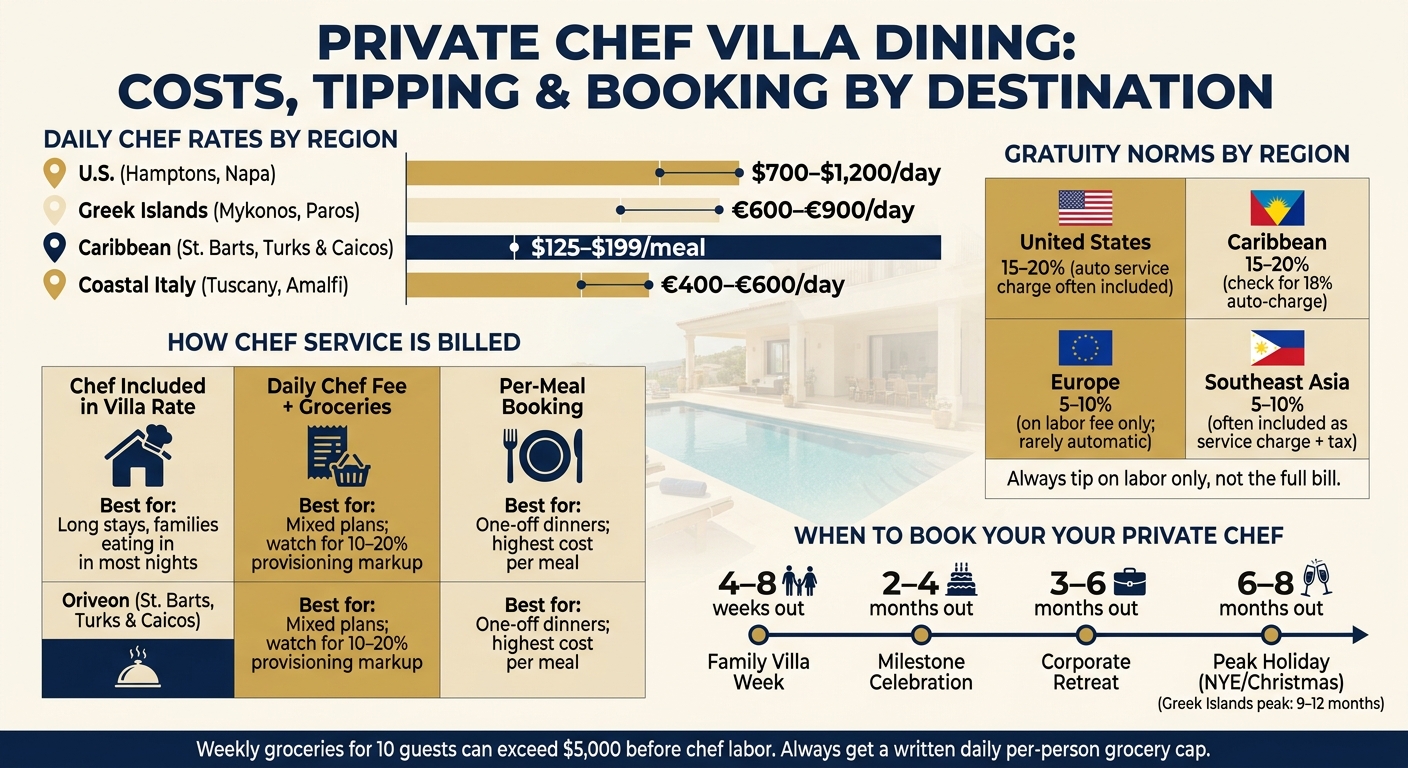
Private Chef Villa Dining: Costs, Tipping & Booking by Destination
Quick Comparison
| Chef Setup | How You Pay | Best For | Main Watchout |
|---|---|---|---|
| Chef in villa rate | Groceries only or limited extras | Longer stays, families eating in most nights | Check what is and isn’t bundled |
| Daily chef fee + groceries | Labor fee plus food costs | Mixed plans with some meals out | Ask about provisioning markups of 10%–20% |
| Per-meal booking | Pay per meal or event | Birthdays, anniversaries, one-off dinners | Often the highest cost per meal |
If I had to boil the whole topic down to one line, it would be this: book early, cap the grocery spend in writing, and confirm service style before you arrive.
sbb-itb-6675d37
Costs, Pricing Models, and Tipping
Once the service model is set, the bill usually comes down to two buckets: labor and ingredients.
What Drives the Total Cost
After you know how the chef service works, the next step is figuring out what pushes the price up.
The biggest factor is usually your popular travel destinations and travel dates. In the U.S., especially places like Hamptons and Napa Valley, daily chef fees often land between $700 and $1,200. In mainland Europe, including Tuscany and Provence, the range is lower at about $430 to $650 per day. In high-demand spots such as Mykonos and St. Barts, rates can climb to $650 to $970 per day.
Food costs add up fast too. In the U.S., groceries usually add $80 to $160 per person, per day.
A few other things shape the final quote:
- Group size
- How many meals you want each day
- Service style
For example, formal plated service often needs one server for every six guests. And if you want premium items like Wagyu beef, live lobster, or specific wine vintages, those are usually billed at cost, sometimes with an added 10% to 20% provisioning margin.
If you want fewer surprises, put a daily grocery cap per person in writing before shopping starts. That one step can save a lot of back-and-forth later. A week of food for a group of 10 can easily go past $5,000 before labor is added.
How to Compare Pricing Structures
The same chef service can look cheap in one quote and expensive in another. It all depends on how the villa handles labor, groceries, and extras.
Some villas roll more into one rate. Others split out the chef’s labor and charge provisioning on top. Per-meal bookings price each service on its own.
That changes the math:
- Inclusive villas bundle more into the nightly rate
- Chef-fee models separate labor from groceries
- Per-meal bookings charge per service
The per-meal setup is easier to predict, but it often ends up being the highest-cost option per meal. On the other hand, a staffed villa often gives the best value if your group plans to eat at the property most nights.
Tipping Norms by Region
Tipping changes by region, and this is one of those details worth checking before the trip.
In North America and the Caribbean, 15% to 20% is standard. Many high-end packages already include an automatic service charge of 15% to 18%. So before adding anything extra, check the invoice.
In Europe, tipping is usually lower. A range of 5% to 10% of the chef’s labor fee is common. The key point: tip on labor only, not on the full bill. If you’re staying in a staffed villa, ask whether gratuity is shared across the team or given straight to the chef.
| Region | Typical Gratuity | Key Note |
|---|---|---|
| United States | 15%–20% | Automatic service charge often already included |
| Caribbean | 15%–20% | Check for an 18% auto-charge before tipping separately |
| Europe | 5%–10% | Based on the chef’s labor fee; rarely automatic |
| Southeast Asia | Varies | Often included as a 5%–10% service charge plus tax on food |
With pricing and gratuity sorted, the next move is to lock in arrival-day logistics.
How to Plan and Book the Right Private Chef Experience
Once pricing is sorted out, the next step is simple: lock in the chef details before you arrive. In this kind of setup, small misses can turn into the biggest service issues.
What to Confirm Before You Arrive
Start with the service model. Is the chef part of a staffed villa rate, or are you hiring them on your own? You’ll also want to confirm how meals will be served before arrival, whether that means casual family-style platters, a formal multi-course plated dinner, or back-of-house prep where the cooking stays mostly out of sight.
Next, send a clear brief with the basics:
- Travel dates
- Villa location
- Total guest count
- Ages of any children
- Cuisine preferences
- Dietary restrictions
- Allergies
- Preferred meal times
Ask for a quote that separates labor from groceries. That makes it much easier to line up the menu, timing, and kitchen setup before the first meal hits the table.
Dietary and allergy details should go out at least one week before arrival, especially if you’re headed to a remote area where specialty items may not be available at the last minute. It also helps to confirm the chef’s scheduled days off so you can plan other meals – or book dinner out – if needed.
On-Site Logistics That Affect the Experience
Before you finalize any menu, make sure the villa kitchen can handle what the chef needs. Many chefs bring their own knives and small tools, but they still depend on the villa for the main kitchen setup.
Timing matters too. Chefs can work around excursions with split service, like feeding children at 6:00 p.m. and serving the main dinner later in the evening. A short evening check-in can help the chef confirm the next day’s menu and adjust service times around your plans. You should also clarify whether the staff is assigned only to your villa or shared across several properties.
Recommended Booking Windows by Trip Type
In busy destinations like St. Barts or Mykonos, leading chefs can be fully booked months ahead of peak season.
| Trip Type | Complexity | Book By | Main Focus |
|---|---|---|---|
| Family Villa Week | Moderate | 4–8 weeks | Chef availability & kid-friendly menus |
| Milestone Celebration | High | 2–4 months | Signature menu design & extra service staff |
| Corporate Retreat | High | 3–6 months | Dietary mapping & multi-meal logistics |
| Peak Holiday (NYE/Xmas) | Very High | 6–8 months | Securing the villa and lead chef |
Once the booking is set, the process can shift from pure logistics to menu design.
Menus, Dietary Needs, and Service Style
Once the booking is set, attention moves to the food itself. A good private chef shapes the menu around your group, the destination, and the flow of each day. Most chefs begin with a preference form that covers tastes, diet goals, and food restrictions. Menus can also change based on what the local market has that day. If the best ingredients come in fresh that morning, a good chef may shift the plan to use them.
From there, the menu gets more specific. Dietary needs matter. So do guest ages, and so does the kind of meal experience you want.
Dietary Restrictions, Allergy Protocols, and Children’s Meals
Professional villa chefs regularly work with vegan, vegetarian, gluten-free, dairy-free, halal, kosher-style, and keto requests. The key is how they handle it in practice. For severe allergies, the standard setup often includes separate utensils, dedicated prep areas, and stocking allergen-safe ingredients before arrival. In remote locations, specialty items like gluten-free flour or certain dairy substitutes may need to be sourced several days ahead.
"A private chef provides greater control, transparency, and peace of mind" for families managing severe allergies or strict dietary lifestyles. – PrivateChef.tc
Children’s meals are often planned apart from the adult menu. Chefs usually make simpler comfort foods and can serve kids earlier, which gives adults space to settle into a more relaxed dinner later on. If you need that setup, ask for simple children’s meals and earlier service times.
Sample Menus for Three Types of Villa Days
These are sample formats, not standard inclusions. Each menu is shaped around your preferences and what the chef can source locally.
A relaxed family-style day might include a poolside breakfast, a casual lunch built around the freshest ingredients available, and a family-style dinner that keeps the mood easy.
A multi-course celebration dinner leans more formal, with seasonal ingredients and tightly timed service. For a plated dinner, a staff-to-guest ratio of one server for every six guests helps dishes arrive at the right temperature and keeps wine service moving smoothly.
A wellness-focused day usually centers on lighter choices across breakfast, lunch, and dinner.
The menu is only part of it. The service style changes how the whole meal feels.
Casual, Elevated, or Formal: Choosing a Service Level
The right service level depends on your group, the occasion, and whether you want dinner to feel relaxed or more like an event.
| Service Level | Staffing | Plating Style | Ideal Group Size | Best-Fit Occasion |
|---|---|---|---|---|
| Casual | Chef only | Family-style / Platters | Large families | Poolside lunches, arrival nights |
| Elevated | Chef + server | Individually plated | 6–10 guests | Birthday dinners, milestone celebrations |
| Formal | Chef + butler + servers | Multi-course tasting | 8+ guests | Anniversaries, hosted events |
Most villa stays blend all three. It’s common to have a casual poolside lunch, an elevated dinner in the middle of the week, and one formal night for a birthday or anniversary. The service style should also line up with the destination’s sourcing and staffing norms.
Best Destinations for In-Villa Chef Dining and Final Planning Takeaways
Once you’ve set pricing and menus, destination becomes the biggest swing factor. It affects staffing, ingredient sourcing, and how far ahead you need to book.
Regional Differences to Know Before You Book
In St. Barts, Turks & Caicos, and Barbados, chef service is often part of the villa’s built-in staff setup and billed per meal. For a group of eight, that usually comes out to $4,000–$9,000 per week. One detail matters here: check whether a 15%–18% service charge is already baked in before you add another tip.
Coastal Italy, especially Tuscany and the Amalfi Coast, usually works on a labor-plus-food-at-cost setup. In many high-end villas, chefs are resident and shop daily at local markets. That daily sourcing helps keep meals seasonal and tied to what’s available that day.
The Greek islands, with Mykonos and Paros leading the pack, tend to post the highest daily chef rates in Europe at €600–€900. Demand in peak season pushes prices up fast. If you’re eyeing August or New Year, book 9–12 months in advance.
In the U.S., chef service is most often hired separately, and prime dates fill up fast. In places like the Hamptons and Napa, day rates usually fall between $700–$1,200.
These patterns help you line up the right service model before you lock in dates.
| Destination | Staffing Model | Chef Rate | Food Billing |
|---|---|---|---|
| Caribbean (St. Barts, Turks & Caicos) | In-house / permanent staff | $125–$199/meal | Often included in per-meal pricing |
| Coastal Italy (Tuscany, Amalfi) | Resident or independent | €400–€600/day | Labor + food at cost |
| Greek Islands (Mykonos, Paros) | Independent contractor | €600–€900/day | Labor + food at cost |
| U.S. (Hamptons, Napa) | Independent contractor | $700–$1,200/day | Labor + food at cost |
What to Prioritize for a Smooth Villa Chef Experience
Once the destination is set, get three things sorted early: the service model, the grocery cap, and the dietary brief.
Match the service model to how your group will eat. If most dinners will happen at the villa, a fully staffed property with an included chef often gives you better value than bringing in an independent chef meal by meal. If you’re only planning two or three standout dinners, booking an independent chef just for those nights usually makes more sense.
Get the grocery budget in writing. Chef labor is fixed. Food is where costs can drift. Requests like lobster, Wagyu, and top-shelf wine can push the weekly grocery total far past your target before chef fees even hit the bill. A written daily, per-person grocery cap helps keep checkout day from turning into a punch in the gut.
Send dietary details one week before arrival, or 4–6 weeks ahead for remote islands where specialty items aren’t easy to find at the last minute. That gives the chef time to plan, shop, and make changes without a last-minute scramble.
Jo Vacations can coordinate villa selection, chef matching, pre-arrival provisioning, and private transfers for a seamless stay.
FAQs
Is a private chef cheaper than dining out?
It depends on your group size and how the villa is set up.
For larger groups, a private chef can often cost less than eating out once you add up transportation, convenience, and drinks. The math can shift fast, especially when everyone would otherwise need to travel to and from restaurants for each meal.
If your villa already includes a resident cook or chef in the nightly rate, you may only need to cover groceries. That can be a strong deal.
For smaller groups, though, or if you only want a few meals, a private chef is usually more of a premium add-on than a way to save money.
What should I ask before booking a villa chef?
Ask if the chef’s fee is part of the villa rate or billed on its own. You’ll also want a quote that separates labor from the food budget so the cost is easy to read.
From there, confirm how provisioning works. Will the chef or villa team buy groceries for you? And will you get receipts for those purchases? That matters more than people think, especially if you’re trying to keep the budget from drifting.
It also helps to pin down the day-to-day details up front, including:
- How many meals are included each day
- The chef’s working hours, schedule, and days off
- How dietary needs, allergies, or food preferences are handled
- Whether service charges or gratuity are already included
These details can change the total cost by a lot, so it’s best to get them in writing early.
How do I avoid surprise food and service charges?
Ask for a quote that separates the chef’s daily labor fee from the food budget. Skip bundled pricing if you can, since it can make provisioning markups hard to spot.
You’ll also want to confirm how groceries are billed. Some chefs charge at cost plus a 10% to 20% margin, while others work within a fixed daily food budget. And before you pay anything extra, ask whether a service charge or gratuity is already included so you don’t end up tipping twice.