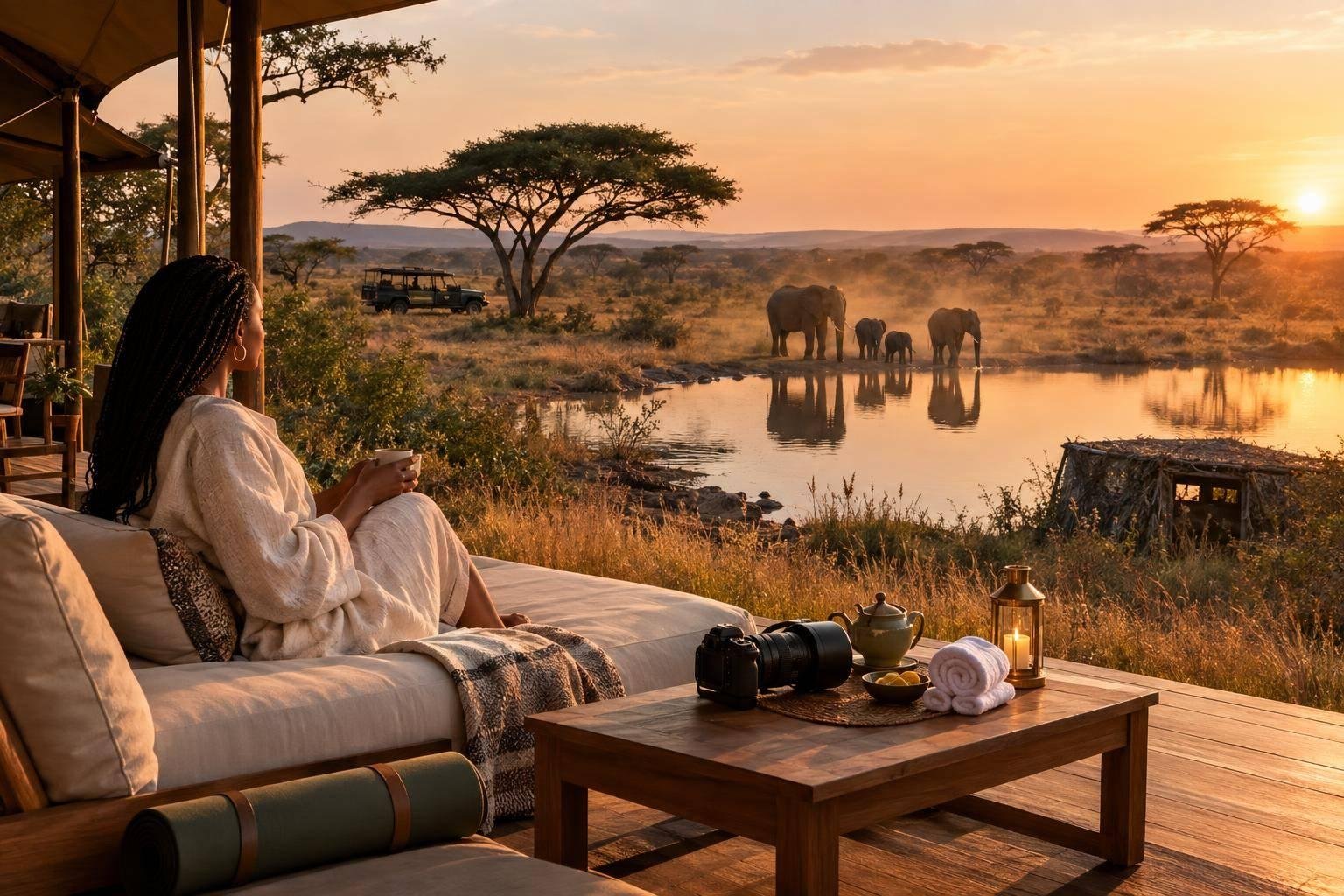
My advice: spend 3–4 nights at one safari lodge, keep drives optional, and set aside time each day to rest. A South Africa safari photo and wellness escape should leave room for wildlife photos and sleep – not force you to choose between them.
I’d plan around these priorities:
- Photography: Choose Sabi Sands for Big Five game drives or Zimanga for photo hides. Add a second reserve, Cape Town, or the Winelands only if you have time for the extra travel.
- Rest: Check room noise, meal times, spa and yoga availability, and whether you can skip wake-up calls.
- Your group: Ask about privacy for couples, arrival support for solo women, and shorter drives and age limits for families.
- Travel and costs: Confirm transfers, camera baggage limits, guiding, hide access, treatment fees, and cancellation terms in writing.
- Health and entry: Check passport and entry rules, malaria advice, yellow-fever requirements, and medical evacuation coverage before departure.
<u>I’d leave arrival day free of scheduled drives.</u> Then I’d give Jo Vacations my budget, photo goals, and sleep needs to build an itemized plan – with requested extras kept separate from confirmed bookings.
Choose Your Safari Region and Photography Style
Once you know how much rest you want, choose a photography format that fits your pace. Choose the format before the lodge: follow wildlife across habitats on game drives, or wait quietly in hides for animals to approach. Your results will depend on your guide’s skill, wildlife movement, and conditions.
Game Drives vs. Photographic Hides
| Factor | Game drives | Photographic hides |
|---|---|---|
| Mobility | Guides search different habitats and respond to tracks | Stationary viewpoint; wildlife must approach |
| Style | Action, changing backgrounds, and broad landscape views | Concealed, stable positions; low angles and reflections where the design allows |
| Timing | Usually early morning and late afternoon | Scheduled morning, afternoon, or overnight sessions |
| Demands | Bumpy roads, vehicle boarding, and early starts | Extended sitting, limited movement, and possible sleep disruption |
| Best for | First-time visitors, families, and photographers seeking variety | Travelers who prefer stillness, birders, and photographers seeking specific perspectives |
Hides suit slower, quieter days, but sitting still for hours can take more energy than you’d expect.
Check the hide’s design, not just its name. Water-level windows give you an eye-level view, while elevated seating changes the angle. Ask about lens supports, restroom access, seating, and space for equipment. Long or overnight sessions can leave you tired, so keep the next morning open.
Sabi Sands, Greater Kruger, and Zimanga
Next, match your photography format to the reserve.
Sabi Sands, in the Greater Kruger ecosystem, is known for leopard viewing, guide-and-tracker teams, and off-road access where permitted. Across Greater Kruger, rules for night drives, vehicle sizes, and off-road viewing differ by reserve. June through September generally offers better visibility in Sabi Sands. Greener months bring lush backgrounds and birds, but rain and thicker vegetation can make wildlife harder to find.
Zimanga Private Game Reserve offers specialized hides alongside game drives. If you’re adding Zimanga to your route, confirm transfer timing before booking. Before paying a deposit, get written confirmation of hide availability, reservations, session lengths, shared or exclusive occupancy, vehicle capacity, and private-guide charges. Families should check minimum ages. Anyone with mobility needs should confirm access and restroom arrangements.
With the reserve selected, decide how much travel you want between stops.
One Reserve, Two Reserves, or a Cape Extension
| Route | Photo variety | Transfers | Recovery |
|---|---|---|---|
| One reserve | Repeat chances to photograph the same ecosystem in different light and observe changing behavior | Lowest; arrival and departure transfers only | Most room for sleep and optional activities |
| Two reserves | Different habitats or a switch from drives to specialized hides | Additional road or air connections and repacking | Less downtime unless you add extra nights |
| Safari plus Cape Town or the Cape Winelands | Coastal subjects, local life, city scenes, or vineyards | Usually domestic flights plus ground transfers | Depends on keeping the transition day lightly scheduled |
Stay at least three nights in the primary reserve for two full days and about four drives. Four to six nights gives you more repeat chances, time to recover after hide sessions, and room to adjust your plans. Choose one reserve for a slower trip, or two if the extra travel is worth it to you. Add another region for a clear change in experience – not at the expense of rest.
sbb-itb-6675d37
Choose a Lodge and Schedule That Support Rest
Safari Photography and Wellness: A Restful Daily Schedule
Once you’ve chosen the reserve, focus on lodges that protect sleep and make time for rest.
Quiet Rooms, Flexible Meals, and Wellness Facilities
A spa alone doesn’t make a lodge sleep-friendly. Before booking, get written confirmation of your room’s location, generator hours, blackout options, insect screens, and climate control. Ask how far the room is from kitchens, bars, staff areas, and paths.
Check what wildlife noise to expect, whether you’ll have private outdoor space, and if wake-up calls are optional. Confirm that breakfast is available when you skip a drive, along with lighter lunches and early dinners.
For wellness services, ask whether yoga is instructor-led or self-guided and whether massage therapists work on-site or visit. Check for meditation spaces and hydrotherapy. Get appointment lengths, prices, availability, cancellation terms, and extra charges in writing.
A Daily Schedule With Time to Rest
Build your day around recovery once you’ve chosen the lodge. Set aside downtime before adding outings.
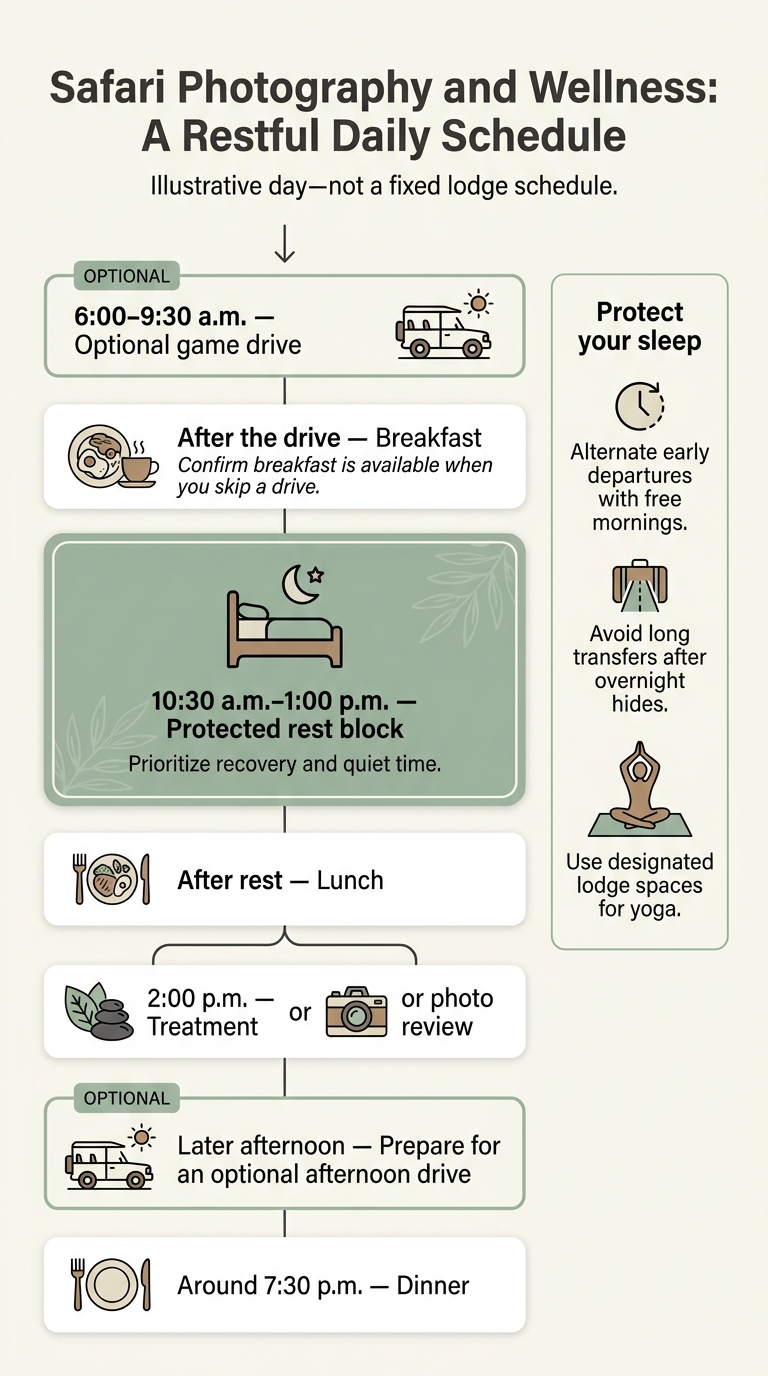
An illustrative day might include an optional 6:00–9:30 a.m. drive, breakfast, a 10:30 a.m.–1:00 p.m. rest block, lunch, and a 2:00 p.m. treatment or photo review. Leave time to prepare for an optional afternoon drive, with dinner around 7:30 p.m.
Alternate early departures with free mornings. Avoid long transfers after overnight hides, and use designated lodge spaces for yoga.
Pacing for Couples, Solo Women, and Families
Match the pace to the people traveling.
Couples can request private guiding and a private vehicle so one person can take photos while the other rests. Confirm the extra cost and how flexible return times are. Solo women can ask for a named lodge contact, clear arrival instructions, and daily check-ins without pressure to join shared activities.
Families should request shorter drives, flexible children’s meals, and supervised activities. Ask for exact room layouts, including connecting doors, bathroom privacy, and terrace safety. Assign one adult to care for a tired child, and confirm childcare supervision and fees. Check age rules for every activity before paying.
Plan Transfers, Camera Gear, and Booking Details
Once you’ve settled on the lodge’s pace, sort out the travel details that will help you stick to it. Confirm transport before paying, and don’t book a safari drive on arrival day. Get flight numbers, pickup points, private or shared transport arrangements, road travel times, the lodge’s arrival cutoff, and a contact for delays in writing. For Greater Kruger, specify Hoedspruit or Kruger Mpumalanga International Airport. Confirm vehicle capacity, child seats, luggage space, and transfer charges, too. Leave time to rest rather than rushing to make a drive.
With transport confirmed, plan around rest days – not tight connections.
Illustrative framework – not a fixed package: Day 1: arrive and recover at a Johannesburg airport-area hotel. Day 2: take a confirmed flight or private road transfer to the lodge, leaving the evening uncommitted. Days 3–5: combine drives, photography, and rest. Day 6: leave room for weather changes or a postponed activity. Days 7–9: optionally add Cape Town or the Winelands once connections are confirmed. Final day: allow for road travel, domestic connections, and international check-in.
Keep your camera kit light enough for easy transfers and less strain. Typical safari baggage limits are about 44 lb checked and 11 lb carry-on (20 kg and 5 kg), but your carrier’s rules apply. Send your bag dimensions and gear list to the transfer operator. For rentals, confirm camera models, delivery, chargers, the damage deductible, and insurance. Ask whether the vehicle or hide has beanbags, camera supports, and enough room for long lenses.
Request an itemized quote covering flights, transfers, fees, hides, guiding, gear rental, and wellness sessions. Check deposit deadlines, cancellation penalties, amendment fees, and whether weather-delayed activities can shift to another day. Insure expensive cameras and lenses as specified items; baggage coverage may not cover their full cost.
Recheck your documents 2 to 4 weeks before departure. Verify entry rules for your nationality, traveler declaration requirements, and yellow-fever proof where relevant. Discuss malaria precautions with a clinician, and review evacuation coverage and policy exclusions with your insurer.
Plan Transfers, Camera Gear, and Booking Details
Private Transfers and Connection Time
Once you’ve chosen a lodge, plan transfers around its rest schedule – not just your flights. For KwaZulu-Natal, ask whether the lodge recommends Durban, another regional airport, or a private road transfer. For Greater Kruger, compare regional flights, charters, and private road transfers by door-to-door travel time, rather than flight time alone. That helps keep your first day restful.
Ask about road distance, rest stops, luggage capacity, and backup plans for delays. Some small safari aircraft limit baggage to 33 lb per person, including carry-on. Check the aircraft’s baggage rules and get approval for your camera case before tickets are issued.
Allow one buffer night for any arrival or departure involving a long-haul flight. Before scheduling your lodge transfer, confirm the latest safe arrival time.
Photography Guides, Gear, and Etiquette
With transfers settled, choose your photo setup based on what you want to shoot. Look for a photo-savvy guide whose skills match your priorities: birds, low light, or hides. A 100–400 mm zoom offers reach without too much weight.
Protect your equipment with sealed bags or a rain cover, and pack layers for cool dawns and hot afternoons. Check the flash rules, and get written permission before bringing a drone. Follow ranger instructions, never ask for an unsafe approach, and get consent before photographing people.
Seasonal Conditions and What Your Quote Includes
The season affects wildlife sightings in Africa, comfort, and access. May through September generally means shorter vegetation and animals gathering near water. October through April can bring lush backgrounds, humidity, and thunderstorms.
Ask how rainfall and daylight affect hide sessions, airstrip access, and treatment schedules. Confirm vehicle step height, walking distances, minimum activity ages, and whether treatments suit your needs.
Read the quote closely. You can also compare luxury travel packages to see how different inclusions affect the total cost. Check exchange-rate assumptions and what could trigger a price change, along with charges for drinks, laundry, baggage, private vehicles, and wellness treatments.
Entry Rules, Health, and Insurance
Check current guidance from the U.S. Department of State, South African Department of Home Affairs, and CDC for passport, entry, and minor-travel rules.
Yellow-fever requirements depend on your travel history. CDC guidance includes travelers aged 1 year or older who transit for more than 12 hours through a risk country. Vaccination generally must be given at least 10 days before arrival.
Confirm the lodge’s nearest medical facility and how staff communicate during emergencies. Also check whether evacuation is covered or must be paid up front.
Set Your Safari Length and Activity Level
Once transfers and gear are set, decide how active – or restful – you want the trip to be.
How Long to Stay on Safari
Plan at least 3 nights in one reserve. Choose 4–5 nights if you want time for both photography and proper downtime, plan an overnight hide, or need a family-friendly pace. On split trips, allow at least 3 nights per reserve so transfer days don’t eat into shooting time. Your length of stay helps determine whether the trip feels active or restful.
When to Skip an Early Drive
After poor sleep or an overnight hide, skip the dawn drive. You’ll miss one outing, but save energy – and patience for photography – for the rest of the trip. Tell the team as early as possible if you want to change the start time.
Choosing Hides for Beginners and Children
Start with a shorter guided hide session so you can photograph comfortably and stay focused. Before booking, ask about session length, minimum age, access, seating, toilets, and camera support.
Booking Private Guiding and Wellness Sessions
Once you’ve set the pace, book private guiding, hide use, spa treatments, and yoga as separate line items. Then build your schedule around them. Place treatments after demanding outings and leave one unscheduled block each day for rest. Adjust transfers, guide type, and outing length to suit couples, solo women, or families.
Jo Vacations can coordinate these preferences, but you’ll still need written confirmation of lodge inclusions, availability, and age rules.
Plan Your Safari With Jo Vacations
Once you’ve chosen your reserve, lodge style, and pace, send Jo Vacations a clear planning brief. Outline your preferred mix of drives, hides, and downtime, with protected rest time built into the schedule.
Include what matters for your group: privacy for couples; trusted guides and private transfers for solo women; or shorter drives, child-appropriate hides, flexible meals, and adjoining rooms for families.
Jo Vacations can use that brief to build an itemized itinerary with quiet lodges, private transfers, photo guides, hide access, and wellness sessions. Confirmed inclusions should be priced separately, while other items remain marked as requested until confirmed.
Before departure, confirm the 24/7 support channel and emergency contacts. Review cancellation terms and excluded costs before you pay.
For a tailor-made consultation, contact Jo Vacations. Share your travel dates, departure airport, budget, ages, photo goals, wellness needs, and sleep priorities. These details help shape an itinerary that balances wildlife photography, rest, and wellness.
FAQs
Can my partner relax while I photograph wildlife?
Yes. Jo Vacations builds your itinerary around both of you, so you can each set your own pace. While you photograph wildlife with a private guide, your partner can enjoy spa treatments, relax by a private plunge pool, or take in scenic views from the lodge deck. The trip is entirely private, giving you time to pursue your photography goals while your partner enjoys a restful wellness escape.
What if weather cancels my photo hide session?
A private safari gives you room to adjust your schedule and activities around the weather, lighting, or wildlife activity. If bad weather cancels your photo hide session, your itinerary can shift to help you get the best possible images. Jo Vacations offers 24/7 on-trip concierge support to handle these changes, keep your trip stress-free, and make sure it suits your preferences.
How much should I budget for safari wellness extras?
Budget $25–$50 per guest per day for tips for guides, trackers, and camp staff. You’ll also need funds for travel insurance, medical evacuation coverage, and personal purchases such as souvenirs or premium spirits.
Luxury all-inclusive packages often include meals and standard activities. But all-inclusive doesn’t mean everything: specialty wellness experiences, private vehicle supplements, and international airfare usually cost extra.