If I want the best month for Tanzania wildlife photos, I match the month to the shot – not just the park. In plain terms: January to March is best for calving and predator action in Ndutu/Southern Serengeti; June to July works well for Western Corridor/Grumeti movement and early crossings; July to October is best for Mara River crossings in the Northern Serengeti; and November to December brings green scenery, fewer vehicles, and returning herds.
Here’s the short version:
- Best for calving: February
- Best for predator-prey scenes: January to March
- Best for river crossings: July to October
- Best for fewer vehicles with green scenery: March to May and November to December
- Best for elephants: Tarangire, June to October
- Best year-round add-on: Ngorongoro Crater
- Best light: 6:00–8:30 a.m. and 4:30–6:30 p.m.
- Best booking window for peak months: 6–9 months ahead
- Typical low-season lodging drop: 30%–50%
A few patterns matter most. Dry season usually gives shorter grass, easier wildlife sightings, and more dust. Green season brings richer color, softer light, birds, storms, and muddier roads. In February, around 8,000 wildebeest calves a day are born in the south. In July and August, crowd levels can hit 9–10/10 near northern river crossings. September often gives crossing action with about 30%–40% fewer vehicles than August.
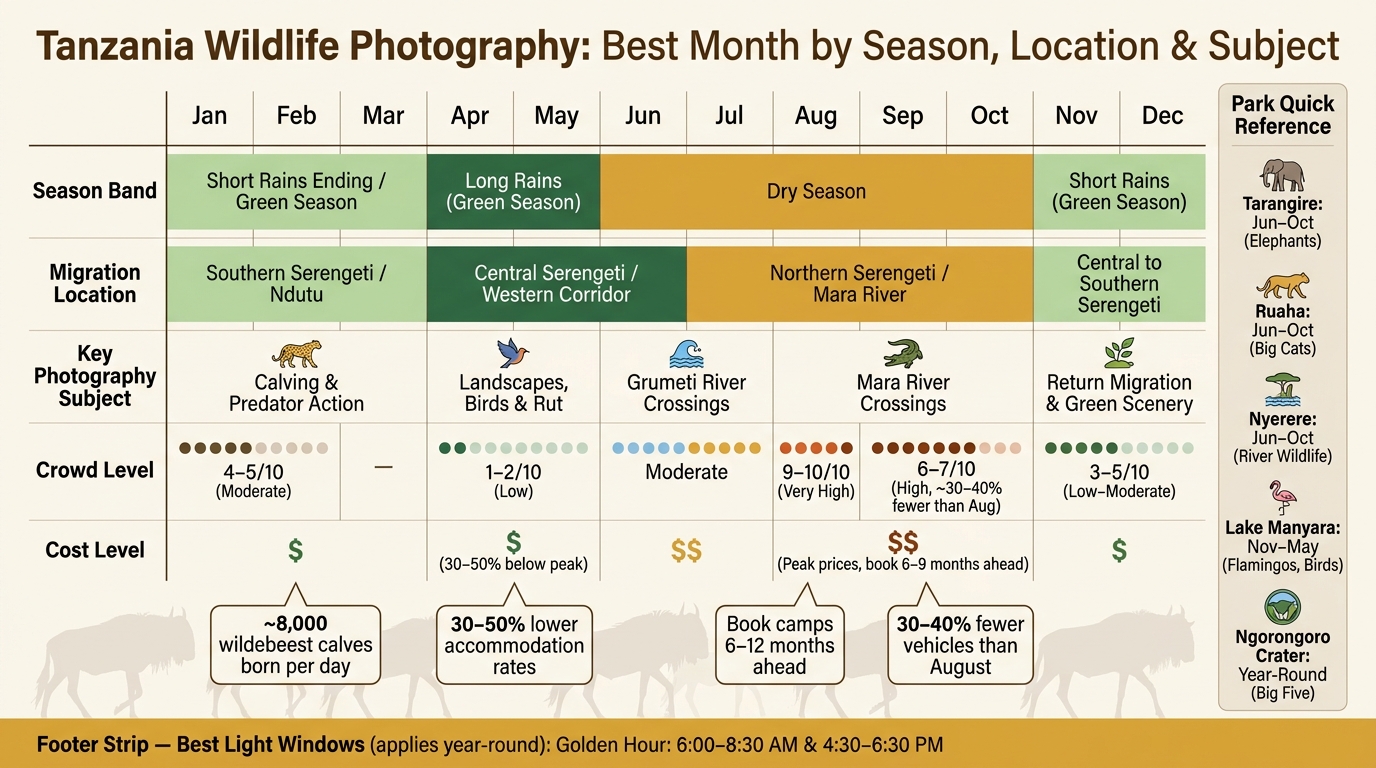
Tanzania Wildlife Photography: Best Month by Season, Location & Subject
Best Time to Visit Tanzania | Month-by-Month Safari Season Guide
sbb-itb-6675d37
Quick Comparison
| Goal | Best Time | Best Place | Main Tradeoff |
|---|---|---|---|
| Calving photos | Jan–Mar | Ndutu / South Serengeti | Some rain and mud by March |
| Predator action | Jan–Mar | Ndutu / South Serengeti | Timing shifts with herd movement |
| Green landscapes and birds | Mar–May, Nov–Dec | Central Serengeti, Ngorongoro, Manyara | Wet roads and some camp closures in Apr–May |
| River crossings | Jul–Oct | Northern Serengeti | Heavy safari traffic, peak prices |
| Early crossings with less traffic | Jun–early Jul | Western Corridor / Grumeti | Less certain than Mara crossings |
| Elephant herds | Jun–Oct | Tarangire | Dust and dry backgrounds |
| Big Five add-on | Year-round | Ngorongoro Crater | Strict road rules and timed access |
I’d sum it up this way: if I want action, I go in February or July to October. If I want color, storm light, birds, and lower costs, I look at March to May or November to December. If I want a steady backup almost any time, I add Ngorongoro Crater.
Tanzania’s Photography Seasons and Migration Patterns
Tanzania photography is shaped by two main seasons: dry and green. Inside the green season, you get two rain periods: the short rains from November to December and the long rains from March to May. Each one changes the look of the land, the movement of wildlife, and the kind of images you can come home with.
Dry Season vs. Green Season: Light, Access, and Wildlife Density
During the dry season, the bush thins out and animals gather around permanent water sources. That makes wildlife easier to spot and easier to photograph. The landscape also shifts toward gold and brown, which can look great in warm-toned portraits and silhouettes.
The downside is dust. Fine dust gets into everything, especially camera gear. A rain cover helps, and it’s smart to change lenses inside the vehicle instead of out in the open.
The green season feels very different. You get richer color, softer light, and less dust in the air. The short rains usually show up as brief afternoon showers, which often settle the dust without ruining the day. The long rains bring muddy roads, the lowest crowd levels, and the deepest green landscapes. They can also be easier on the budget, with accommodation rates 30% to 50% lower than peak-season pricing.
How the Great Migration Moves Through the Serengeti Each Year
The migration follows a broad seasonal loop through the Serengeti ecosystem each year.
| Period | Location | Photographic Highlight |
|---|---|---|
| Jan–Mar | Southern Serengeti / Ndutu | Calving season; intense predator-prey action |
| Apr–Jun | Central Serengeti / Western Corridor | Moving herds; lush green backdrops |
| Jul–Oct | Northern Serengeti | Mara River crossings; high-drama action |
| Nov–Dec | Central to Southern Serengeti | Return of herds; fresh green landscapes |
February is the heart of calving season. That means lots of newborns, but it also means predator action picks up fast. Lions, cheetahs, and hyenas are often in near-constant motion.
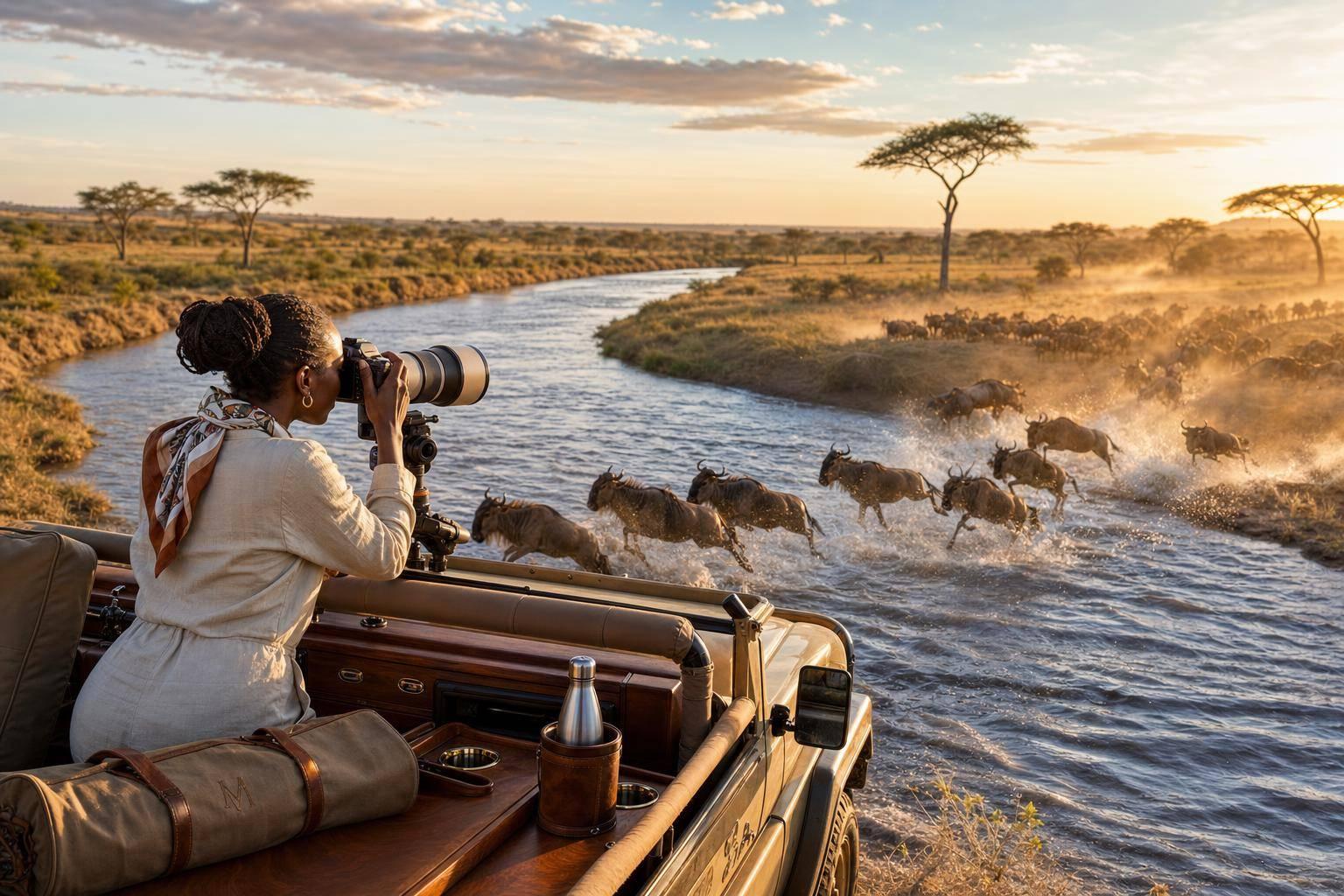
From July to October, attention shifts north to the Mara River crossings. This is the peak stretch for dramatic action, and because of that, it also tends to bring the most vehicles. If you want river-crossing drama with a bit less traffic, the Grumeti River crossings in June to July can be a smart pick.
These seasonal changes set up the month-by-month guide below.
Best Times of Day for Stronger Safari Images
In Tanzania, the two best light windows are usually 6:00–8:30 a.m. and 4:30–6:30 p.m.. This is when the light is warm, angled, and easier to work with. Midday sun is much harder. It creates harsh contrast, adds heat shimmer, and can make far-off subjects look flat and washed out.
A private vehicle can make a big difference. It gives you more control over timing and positioning. You can leave before sunrise, stay longer at a sighting, and line up the vehicle so the sun is behind you instead of in your face.
A few field habits help too:
- Use a bean bag on the window ledge or roof hatch
- Skip the tripod in the vehicle; it usually gets in the way
- Ask your guide to switch off the engine during key moments, since even small vibrations can soften images
These light windows become far more useful once you pair them with the right month and region.
Month-by-Month Tanzania Wildlife Photography Guide
This calendar helps you line up each part of the year with the animals, light, and road access that tend to photograph best.
January to March: Calving Season, Newborns, and Predator Action at Ndutu
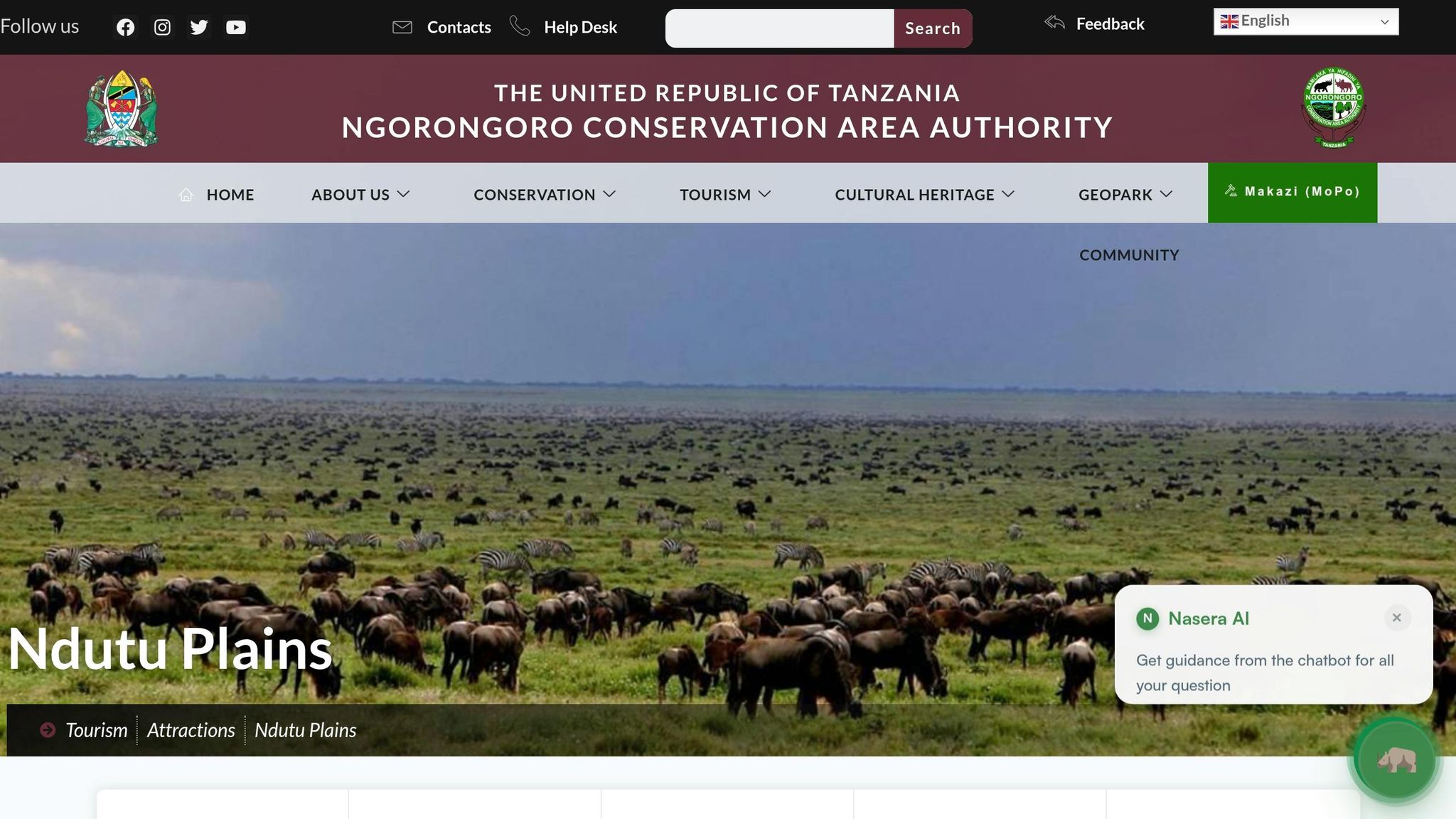
January keeps the herds in Ndutu, where green grass and soft light make the landscape feel calm even when a lot is happening. Then February turns up the pace. Calving reaches its peak, and roughly 8,000 wildebeest calves are born each day. That huge wave of newborns pulls in lions, cheetahs, and hyenas, which is why this is one of the strongest periods of the year for predator-prey scenes.
Crowds are usually moderate, around 4–5/10. For gear, a telephoto in the 200–600mm range works well for tight predator portraits, while a wide-angle lens helps with environmental frames that show the herds in place.
March starts to shift. The herds begin moving toward the Western Corridor, the rains build, and some tracks get muddy. As the month moves along, being flexible matters more than sticking to a fixed plan.
April to June: Green Landscapes, Fewer Crowds, and the Western Corridor
April and May are usually the quietest months in the field, though muddy tracks can limit how far you can move. Accommodation rates may drop 30%–50% below peak-season pricing. That lower cost comes with a tradeoff: access can be harder, and tall grass can hide smaller predators. Still, if you want moody skies, deep color, and storm light, this stretch can be a great fit.
Ngorongoro Crater stays reliable during the wet months, especially for close wildlife work and bird photography. Tanzania has more than 1,100 bird species, which makes the green season one of the best windows for bird images. The wildebeest rut also starts in this period, bringing more action as bulls compete and the herds keep pushing west.
By June, the ground starts to dry and the migration moves with it.
June feels like a clean handoff. Mornings turn crisp, skies clear out, and the herds move into the Western Corridor toward the Grumeti River. Crossings at the Grumeti in June and early July can bring the same kind of river drama many people chase later in the year, but often with fewer vehicles than the Mara River.
July to December: Mara River Crossings, Dry-Season Drama, and the Return South
From July through October, attention shifts to the Mara River. Big herds gather at the banks, crocodiles wait below, and crossings can explode into action without much warning. This is peak season in every sense. Crowd levels hit 9–10/10 in July and August, and the best camps often need to be booked 6–12 months ahead.
September stands out for a simple reason: you can still get the river-crossing action, but with about 30%–40% fewer vehicles than in August. For photographers, that’s a big deal. You get a bit more room to work, and the light is often strong too, with warm golden tones and less haze than later in the dry season.
By November, the short rains come back. Dust settles, the plains start turning green again, and migratory birds return. Crowd levels drop to 3–5/10, though there is usually a brief bump around the holiday season. December brings fresh grass, dramatic skies, and softer light, with far fewer vehicles than the peak months.
| Month Range | Primary Location | Key Subject | Crowd Level |
|---|---|---|---|
| Jan–Feb | Ndutu / South Serengeti | Calving & predator action | Moderate (4–5/10) |
| Mar–May | Central Serengeti / Ngorongoro | Landscapes, birds, rutting | Low (1–2/10) |
| Jun–Jul | Western Corridor / Grumeti | Migration movement, crossings | Moderate |
| Aug–Oct | Northern Serengeti / Mara River | River crossings, dry-season drama | High to Very High |
| Nov–Dec | Central & South Serengeti | Return migration, green season | Low–Moderate (3–5/10) |
Where to Go by Season: Serengeti, Ngorongoro Crater, and Other Key Parks
Once you know your month, the next step is simple: pick the park or sub-region that gets you closest to the wildlife activity you want to photograph.
Serengeti Sub-Regions by Month
The Serengeti isn’t one single experience all year. Its different sub-regions peak at different times, and that changes what you can shoot.
Southern Serengeti and Ndutu are best from January through March. This is calving season, and the short-grass plains give you clean, open backgrounds. That makes a big difference for predator-prey sequences, where clutter can ruin the frame.
Seronera, in central Serengeti, is the most steady pick year-round. If you want a safer bet no matter where the migration is, this is it. Leopard and lion sightings are reliable here, often around kopjes and acacia trees.
The Western Corridor and Grumeti area comes into its own in late spring through the early dry season. This is a good place for herd-compression images and early river crossings. You also tend to deal with fewer vehicles than in the Mara, which can make a shoot feel a lot less chaotic.
From July through October, attention shifts to the Northern Serengeti, especially Kogatende and Lamai. This is where the Mara River crossings happen.
If you’re moving between northern and southern camps, internal flights can save a lot of time and give you more hours in the field. A private vehicle matters most in the northern and southern zones, where timing and flexibility can change your odds of catching a crossing – and getting a cleaner composition.
Ngorongoro Crater as a Year-Round Add-On
If you want a steady, non-migratory option between migration phases, Ngorongoro Crater is the most reliable add-on. It works in any season because the wildlife is resident. About 25,000 large mammals live inside the caldera, including lions, elephants, buffalo, and the endangered black rhino. With that kind of density, you can realistically put the Big Five in front of your lens in a single morning.
The crater also gives you backgrounds the Serengeti simply doesn’t. Its steep walls can create dark, enclosed backdrops, and in greener months, mist often rises from the caldera floor at sunrise. That can add mood fast.
There are two limits to keep in mind. Access is timed, and off-roading is strictly prohibited. Staying at a rim lodge helps a lot because you can descend at first light, get ahead of the crowds, and head out in the afternoon when the light is often better.
Tarangire, Ruaha, Nyerere, and Lake Manyara: When to Visit Each
These parks each shine in different seasons, and each one suits a different shooting style.
Tarangire is at its best from June through October and is one of Tanzania’s top spots for elephant photography. In the dry season, herds gather around the Tarangire River in numbers that are hard to match elsewhere. The baobabs also help a lot, especially for wide-angle elephant shots with strong foreground shape.
Ruaha, also best from June through October, is a strong pick for predator work. It has high densities of lions and leopards, but very few vehicles on the ground. That lower traffic can make a huge difference when you’re trying to work a scene without interruption.
Nyerere is another June through October destination, but the draw here is very different. It’s best for boat-level river photography, especially hippos, crocodiles, and African skimmers.
Lake Manyara works best from November through May. The green season pays off here with flamingos on the soda lake, migratory birds in the forest canopy, and reflective water that adds extra depth to landscape frames.
| Park | Best Window | Best Subjects |
|---|---|---|
| Tarangire | June–October | Elephant herds, baobab silhouettes |
| Ruaha | June–October | Big cats, low vehicle counts |
| Nyerere | June–October | Hippos, crocodiles, river-level shots |
| Lake Manyara | November–May | Flamingos, forest birds, reflective water |
| Ngorongoro Crater | Year-round | Black rhino, Big Five, misty caldera |
Planning Your Trip: Gear, Comfort, and Booking Strategy
Once you’ve picked the month, the next step is simple: match your gear and booking timing to the conditions you’ll face.
Camera Gear and Clothing by Season
Your packing list should shift with the season.
In the dry season (June–October), the main problem is fine volcanic dust. It gets everywhere if you’re not careful. Change lenses inside the vehicle, not out in the open, and clean your gear each day with a blower and swabs. It also helps to wrap lenses in a soft cloth between shots. A 400mm–600mm telephoto is a smart pick for this time of year because animals often gather near water sources or are viewed from set tracks.
In the green season (November–May), rain protection moves to the top of the list. Afternoon tropical downpours are common, so waterproof covers for your camera body and long lens are a must. This is also the season when wide-angle and mid-range zooms (24–70mm) come into their own. Storm clouds, rainbows, and green, flowering landscapes often look better with a wider frame.
Clothing follows the same pattern. In June through August, morning game drives can fall to about 59°F (15°C), so bring a fleece or insulated jacket and wear layers you can peel off as the day heats up. From November through March, conditions are warmer and more humid, so light, breathable fabrics make more sense.
For camera settings, use 1/1000s for moving animals and 1/1600s or faster for action sequences. If you’re shooting from a vehicle, a bean bag is one of the simplest ways to keep things steady.
Best Months by Priority: Crossings, Calving, Birds, Predators, and Crowd Levels
These month-by-month patterns shape both the kind of images you can get and how easy it is to move around.
| Month | Weather & Temp | Tradeoffs |
|---|---|---|
| Jan–Mar | Warm; occasional rain | Humidity, muddy roads |
| Apr–May | Wet; heavy rain | Some camps closed, difficult road access |
| Jun–Aug | Dry and cool | Heavy dust, peak crowds, highest prices |
| Sep–Oct | Dry and warm | Dust, peak pricing |
| Nov–Dec | Warm; short rains | Unpredictable rain, rising humidity |
If you’re aiming for peak season (July–October), plan far ahead. Book 6 to 9 months in advance if you want the best migration camps and a private vehicle.
Conclusion: Match the Month to the Images You Want Most
Pick the month based on the images you want most – calving, river crossings, birds, predator action, or green-season scenery. Then build the rest of the trip around that choice, including the route and the level of vehicle access. Jo Vacations can help you build a tailor-made Tanzania photography safari around your specific goals – pairing the right camps, private guiding, and internal flight logistics to keep you in the field when the light and action are at their best.
FAQs
How many days do I need for a Tanzania photo safari?
It comes down to what you want to shoot. Most Tanzania photo safaris run for 7 days if you’re doing a standard Northern Circuit trip. If you want more time in the field and more room to work with changing light, 14- or 21-day trips are a better fit.
Jo Vacations can adjust the pace around key wildlife moments. So if your goal is the calving season in Ndutu or river crossings in the northern Serengeti, the itinerary can be shaped around that.
Should I choose a private vehicle for photography?
Yes, a private vehicle is strongly recommended for photography.
It gives you more control over your position, your timing, and how long you stay at a sighting. That matters a lot when you’re trying to frame a shot and don’t want to be rushed by other passengers.
A private vehicle also makes it easier to focus on specific subjects. You can spend more time following a predator, stay put for animal behavior, or wait for the light to shift into something better for photos.
If you want a more tailored safari experience, Jo Vacations can arrange private excursions.
Which lens should I bring for Tanzania wildlife photos?
Bring a telephoto lens – ideally 100–400mm or 200–600mm – for wildlife shots. For landscapes and photos of the safari vehicle, a 16–35mm wide-angle lens is a good fit.
Safari drives can get dusty fast. To help protect your gear, bring at least two camera bodies so you don’t have to swap lenses in the field. And pack a bean bag too – it’s a simple way to steady your camera on the vehicle window when you need extra support.