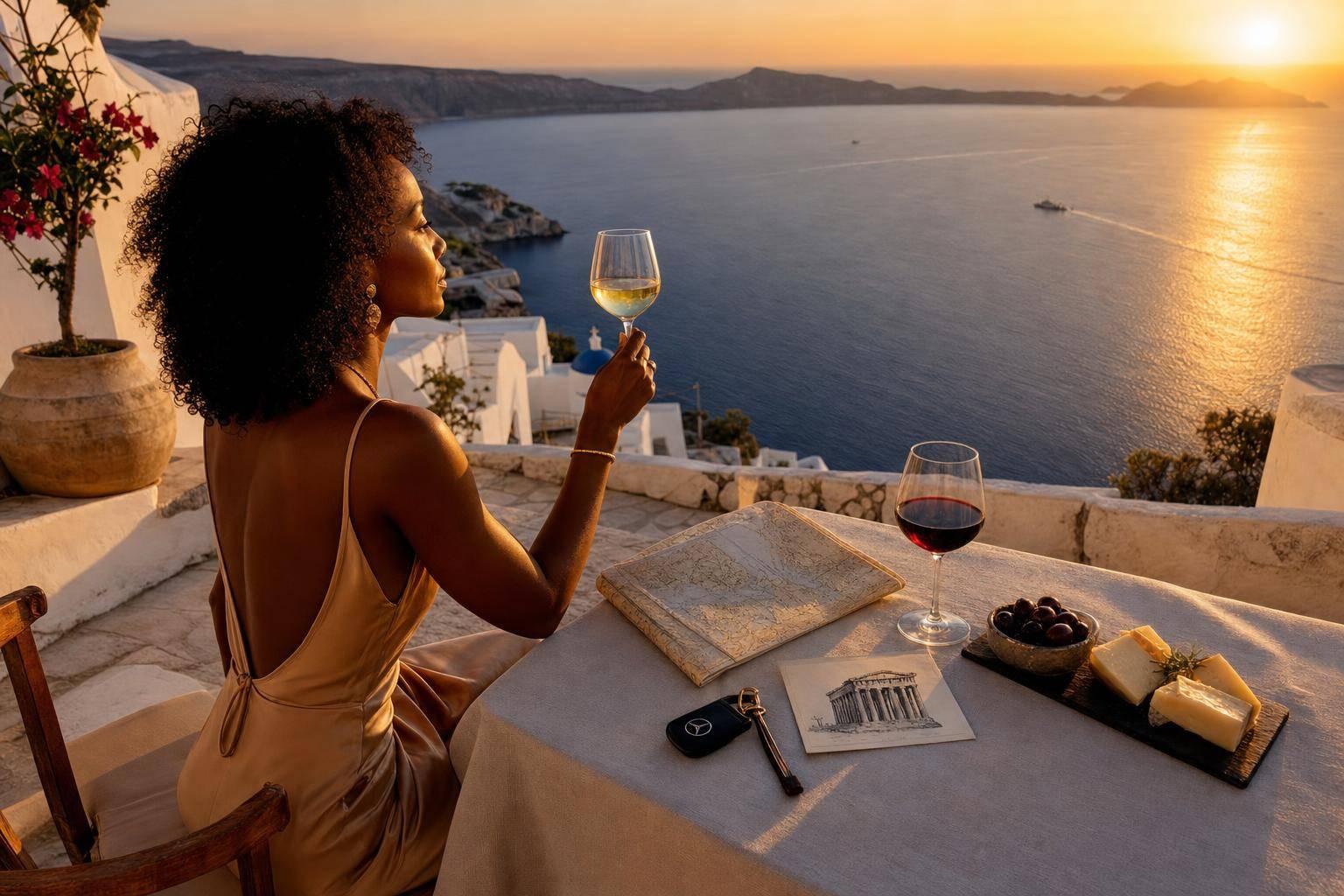
If I had to sum it up fast: choose the islands for sea views, volcanic whites, and a slower trip; choose the mainland for road travel, more red wine options, and easier access from Athens.
Greece has made wine for more than 4,000 years and grows about 200 to 300 native grape varieties. So this choice shapes more than scenery. It changes what you drink, how you move around, what you eat, and how much ground you can cover.
Here’s the short version:
- Islands: best for Assyrtiko, volcanic soils, cliffside tastings, and romantic stays
- Mainland: best for Agiorgitiko, Xinomavro, easier car routes, and trips mixed with ancient sites
- Santorini: known for high-acid, saline whites and old ungrafted vines
- Crete: gives you more grape variety and 60+ wineries
- Nemea and Naoussa: better if you want serious reds and cellar visits
- Timing: May to June and September to October are usually the best months for both
- Trip length: plan 2 to 3 winery stops per day and at least 2 to 3 full days per island
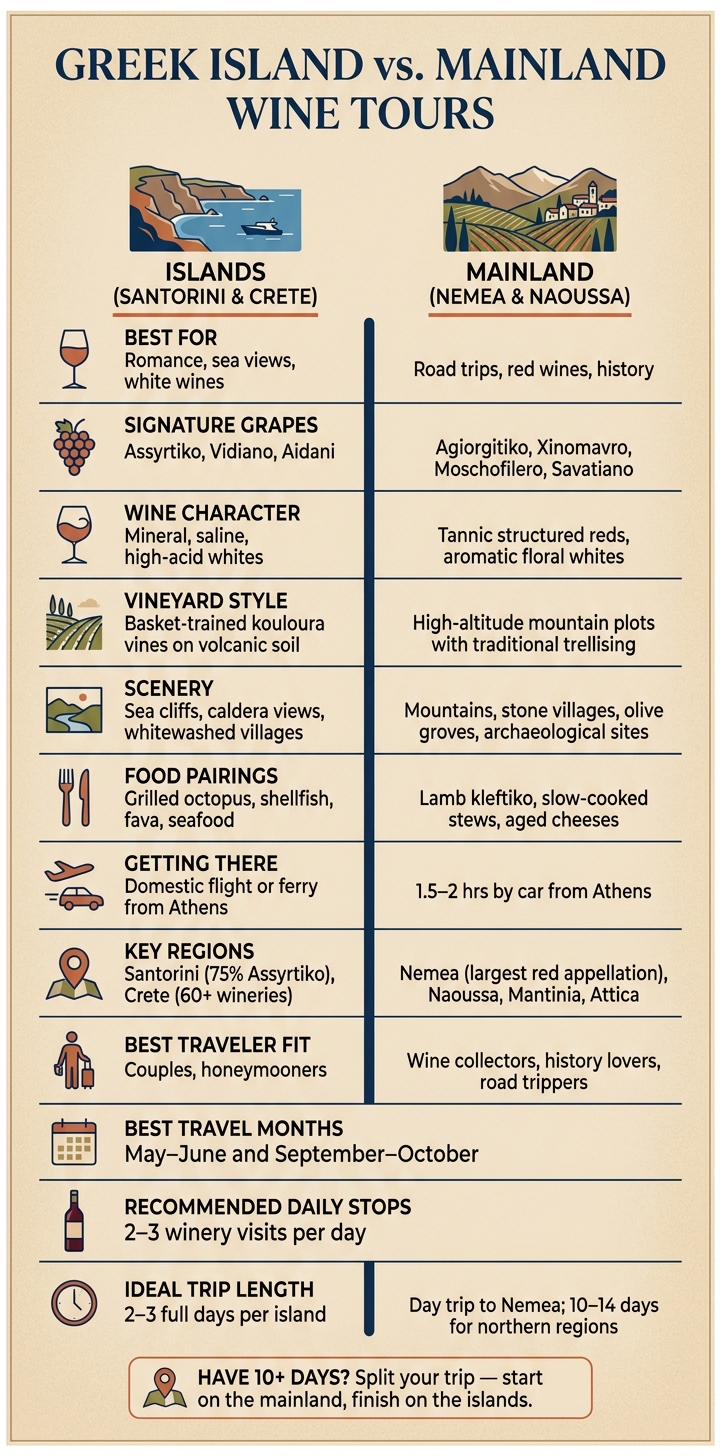
Greek Island vs. Mainland Wine Tours: Side-by-Side Comparison
Best Wine Tasting in Santorini | 5 Top Wineries (2026)
sbb-itb-6675d37
Quick Comparison
| Topic | Islands | Mainland |
|---|---|---|
| Best for | Romance, views, white wines | Road trips, red wines, history |
| Main wine profile | Mineral, salty, high-acid whites | Tannic reds, floral whites, more style range |
| Main grapes | Assyrtiko, Vidiano, Aidani | Agiorgitiko, Xinomavro, Moschofilero, Savatiano |
| Scenery | Sea, cliffs, whitewashed towns | Mountains, vineyards, stone villages |
| Food match | Seafood, octopus, shellfish | Lamb, stews, aged cheeses |
| Logistics | Flights or ferries, more planning | Easier by car from Athens |
| Best traveler fit | Couples, honeymooners | Collectors, history lovers, drivers |
My takeaway: if you want the trip to feel romantic and easygoing, I’d lean island. If you want more wine range and simpler planning, I’d lean mainland. And if you have 10+ days, I’d split the trip and do both with these Greece packages.
Greek Island Wine Tours: Volcanic Wines, Sea Views, and a Relaxed Pace
Greek island wine touring is shaped by the land first. Volcanic soils, salty air, and strong Aegean winds all leave their mark on the vineyards and the wines.
Key Island Regions and Wine Styles
Santorini sits at the center of Greek wine travel. Assyrtiko makes up about 75% of the island’s vineyards. Because the island’s volcanic ash, pumice, and lava helped protect vines from phylloxera, some ungrafted vines are now more than 100 years old. Beyond dry Assyrtiko, Santorini is also known for Nykteri, a barrel-aged white, and Vinsanto, a sun-dried dessert wine.
Crete gives travelers a much broader mix of native grapes and wine styles. The island has more than 60 wineries spread across four PDO appellations: Archanes, Peza, Sitia, and Dafnes. Producers here work with local grapes such as Vidiano, a full-bodied white with stone fruit notes; Liatiko, a lighter red with earthy depth; and Kotsifali, a richer red that is often blended for structure. Each appellation shows a different side of the island, which makes Crete one of Greece’s most varied island wine stops.
| Island | Signature Grapes | Notable Wine Styles |
|---|---|---|
| Santorini | Assyrtiko, Aidani, Athiri | Mineral whites, Nykteri, Vinsanto |
| Crete | Vidiano, Liatiko, Kotsifali, Vilana | Indigenous whites and reds |
Scenery, Food Pairings, and the Island Atmosphere
Island wine touring stands out because the setting matters as much as the tasting. In Santorini, estates like Santo Wines and Domaine Sigalas lean into caldera views and the island’s stark volcanic backdrop. Many vines are trained in the old kouloura basket style, which shields the grapes from hard Aegean winds and helps the plants pull moisture from the night air. It gives the vineyards a look that’s hard to forget.
The food matches the setting. Assyrtiko, with its high acidity and salty edge, works beautifully with grilled octopus, raw shellfish, and lamb kleftiko. In Crete, Vidiano pairs nicely with Cretan cheeses, Dakos salad, and Kaltsounia pastries. Estates such as Manousakis Winery are known for pairing tastings with true Cretan food experiences. The pace is slower here too – long lunches, unhurried afternoons, and plenty of time to sit with one more glass.
Getting Around the Islands as a Private Traveler
Most trips start in Athens and then continue by domestic flight to Santorini, Heraklion, or Rhodes. These routes are common features in bespoke Greece itineraries designed for luxury travelers. Ferries are an option, but they take more time and call for tighter planning.
Once you arrive, getting to wineries is the tricky part. Public transportation doesn’t reach most estates, so a private transfer or rental car is a must. If wine is your main focus, plan for at least 2 to 3 full days per island so you can visit several wineries without rushing. The best windows are the shoulder seasons – May to June and September to October – when the weather is milder and the crowds are thinner. If you want private tastings at places like Domaine Sigalas or Estate Argyros, book well ahead, especially during the summer peak.
That slower island pace makes the shift to the mainland feel different right away: easier travel by road, more regional range, and a deeper sense of history.
Mainland Wine Tours: Historic Regions, Deeper Cellars, and More Terroir Range
The mainland gives travelers a broader wine lineup and an easier way to tour by car. The islands lean toward sea views and a slower rhythm. The mainland, by contrast, works better for road trips, longer tasting days, and more regional contrast.
Key Mainland Regions and Flagship Grapes
There isn’t one grape that rules the mainland. Each region tends to lead with its own native variety. That’s a big part of the appeal if you want to taste very different wines in a single trip.
| Region | Flagship Grape | Wine Style | Nearby Heritage Sites |
|---|---|---|---|
| Nemea | Agiorgitiko | Full-bodied, velvety reds | Ancient Nemea, Mycenae, Nafplio |
| Naoussa | Xinomavro | Structured, tannic reds | Vergina (Royal Tombs), Pella |
| Mantinia | Moschofilero | Aromatic, floral whites and rosés | Ancient Mantineia, Arcadian mountain villages |
| Attica | Savatiano | Modern Retsina, dry whites | Acropolis, Temple of Poseidon |
| Epirus | Debina | Crisp, sparkling whites | Dodoni Ancient Theater, Meteora |
Nemea is Greece’s largest red wine appellation, centered on Agiorgitiko, a deep ruby red with spice and dark-fruit depth. Up north, Naoussa is known for Xinomavro, a grape that brings high acidity, firm tannins, and savory aromas. Mantinia sits on a high-altitude plateau and turns out Moschofilero, a floral, rose-scented white that feels a world away from the islands’ mineral-driven wines. Then there’s Attica, just outside Athens, where Savatiano has taken on a newer identity: lighter, cleaner, and far from the resin-heavy Retsina many people still picture from past decades.
The mainland also shows off other native grapes, including revived varieties like Malagousia. A newer wave of winemakers, many trained in France and Italy, has played a big part in bringing it back.
Inland Scenery and Historical Depth
The appeal goes past the glass. On the mainland, wine country comes with mountains, forests, stone villages, olive groves, and layers of history that stretch from Mycenaean times to the Byzantine era.
In Nemea, vineyards spread across red soils, with Ancient Nemea close at hand. Drive a bit farther and you’re at Mycenae, one of the key Bronze Age sites in Greece. In the north, Kir-Yianni Estate sits in the hills above Naoussa and looks out over the Vermio mountain range.
"Mainland Greece offers a very different experience, shaped less by ferry routes and beach clubs and more by mountains, mythology, archaeological sites, stone-built villages, and scenic road trips." – Epos Travel & Tours
The food changes with the setting too. Inland cooking leans toward slow-cooked stews, mountain herbs, and local olive oil. That style fits the wines well, especially the firmer reds and perfume-rich whites poured across these regions.
Mainland Access and Trip Structure
Travel on the mainland is pretty straightforward. Most itineraries are road-based, which gives private travelers more freedom to shape the day. Attica and Nemea sit about 1.5 to 2 hours from Athens by car, making them a solid choice for a full-day private outing with winery visits and a stop at Ancient Nemea or Mycenae.
Northern Greece, including Naoussa, Amyntaio, and the rest of Macedonian wine country, works better as part of a multi-day plan. A 10- to 14-day trip makes more sense here, especially once you factor in the scenic but winding mountain roads.
Domaine Skouras in Nemea is one clear example of how built-out mainland wine tourism can be. The estate welcomes around 10,000 visitors each year and has a 1,000-barrel cellar along with an ultra-modern hospitality setup. At the same time, smaller family estates across the Peloponnese, which has nearly 200 wineries across five PDO regions, often need advance booking made straight with the winemaker. For private travelers, that usually means easier winery-to-site pairing, fewer transfers, and more control over the pace of the trip. This level of personalization is a hallmark of our bespoke travel services.
Islands vs. Mainland: A Direct Comparison of Wine, Setting, Culture, and Logistics
Wine Styles and Tasting Experience
After the regional breakdown above, the easiest way to compare the islands and the mainland is by flavor, setting, and access.
The biggest split comes down to the wine itself. Island wines, with Santorini Assyrtiko leading the way, are high-acid, saline, and shaped by volcanic soils. In the glass, they come across as lean, salty, and precise. Mainland wines cover a much broader range, from plush Agiorgitiko to Xinomavro, which is known for firm tannins and strong aging potential.
| Feature | Islands (e.g., Santorini, Crete) | Mainland (e.g., Nemea, Naoussa) |
|---|---|---|
| Signature Grapes | Assyrtiko, Athiri, Vidiano, Mandilaria | Agiorgitiko, Xinomavro, Moschofilero, Savatiano |
| Wine Character | Saline, mineral-driven, high-acid whites; volcanic intensity | Structured, tannic reds; aromatic, floral whites |
| Vineyard Style | Basket-trained kouloura vines to resist Aegean winds | High-altitude mountain plots with traditional trellising |
If you like sharp, sea-swept whites, the islands tend to win that battle fast. If you want reds with grip and depth, or whites with more perfume, the mainland usually has more range.
Scenery, Cuisine, and Overall Atmosphere
The setting changes the whole mood of the day.
On the islands, tastings often come with caldera views and the Aegean spread out below. Venetsanos Winery on Santorini, for example, is built right into the cliff face. It feels dramatic in the best way. The food follows the same coastal pattern: grilled octopus, fava, fresh capers, and seafood that makes mineral whites feel like the obvious pick.
The mainland offers a different rhythm. Wine country here means mountain backdrops, stone villages, olive groves, and nearby archaeological sites. The food is richer and more rustic: lamb kleftiko, slow-cooked stews, and aged cheeses. Those dishes fit fuller-bodied reds and aromatic whites far better than a light seaside lunch ever could. The mainland also tends to feel more local and less built around resort traffic.
Access, Seasonality, and Best Fit by Traveler Type
Logistics matter more than people think.
Getting to island wine country usually takes a bit more effort. Santorini often means a short domestic flight or a long ferry ride from Athens. The mainland is easier to reach. Nemea is about 1.5 to 2 hours from Athens by car, and northern regions like Naoussa make more sense as part of a road trip.
Shoulder season is a smart pick for both. Autumn harvest adds a lively feel to mainland estates.
| Traveler Type | Better Fit |
|---|---|
| Honeymooners and couples | Islands – caldera views, coastal atmosphere, private tastings |
| Wine collectors | Mainland – age-worthy Xinomavro, structured reds, deep cellar visits |
| History-focused travelers | Mainland – Mycenae and Ancient Nemea within reach |
| Road trippers | Mainland – flexible, multi-region routes by car |
For most travelers, that’s the real tradeoff: dramatic island scenery and sea-driven wines versus easier access, deeper road-trip options, and more red wine depth. That tradeoff is what determines the bespoke adventure through Greece.
How to Choose the Right Private Wine Tour in Greece
Once you see the tradeoff, the choice gets easier: pick the route that lines up with what you want from the trip.
Best Choice for Romance, Wine Depth, or History
Start with the wine, the mood, and what you want to see between tastings.
For a honeymoon, anniversary, or romantic escape, the islands usually make the most sense. Santorini stands out here. You get caldera views, private tastings, and mineral-driven whites plus dessert wines. It’s hard to beat that mix if the trip is meant to feel special.
If you care more about red wine, or you want to mix tastings with ancient sites like Mycenae, Delphi, or Olympia, the mainland is the better pick. Regions like Nemea and Naoussa are known for structured, age-worthy reds and more serious cellar visits. That gives the trip a stronger sense of place, along with a deeper link to Greek history.
When a Combined Itinerary Makes Sense
If you want both, split the trip.
For travelers with 10 or more days, a split itinerary is often the most satisfying option. One practical route is to start in Athens, spend a few days on the Peloponnese wine route through Nemea, and then head to Santorini or Crete for volcanic island wines. You get the mainland’s depth and the islands’ scenery in one trip.
There’s one rule that matters no matter which route you choose: keep winery visits to 2 to 3 quality stops per day. Go past that, and palate fatigue shows up fast. Wine tours are a bit like good meals – when you rush, you miss the best part. A slower pace usually leads to a better day.
Conclusion: Key Differences to Keep in Mind
At that point, it comes down to your priorities.
The islands offer coastal scenery, mineral-driven whites, and a romantic, easygoing feel. The mainland gives you more terroir range, stronger red wine regions, and deeper historical context, with places like Nemea within driving distance of Athens. And there’s another perk many travelers love: buying straight from the cellar door, especially limited releases or library vintages, is one of the strongest reasons to visit in person.
Jo Vacations can design a tailor-made private wine itinerary in Greece with luxury stays, private transfers, and on-trip concierge support.
FAQs
Which is better for first-time wine travelers in Greece?
Both can be a great fit for first-time wine travelers. It just depends on what you want from the trip.
The mainland makes things easier if you want simple access and a stronger learning base. Regions like Nemea are close enough to Athens for easy day trips, and many visits also include historic sites. That mix can help you get your bearings fast.
The islands, especially Santorini, are a strong pick if you want postcard-worthy views and a direct introduction to volcanic wines like assyrtiko. Put simply, the mainland gives you more regional range and deeper history, while the islands lean into that classic scenic wine-trip feel.
Can I combine an island and mainland wine tour in one trip?
Yes. Many itineraries mix island and mainland wine tours to show off Greece’s range, from Santorini’s volcanic, mineral-driven whites to the Peloponnese’s bold reds and grape varieties from the north.
Getting from one region to another is fairly straightforward, and some islands, like the Saronic Islands, sit close enough to the mainland to make travel easy. Jo Vacations can tailor the logistics so the trip feels smooth from start to finish.
How far in advance should I book private winery visits?
Book private winery visits ahead of time so you don’t miss out. That matters even more in summer, when popular estates fill up fast and smaller producers may cut back their hours in July and August.
Whether you’re heading to island vineyards or mainland estates, a little planning goes a long way. It helps your visit run smoothly, without last-minute scrambling. Jo Vacations can handle appointments and logistics as part of a personalized Greek itinerary.