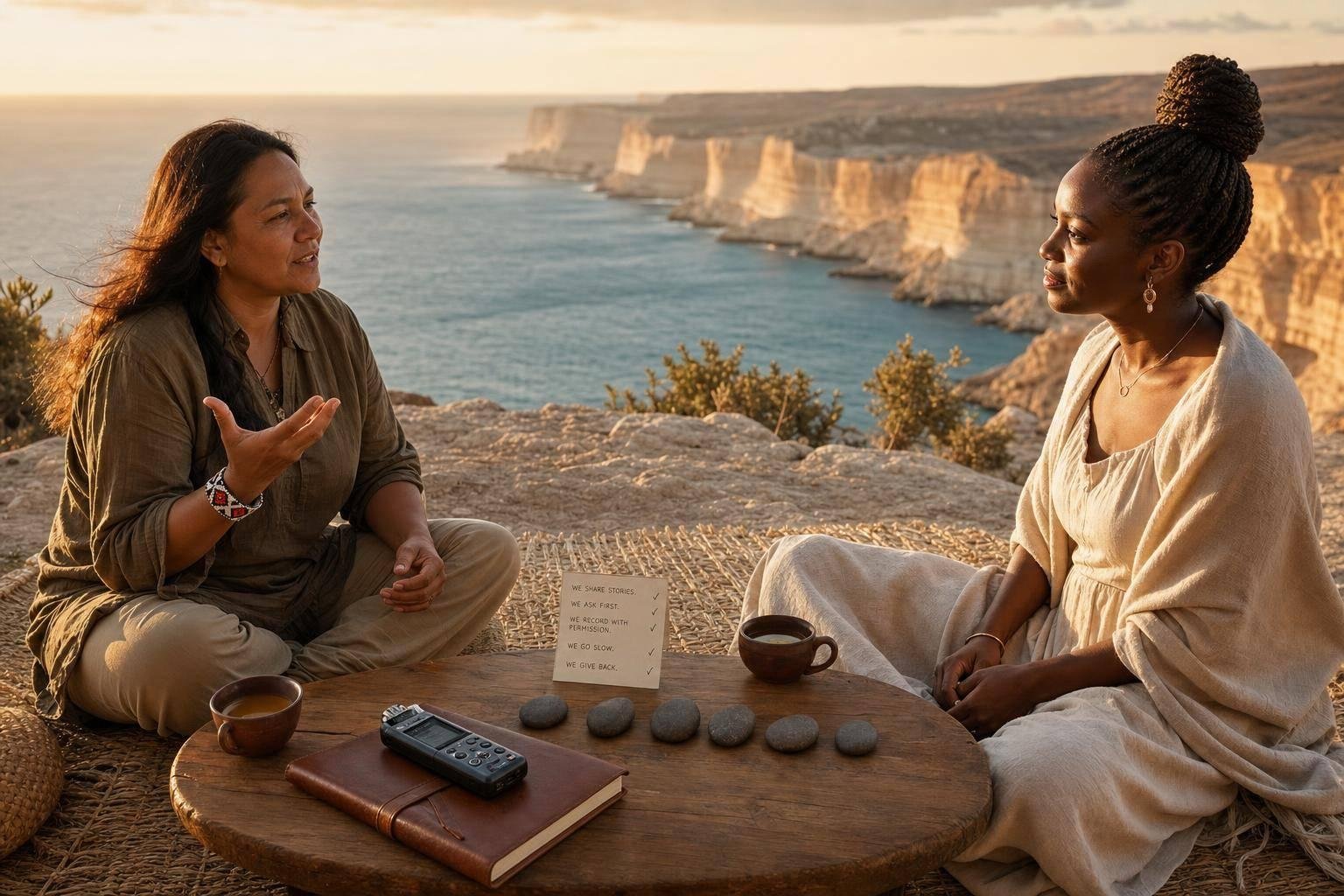
If a trip is not led and approved by the Indigenous community, I would not treat it as an oral-history trip. That is the main filter in this article.
Here’s the short version: before I book anything, I confirm who approved the visit, what can be shared, whether photos or audio are allowed, how small the group is, and what happens if access changes due to weather, ceremony, or local direction. The article then sorts travel into five models: honeymoon, solo women’s journey, family legacy trip, milestone trip, and solo reflection.
In plain terms, the piece says oral-history travel is less about seeing more places and more about slowing down, listening, and following rules set before arrival.
- 5 trip models are covered
- 3 booking checks come first: authority, visitor rules, and travel logistics as part of our bespoke planning services
- 100% of access should depend on community approval, not a tour label
- 0 recording should be assumed allowed unless permission is given ahead of time
Native American Oral Storytelling & History | Seth Fairchild | TEDxSMU
sbb-itb-6675d37
Quick Comparison
| Trip Model | Best For | Pace | Main Need |
|---|---|---|---|
| Honeymoon | Couples | Slow | Privacy and quiet logistics |
| Solo women’s journey | Solo women | Flexible | Women-led guidance and safety |
| Family legacy trip | Families with kids and elders | Mixed pace | Rest breaks and age-fit storytelling |
| Milestone trip | Private groups | Measured | Clear rules and guest coordination |
| Solo reflection | One traveler | Open and slow | Space, privacy, and time alone |
My takeaway: this is not a sightseeing guide. It is a guide to booking with care, asking direct questions, and making sure the community stays in control of the visit.
How to Travel for Oral Histories
Not every trip sold as “cultural” is led by the people whose stories are being told. That distinction matters. Indigenous-led storytelling means the community, or a recognized cultural authority within it, decides what can be shared, who shares it, and the conditions around it. If that authority isn’t there, the trip isn’t Indigenous-led. Use that standard before you even look at the itinerary.
How to Confirm Indigenous Leadership and Community Approval
Ask who built the program. A community-led experience should name the cultural authority involved, whether that’s a Knowledge Keeper, Elder, or another recognized leader who helped shape the itinerary. You should also be able to find out who approved the program and how the community receives direct benefit from it.
If the operator gets vague, that’s a red flag. If they can’t explain those points clearly, don’t book.
Access Limits Travelers Should Expect
Travel centered on oral histories often comes with limits, and that’s part of doing it right. Some stories can only be shared during certain seasons. Some knowledge is gender-specific. Sacred places may be closed entirely, or access may depend on community protocol.
Rules around recording and photography can be strict too, so check before you commit. These aren’t minor details or last-minute hurdles. They shape the trip itself.
Questions to Ask Before Committing to an Itinerary
Before you say yes, confirm:
- cultural authority
- direct community benefit
- photography and recording rules
- backup plans for closed sites or ceremonies
- maximum group size
These checks help you decide whether any of the five trip models below is a fit.
Planning Principles for a Respectful Private Itinerary
All five trip models begin in the same place: the community leads, and travel plans come second. That idea shapes everything that follows.
Community Authority and Decision-Making
The community, family, Elder, or Knowledge Keeper decides what may be shared, where visitors may go, and how the visit is set up. Tribal lands should be treated as sovereign territory. Don’t assume public access, and don’t assume an operator has permission to bring guests.
Always confirm access through official tribal or community channels, not through a booking confirmation alone. And only book when the decision-maker is clearly identified in writing and the community’s benefit is spelled out there too.
Permissions, Protocol, and Visitor Conduct
Each traveler should get a written protocol brief before departure. Not a broad etiquette sheet, but a place-specific guide that covers greetings, forms of address, dress, gifts, alcohol, conduct around Elders, restricted areas, and photography rules.
As a rule, treat all documentation as off-limits unless written permission is given. Being present does not grant permission to take photos, record audio, film video, publish material, or post online.
Gifts follow the same logic. Ask ahead of time if a gift is welcome, what form it should take, and whether a direct honorarium or a contribution to the community is preferred instead. Never make up a gift plan on the spot or offer a gift as casual payment for a story. Those rules shape how each private itinerary can move forward.
Pacing, Group Size, and Private Logistics
Smaller groups and slower pacing help protect the quality of the exchange. Talk through visitor numbers and guide-to-guest ratios directly with community leaders. If needed, keep groups small or split them up so the time together stays meaningful.
One main storytelling session, with room for introductions, pauses, and natural conversation, is often worth more than several rushed stops crammed into one afternoon.
It also helps to build in buffer time before and after every community meeting. Weather can shift. Roads can slow things down. A host may also need to shorten the session or guide it in a different direction.
A private travel planner such as Jo Vacations can manage transfers, permits, and 24/7 support, while the host community keeps full control of the cultural visit. That same slower, more respectful pace should guide the stay as well.
Choosing Accommodations That Fit Comfort and Place
The right accommodation should offer comfort, privacy, and a good fit with place. A remote luxury property may sound appealing, but it’s a poor choice if it leads to draining transfers before every community visit or if its marketing presents local culture in a false way.
Good options may include:
- Indigenous-owned lodges
- Locally run boutique hotels
- Private villas
- Quiet retreats located near, but not inside or pressing on, the community
Before booking, confirm drive times, road conditions, water and power limits, whether remote sites need high-clearance vehicles, and whether the property hires local staff and sources food locally. For multigenerational groups, accessibility isn’t optional. The stay should give travelers space to rest and reflect, without turning the host community into a constant backdrop.
1. Honeymoon Through Ancestral Landscapes
For a honeymoon, these details matter even more. Privacy and pace can shape the whole trip, especially when the journey centers on Indigenous oral histories. This kind of itinerary works best when privacy, discretion, and community-led access guide each part of the plan.
Community-Led Storytelling Authority
Make sure the story session is led by community-authorized Knowledge Keepers or guides. Any access that has community approval should also be clearly approved by the host community.
After the host community approves the visit, the next step is simple: confirm exactly what can be shared, and when.
Protocol and Permission Requirements
Protected or sacred sites often come with site-specific rules. Travelers should check permits, seasonal access requirements, and any entry documents tied to the route well ahead of time. Trips on ancestral lands can also shift based on local input or weather, so flexibility matters.
Trip Pace and Private Logistics
Private transfers, flexible start times, and buffer time help keep the trip calm and unhurried. Jo Vacations can coordinate private transfers, permits, and concierge support, so the couple can stay focused on the experience instead of the planning.
Accommodation Fit
Indigenous-owned lodges, boutique beachfront stays, or private villas can work well here, especially when they protect privacy and cut down on transit time. A quiet stay in the right location gives the couple space to rest and reflect, without making the host community feel like a constant backdrop.
That same privacy-first setup can also work well for solo travelers, especially women traveling with women storykeepers.
2. Solo Women’s Journey With Women Storykeepers
This model brings the same community-led standards into a solo trip, with extra care around safety, privacy, and women-led guidance.
Community-Led Storytelling Authority
For solo women, the strongest setup pairs women Knowledge Keepers or storytellers with female guides. Before you book, make sure the women leading your sessions hold recognized community authority. Ask who approved the storyteller and how that approval was checked. Don’t leave this vague. Use direct pre-trip communication with the travel designer and destination partner to get clear answers before the trip starts.
Once the guide is confirmed, the next step is simple: settle what can be shared or recorded.
Protocol and Permission Requirements
Women-centered storytelling sessions may come with specific rules for photography, audio, video, and photos. Some knowledge is restricted or sacred, so you need to confirm what can and cannot be recorded before you travel. That clarity matters. It helps you show respect and avoids awkward moments on site.
After permissions are set, the itinerary should slow down to fit the pace of the conversation. These sessions aren’t something to squeeze between other activities. Ask how the visit supports the local community and who will be involved on site.
Trip Pace and Privacy Needs
Leave room for flexible start times and unhurried gaps between sessions so the day can follow the conversation, not the clock. That kind of breathing room makes a big difference. If a session runs long, or if you want quiet time afterward, the plan should already allow for that.
Private itineraries can shift based on how a session unfolds, which gives solo travelers more ease and more privacy throughout the day.
Accommodation and Private Logistics Fit
That same privacy-first approach should carry through to transfers, driver support, and where you stay. Private logistics aren’t just a nice extra. They’re part of the experience.
Private airport transfers, a dedicated driver-guide, and 24/7 concierge support can keep the trip calm and private, so your attention stays on the journey instead of the moving parts. Accommodation should also put safety and single-occupancy privacy first, whether that means a boutique hotel, a luxury resort, or a private villa.
3. Family Legacy and Intergenerational Story Journey
This model is built for multigenerational groups – grandparents, parents, and children – who want to spend time with ancestral stories together. The point isn’t sightseeing. It’s shared understanding across generations.
Community-Led Storytelling Authority
On a family itinerary, oral history needs to hold the attention of more than one generation at the same time. The storytelling should land with elders and still make sense to children. That means choosing community-approved storytellers and guided visit leaders who can speak to both.
Ceremonies and gatherings should be treated as community-led events, not scheduled performances.
Once guides are confirmed, get clear on what the family may see, hear, photograph, or record.
Protocol and Permission Requirements
Families should approach every ceremony and gathering with care and discretion. Confirm ahead of time whether photography, audio, or video is allowed. It also helps to build quiet time into major heritage visits so everyone has space to reflect together.
Trip Pace and Privacy Needs
Multigenerational groups rarely move at one speed. Elders may need rest breaks. Children need ways to stay engaged without getting overstimulated. A private itinerary gives the family room to set its own rhythm instead of following a fixed group schedule.
Add buffer time for delays and rest. That slower pace should also shape where the family returns between visits.
Accommodation and Private Logistics Fit
A private villa or boutique resort can work well as a calm family base. Private transfers help keep the group together in transit. A shared base also gives each family member room to rest and process meaningful experiences together.
4. Milestone Celebration on Country
Milestone trips need the same community-led rules as the other models, with extra care around celebration, pacing, and guest comfort. This kind of trip works best as a private, community-led journey shaped by local protocol, pace, and place. It should center on custom logistics, chosen stays, and a slower rhythm. The goal is to protect the occasion without turning the host community into a backdrop.
Community-Led Storytelling Authority
The first call is simple: who gets to shape the story? Community-approved guides should lead the visit and decide what is shared. Community input should also determine which stories belong in the itinerary.
Protocol and Permission Requirements
Check early whether each experience is open to outside guests and under what conditions. Milestone celebrations can overlap with cultural ceremony, so that line matters. Confirm permits, recording rules, and site access before anything is booked.
Once access is confirmed, the itinerary should slow down to match the occasion.
Trip Pace and Privacy Needs
Keep the pace slow enough for reflection and rest. Milestone groups often include guests with different physical needs, so it helps to leave buffer time in the schedule. That space also makes room for local guidance, weather shifts, or safety changes without throwing the whole trip off course.
That same slower rhythm should carry through to where the group stays and how it gets around.
Accommodation and Private Logistics Fit
A boutique hotel, private villa, or luxury resort can suit the need for comfort and privacy. Private transfers help keep the itinerary smooth from arrival to departure, while also protecting the integrity of each community visit, not just the group’s convenience. Jo Vacations can manage transfers, timing, and concierge support so guests can stay focused on the celebration.
5. Solo Reflection and Personal Reconnection
For travelers who want the quietest version of this trip, the story still comes first. The difference is that the schedule loosens up. This setup fits people who want stillness, not a packed calendar. It leans on slow travel, private logistics, and a guide approved by the community.
Community-Led Storytelling Authority
Even on a solo reflection trip, guide selection matters a lot. The guide should be approved by the community and named in writing before departure. Travelers can also ask for a specific guide, subject to availability.
Protocol and Permission Requirements
Solo travelers should plan for access limits, and recording rules are not flexible. It’s smart to confirm passports, visas, permits, and certificates before departure. Some wiggle room also helps, since itineraries may shift due to weather, local events, or local input.
Trip Pace and Privacy Needs
A solo reflection trip should move at an easy pace, with flexible start times and space for quiet pauses. Buffer time matters even more here because some conversations will naturally go longer than planned. Privacy isn’t just a comfort perk. It lowers pressure on hosts and makes deeper listening more likely.
Accommodation and Private Logistics Fit
High-end luxury resorts and charming boutique hotels can both fit well when they offer comfort, privacy, and a setting that feels rooted in place. Private transfers and 24/7 support make movement smooth and take logistics off the traveler’s plate. Jo Vacations can coordinate these details from start to finish.
These standards set the baseline for comparing the five trip models below.
Comparison Table
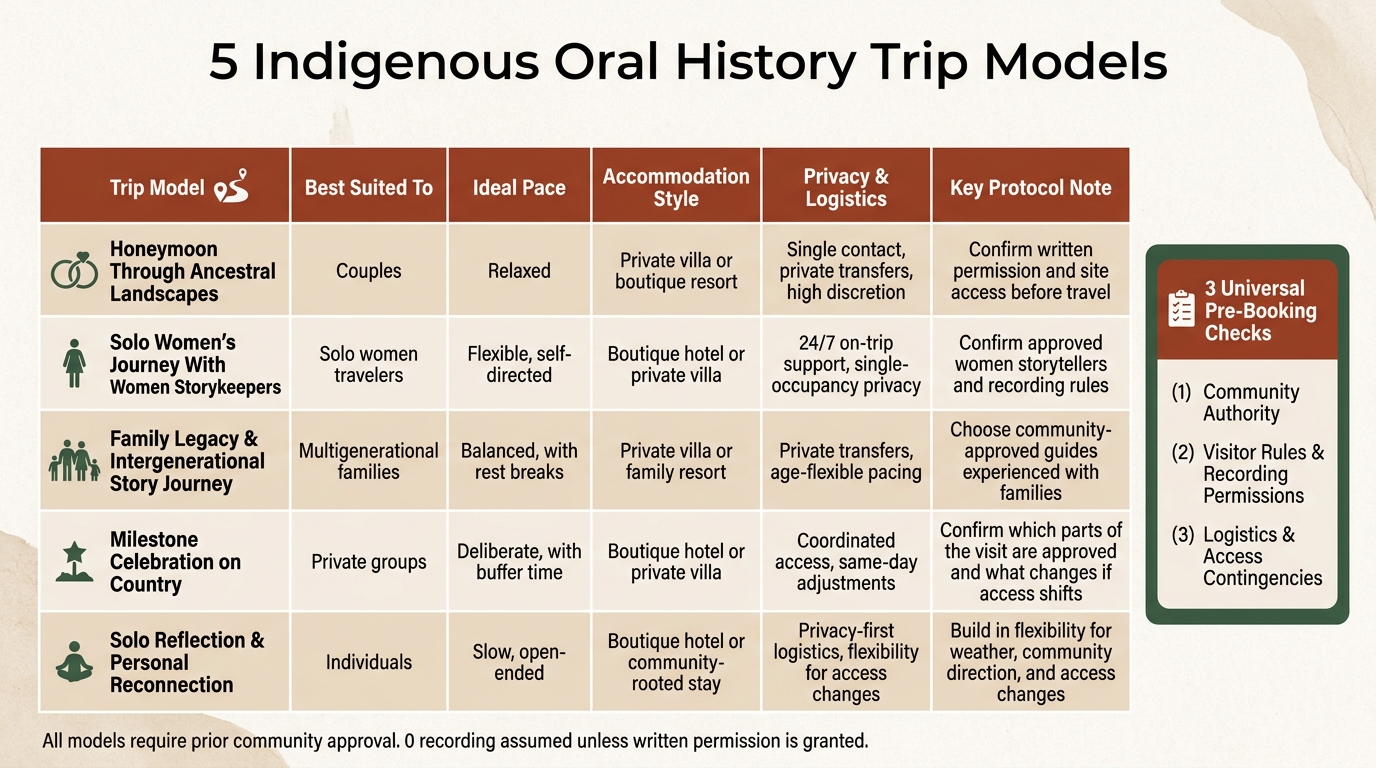
5 Indigenous Oral History Trip Models: Quick Comparison Guide
Use this table to compare the five models by pace, setting, privacy, and protocol. For more travel inspiration, explore The Wanderer’s Guide for your next trip.
| Trip Model | Best Suited To | Ideal Trip Pace | Suggested Accommodation Style | Signature Oral-History Setting | Privacy & Logistics Needs | Primary Protocol Consideration |
|---|---|---|---|---|---|---|
| Honeymoon Through Ancestral Landscapes | Couples | Relaxed | Private villa or boutique resort | Community-led story sessions at approved sites | Single point of contact, private transfers, high discretion | Confirm written permission and site access before travel. |
| Solo Women’s Journey With Women Storykeepers | Solo women travelers | Flexible, self-directed | Boutique hotel or private villa | Private sessions with approved women storytellers | One trip contact, 24/7 on-trip support, single-occupancy privacy | Confirm the approved women storytellers, recording rules, and direct contact chain. |
| Family Legacy and Intergenerational Story Journey | Multigenerational families | Balanced, with rest breaks | Private villa or family resort | Family story gatherings and guided site visits | Private transfers and pacing that work for all ages | Choose community-approved guides experienced with family groups. |
| Milestone Celebration on Country | Private groups | Deliberate, with buffer time | Boutique hotel or private villa | Approved site visits and community-led story sessions | Coordinated access and same-day adjustments subject to community approval | Confirm which parts of the visit are approved, and what changes if access shifts. |
| Solo Reflection and Personal Reconnection | Individuals | Slow, open-ended | Boutique hotel or community-rooted stay | Guided walks and approved story sessions | Privacy-first logistics, buffer time, flexibility for access changes | Build in flexibility for weather, community direction, and access changes. |
Use the comparison to narrow down the best fit, then verify approvals, recording rules, and logistics before booking.
What to Confirm Before Booking an Oral-History Journey
Use this checklist before you pay a deposit on any oral-history journey. Before you book, make sure three things are clear: who has authority over the experience, what rules apply to you as a visitor, and whether the logistics make sense in actual travel conditions. Those checks help protect community authority, visitor behavior, and whether the itinerary can work for every model covered in this article.
Leadership, Approvals, and Community Benefit
First, confirm who approved the itinerary and whether that approval is documented. The Indigenous nation or community authority should approve the sites, storytellers, and content in writing. That matters because a guide with broad cultural knowledge is not the same as a guide who has direct permission to share specific oral histories.
It also helps to ask for the name of the Indigenous-led organization or community group behind the experience. Then confirm where your money goes. Your spending should support local guides, drivers, and community-led cultural experiences.
Naming, Restricted Knowledge, and Recording Rules
Use the proper nation names and Indigenous place names. It’s a small step, but it shows respect.
You should also ask what’s allowed when it comes to photography, audio, and video at each stop. Rules can change from one nation, site, or storyteller to another, so don’t assume one answer covers the whole trip.
Transport, Accessibility, Weather, and Emergency Planning
Bring up mobility needs during the planning stage, not when you arrive. That gives the operator time to explain what’s possible and how each stop will work.
Confirm that private airport and port transfers, along with all scheduled ground transfers, are included. If any site needs special transport, ask exactly how that access will be handled.
Weather and local conditions can shift plans fast, so ask which parts of the itinerary depend on weather and what the backup plan is. For emergencies, verify that 24/7 support is available through a direct communication channel. Your travel insurance should also cover illness, injury, medical emergencies, and itinerary activities.
With those points checked, you’re ready to review the final booking terms.
Conclusion
The trips that matter most are shaped by respect, not access. Indigenous oral-history travel should begin with community authority, patience, and careful respect for local protocol. Start there, and picking the right trip style gets much simpler.
Choose the model that matches the moment and the level of privacy, pace, and structure it calls for. That might mean intimacy for honeymoons, milestone trips, and everything in between, flexibility for families, or quiet for solo reflection.
Once the model fits the occasion, the logistics should fade into the background. Good planning keeps transfers, stays, and backup plans smooth, so the community stays in control of the story.
Jo Vacations designs bespoke oral-history itineraries with handpicked stays, private transfers, and on-trip concierge support.
FAQs
How do I verify community approval?
Lean on your travel planner and local guides to make sure your plans are respectful and welcomed. Jo Vacations works with local specialists and property staff who know the region and understand local expectations.
It also helps to choose accommodations with strong community programs and licensed local guides. They can share useful context on local customs and etiquette, and their on-the-ground support is available 24/7.
What if access changes at the last minute?
If access changes at the last minute, Jo Vacations will use its 24/7 concierge support to help adjust your itinerary and keep your trip on track.
That said, not every last-minute change can be worked around. In some cases, final reservations may mean you miss certain experiences, and refunds won’t be issued for schedule changes made in your best interest.
Which trip model fits my travel style?
Consider your main goal and who you’re traveling with. Jo Vacations builds bespoke, start-to-finish itineraries shaped around your schedule, pace, and interests.
For honeymoons or anniversaries, that can mean private, romantic escapes. For families or multi-generational groups, it means flexible plans and smooth logistics. For solo travelers, especially women, it means tailored trips with a strong focus on safety and immersive experiences.