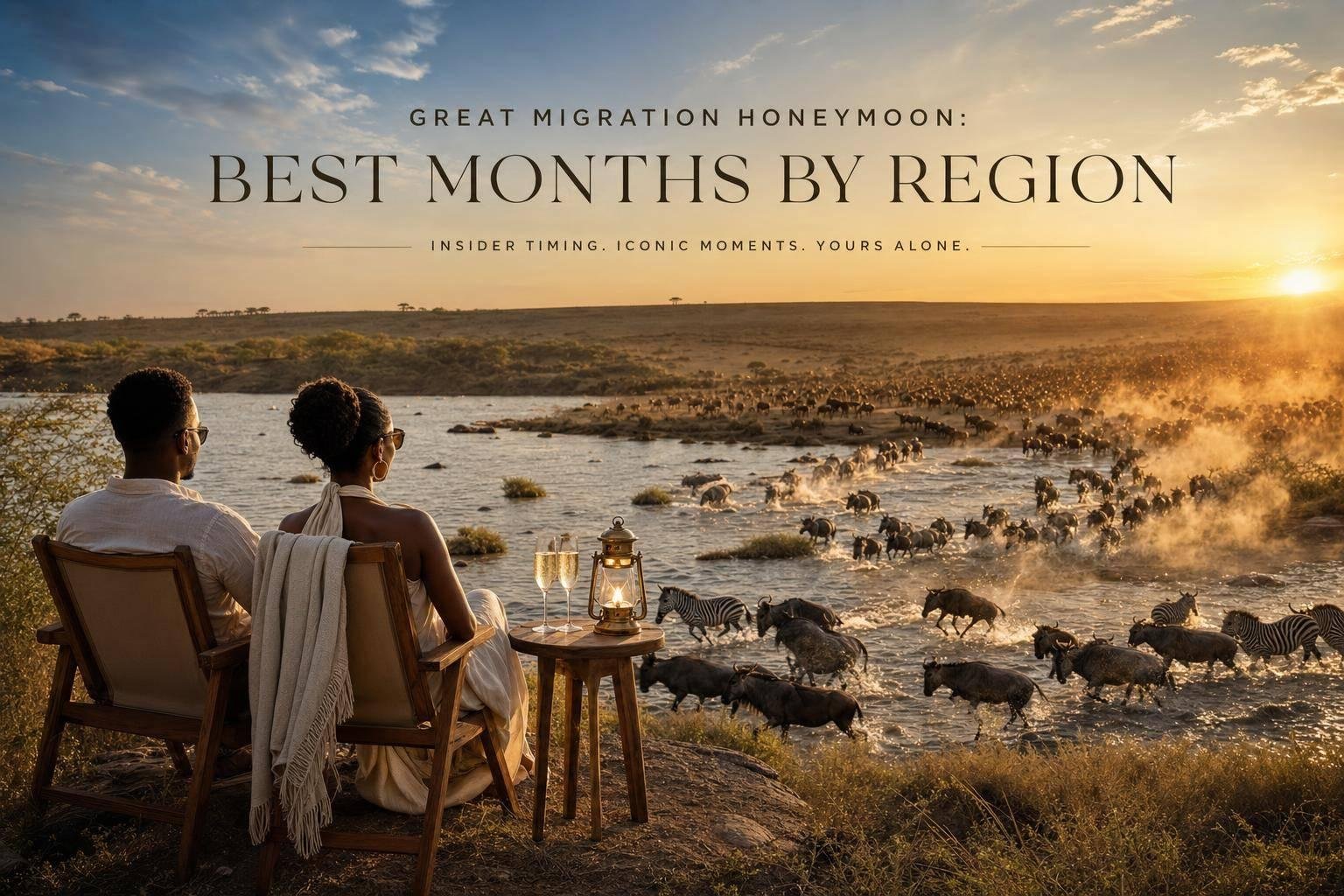
Kenya and Tanzania offer some of the best wildlife photography experiences in the world, featuring iconic locations like the Masai Mara, Serengeti, and Ngorongoro Crater. With options tailored for all skill levels, these tours focus on small groups, expert guides, and specialized vehicles to maximize photo opportunities. Key highlights include:
- Great Wildebeest Migration (July–October): A must-see event across the Masai Mara and Serengeti.
- Year-Round Wildlife: Big cats, elephants, rhinos, and over 1,000 bird species.
- Tailored Experiences: From private safaris to expert-led group tours.
- Best Seasons: Dry season (June–October) for clear views or wet season (November–May) for lush landscapes and dramatic skies.
Whether you’re a beginner or a seasoned photographer, these tours provide everything you need to capture East Africa’s breathtaking wildlife and landscapes.
Quick Comparison
| Tour Operator | Max Group Size | Key Locations | Focus | Price Range |
|---|---|---|---|---|
| Untamed Photo Safaris | 4–8 | Kenya & Tanzania parks | General wildlife | Custom pricing |
| Wild Eye | Small groups | Masai Mara | Big cats, Great Migration | $5,850–$7,850 |
| WILD4 Photo Safaris | 3 per vehicle | Masai Mara, Samburu | Diverse ecosystems | Custom pricing |
| Vulture Africa Safaris | Private/custom | Kenya & Tanzania | Flexible, client-led focus | Varies by itinerary |
| ORYX Photo Tours | 4–8 | Masai Mara & Serengeti | Technical photography skills | $2,375–$28,000 |
| Jo Vacations | Private/custom | Kenya & Tanzania | Fully personalized trips | Custom pricing |
| Nature’s Lens | Max 12 (4/vehicle) | Serengeti & Amboseli | Big cats, elephants, migration | Custom pricing |
Each operator offers unique features, so choosing the right one depends on your photography goals, preferred locations, and budget.
Serengeti – A Wildlife Photographer’s Guide
Kenya and Tanzania Photo Safari Basics
Kenya and Tanzania are home to a stunning range of ecosystems – from sprawling savannahs to volcanic craters and acacia woodlands – all teeming with wildlife. These landscapes offer photographers the chance to capture unforgettable moments: elephants silhouetted against Mount Kilimanjaro, lions prowling the Serengeti plains, or vibrant flocks of flamingos at Lake Nakuru.
Each park in these regions has its own photographic charm. The Masai Mara is famous for thrilling big cat encounters and the dramatic river crossings of the Great Migration. The Ngorongoro Crater stands out for its dense, self-contained ecosystem, where early morning drives can reveal mist-covered crater floors and even rare black rhinos. Tarangire National Park, on the other hand, is known for its iconic baobab trees and large elephant herds gathering near the Tarangire River during the dry season, creating striking compositions for photographers.
| Park | Country | Best Months | Key Photography Subjects |
|---|---|---|---|
| Masai Mara | Kenya | July – October | Great Migration, big cats, river crossings |
| Serengeti | Tanzania | Year-round | Predators, open plains, kopje landscapes |
| Amboseli | Kenya | June – Oct, Jan – Feb | Elephant herds, Mt. Kilimanjaro backdrop |
| Ngorongoro Crater | Tanzania | Early morning visits | Black rhino, flamingos, misty crater shots |
| Tarangire | Tanzania | Dry season | Elephants among baobabs, river wildlife |
| Lake Nakuru | Kenya | January – March | Flamingos, rhinos, Palearctic migratory birds |
Timing plays a crucial role in capturing the best images. The dry season (June–October) offers clear views, with animals gathering near water sources and vegetation thinning out. On the other hand, the wet season (November–May) brings lush greenery, dramatic skies lit by storms, and the charm of newborn animals. Both seasons provide distinct opportunities for breathtaking shots.
What truly elevates a photography safari is the guide. A skilled guide does more than spot wildlife – they understand animal behavior, anticipate movement, and position the vehicle for the best lighting and angles. They know when to hold a sighting just a bit longer, waiting for that perfect moment, like a cheetah’s poised glance or a herd stepping into golden light. These elements are what turn an ordinary safari into a photographer’s dream adventure, setting the stage for a deeper look into the top photography tours in Kenya and Tanzania.
1. Untamed Photo Safaris: Small-Group East Africa Tours
Untamed Photo Safaris specializes in the Northern Tanzania Safari Circuit, offering access to some of East Africa’s most picturesque parks. These include Tarangire National Park, Serengeti National Park (with highlights like the Central Plains, Moru Kopjes, and Simba Kopjes), Ngorongoro Crater, and Lake Eyasi. Each location delivers unique photo opportunities, from elephants silhouetted by baobab trees in Tarangire to leopards moving through Serengeti’s riverine forests. There’s even the chance to photograph the rare black rhino within the Ngorongoro Crater.
What makes this operator stand out is its emphasis on small group sizes, creating a more personal and focused experience during the safari.
Adding to the appeal, expert photography hosts provide hands-on guidance throughout the journey to help participants refine their skills. Many guides come with impressive credentials, such as the KPSGA Bronze Medal, reflecting their dedication to top-tier standards. These insights ensure that participants capture technically precise and creatively compelling shots.
Whether you’re pursuing the drama of the Great Migration or looking to elevate your craft, the blend of expert instruction and intimate group settings makes Untamed Photo Safaris perfect for capturing East Africa’s iconic wildlife moments.
2. Wild Eye: Expert-Guided Photography Safaris in the Masai Mara
Wild Eye offers expert-guided photography safaris in Kenya’s Mara Triangle, a wildlife-rich area within the Masai Mara ecosystem. These tours, lasting six nights (Sunday to Saturday), give photographers plenty of time to adjust and take advantage of the best lighting conditions for their shots. This week-long adventure is packed with experiences that cater to both amateur and seasoned photographers.
One of the standout features is the Enkishui Campground, which sits along a river. This prime location attracts wildlife – hippos, for instance, are known to wander within just a few meters of the camp. Guests often mention hearing the grunts and splashes of hippos right from their tents, creating spontaneous and thrilling photo opportunities.
"If you plan to visit the Mara Triangle then Wild-Eye is the only way to go period. Best location with very comfortable and well supported tented camp which blends into the bush and is at one with the wildlife that is all around you." – Martin Botha
Daily excursions into the field last 8–10 hours, guided by local wildlife experts and photography specialists. These guides provide valuable tips on tracking animals, perfecting techniques, and working with natural light. Birding enthusiasts will also appreciate the inclusion of birding guides, who help photographers discover and capture a wider variety of subjects.
Pricing for these safaris varies depending on the experience. The Great Migration Safari is priced at $7,850 per person, while the Masai Mara Experience Safari costs $5,850 per person. Both packages include internal flights from Nairobi, transfers, meals, drinks, and photography instruction.
3. WILD4 Photo Safaris: Multi-Park Kenya Routes
Since 2003, WILD4 African Photographic Safaris has focused on one simple but powerful idea: fewer photographers per vehicle equals better opportunities for everyone. Their Kenya tours combine two strikingly different ecosystems – the lush Masai Mara and the arid Samburu National Reserve, home to rare wildlife – offering an experience that captures Kenya’s rich diversity across popular destinations.
What makes WILD4 stand out is their thoughtfully designed vehicles. Each custom 4×4 accommodates just three photographers, with dual-sided platforms for telephoto lenses and plenty of storage for camera gear. These tours are led by founder Stu Porter, who brings over 25 years of bush expertise, or skilled local guides like Mamai, ensuring the perfect vehicle positioning for the best lighting and angles.
"The vehicle takes just three photographers and features platforms to steady big lenses on both sides of the vehicle and loads of storage space and pockets for lenses, bodies, accessories… I cannot imagine a better platform for photography in the bush." – George Cathcart, USA
WILD4’s approach is all about precision. Instead of broad lessons, their guides offer real-time coaching, tailored to the terrain and wildlife, helping photographers refine both technical and creative skills.
"Mamai ensured that the jeep stopped at the exact place where I could get the best photographs… ensuring that proper lighting due to strategic location for best photography was there." – Madhumita Bishnu, India
For experienced photographers or those with specific goals, WILD4 offers even more flexibility. Their custom itineraries, which can last up to 14 days, are designed to match individual needs and aspirations. WILD4 exemplifies the concept of small-group, expertly guided safaris, creating a truly immersive experience for photography enthusiasts.
4. Vulture Africa Safaris: Custom Kenya and Tanzania Photo Itineraries
Since 2018, Vulture Africa Safaris has been crafting personalized photographic itineraries for travelers with a passion for wildlife photography. Whether you’re chasing the drama of the Great Migration, snapping elephants framed by Mt. Kilimanjaro in Amboseli, or seeking out rare species in Samburu and Serengeti, their trips are tailored to your specific interests.
What makes them a standout choice for photographers is their private safari model. With small, exclusive groups, you have complete control over your schedule. Want to linger at a leopard sighting for the perfect shot? That’s entirely up to you. Their expert guides understand that great wildlife photography requires both patience and strategic positioning, ensuring you’re in the right place at the right time. This level of personalization transforms each trip into an unforgettable photographic adventure.
"We specialize in bespoke safari experiences, offering a range of meticulously designed packages to suit every traveler." – African Vulture Safaris
For an added thrill, Vulture Africa also offers hot-air balloon safaris, giving photographers breathtaking aerial views of the Serengeti and Masai Mara plains. They handle all the logistics, from cross-border transfers to private air and ground transportation, and provide 24/7 support for any last-minute changes – leaving you free to focus on capturing those once-in-a-lifetime moments.
Vulture Africa Safaris’ reputation is backed by accolades like the Travelers’ Choice Awards 2025 and glowing reviews on platforms like Google, TripAdvisor, and Trustpilot. They cater to a range of budgets, offering options from mid-range to luxury safaris, all supported by a Best Price Guarantee. This flexibility ensures that photographers of all levels can enjoy a trip tailored to their needs.
5. ORYX Photo Tours: Masai Mara and Regional Wildlife Focus
ORYX Photo Tours has been offering unforgettable East African photographic adventures for over 16 years, thanks to founders Marius Coetzee and Adam Riley. Their Masai Mara tours are more than just a chance to see wildlife up close – they’re an opportunity to understand animal behavior and capture stunning images. Every trip is designed to blend wildlife encounters with hands-on photography guidance.
What makes ORYX stand out is the emphasis on technical skills. Photo leaders dive into everything from camera settings and lens choices to advanced techniques like the rule of thirds, motion panning, and photographing birds in flight. To top it off, each trip includes personalized critique sessions, where you’ll get tailored feedback to refine your skills.
Group sizes are intentionally kept small to ensure individual attention. Here’s how the tours are structured:
- Classic Tours: Host 6–8 participants and focus on prime locations with plenty of one-on-one guidance.
- Signature Tours: Limited to 4 or fewer guests, these tours combine exclusive access to top sites with luxurious accommodations.
- Private Tours: Fully customized to your interests, these offer a bespoke experience tailored just for you.
| Tour Type | Group Size | Key Benefit |
|---|---|---|
| Classic | 6–8 participants | Prime locations and high individual attention |
| Signature | 4 or fewer | Exclusive sites with luxury stays |
| Private | Custom | Bespoke itinerary tailored to your goals |
Prices vary widely, ranging from affordable options to as much as $28,000, depending on the tour type and length.
"The ORYX way is to make sure both these versions [memories and digital pixels] are as exceptional as possible, and we pride ourselves on our dynamism, adaptability and relentless desire to deliver a world-class photographic and holiday experience to our guests."
- Marius Coetzee and Adam Riley, Founders, ORYX Photo Tours
sbb-itb-6675d37
6. Jo Vacations: Bespoke Photography Safaris in Kenya and Tanzania
For photographers looking to step away from group tours and embrace a fully personalized adventure, Jo Vacations offers a custom-tailored option. This travel agency specializes in creating itineraries designed around your specific photography goals. Whether you’re aiming to capture the dramatic Great Migration in Tanzania’s northern Serengeti, follow big cats through Kenya’s Mara Naboisho Conservancy, or explore the wildlife-rich landscapes of Tanzania’s Ruaha National Park, Jo Vacations ensures your trip is built entirely around your vision.
From private airport transfers to luxury accommodations, Jo Vacations takes care of all the details, giving you the freedom to focus on your craft. The flexibility of these private safaris means you can adjust your schedule to chase perfect lighting or seize unexpected wildlife moments.
Jo Vacations provides in-depth coverage of East Africa’s most iconic regions. In Kenya, itineraries often center on the Greater Masai Mara ecosystem, including the celebrated Mara Naboisho Conservancy. In Tanzania, options extend to the Serengeti and Ruaha National Park, offering diverse and breathtaking wildlife encounters. With 24/7 concierge support, you can make real-time changes to your plans, ensuring you never miss a shot.
It’s important to note that while Jo Vacations handles the logistics and planning, they don’t provide photography coaching. If you’re looking for technical guidance, consider pairing your trip with a personal photography mentor. For seasoned photographers who want a seamless, highly customized East African experience, Jo Vacations delivers an unparalleled opportunity to immerse yourself in the region’s natural beauty.
7. Nature’s Lens: Serengeti and Amboseli Photography Adventures
Nature’s Lens continues to offer intimate, expertly crafted photography tours in two of East Africa’s most celebrated parks: the Serengeti and Amboseli. These tours are designed for small, focused groups, with a strict limit of 12 guests overall and no more than 4 per vehicle. This setup ensures everyone has prime shooting positions and fewer distractions. For an even more exclusive experience, private tours accommodate 1–6 guests. This personalized approach allows photographers to fully immerse themselves in the stunning landscapes and wildlife of Amboseli and the Serengeti.
The tours are led by award-winning wildlife photographers who bring a wealth of expertise in animal behavior and photography techniques. Their hands-on guidance helps participants sharpen both their technical skills and creative vision.
Amboseli National Park offers a breathtaking variety of scenery, from golden grasslands to shimmering wetlands and arid lakebeds. The park is renowned for its "super tuskers" – elephants with impressively large ivory tusks – all set against the iconic backdrop of Mount Kilimanjaro’s snow-capped peak.
In the Serengeti, photographers are treated to sweeping savannahs and dramatic wildlife encounters. The Great Migration is a major highlight, and the park’s unique granite kopjes, such as Moru and Simba, provide incredible opportunities to photograph lions and leopards in their natural environment. Outfitted 4×4 vehicles with swivel seats and bean bags ensure a stable and comfortable shooting experience.
Together, Amboseli and the Serengeti offer an unmatched combination of diverse landscapes, extraordinary wildlife, and expert guidance, solidifying Nature’s Lens as a leading name in East African photography tours. For more travel inspiration, explore our Wanderer’s Guide blog.
Tour Comparison Table
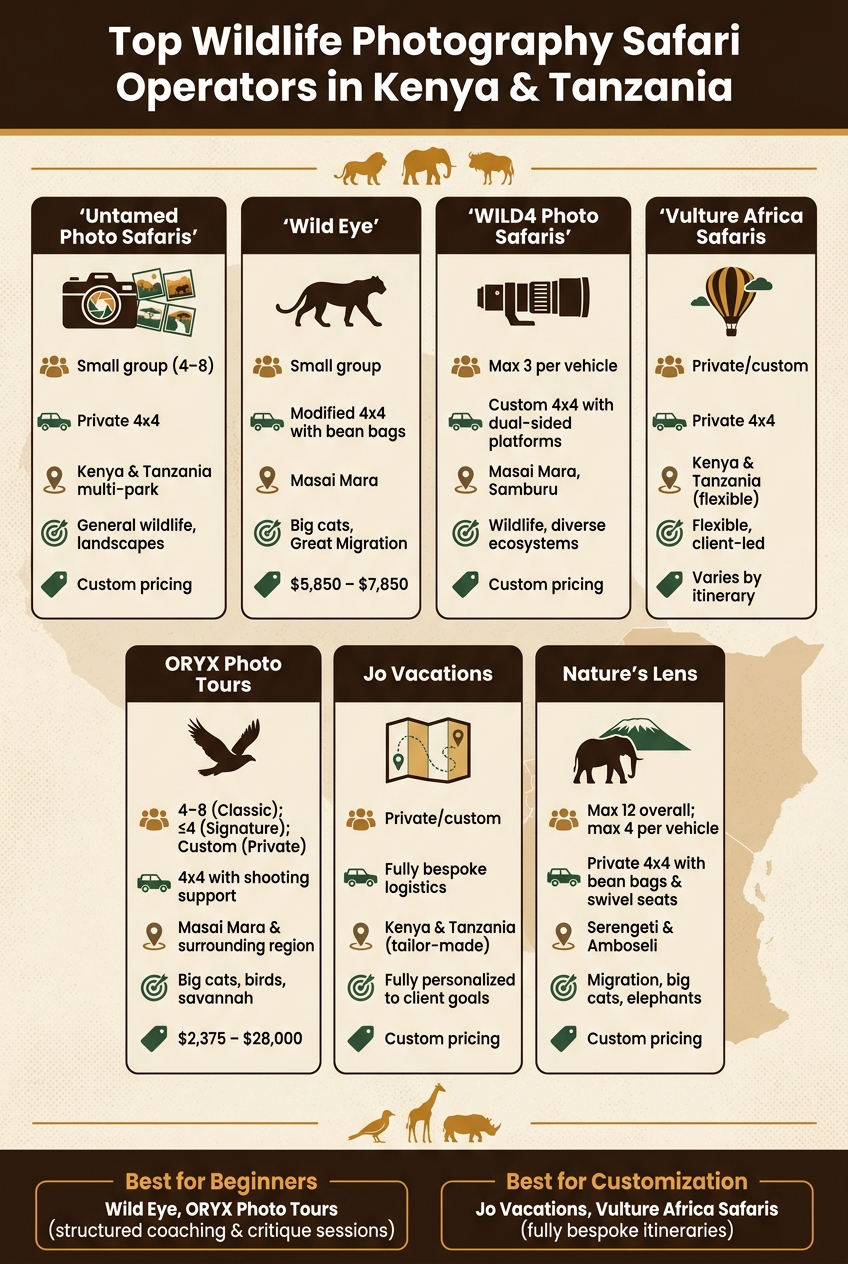
Kenya vs Tanzania Wildlife Photography Tours: Top Operators Compared
The table below breaks down the main differences across seven safari tour operators, giving you a quick way to compare group sizes, vehicle setups, guide expertise, and more.
| Tour Operator | Max Group Size | Vehicle Setup | Guide Expertise | Key Destinations | Photography Focus |
|---|---|---|---|---|---|
| Untamed Photo Safaris | Small group | Private 4×4 | Wildlife photography specialists | Kenya & Tanzania multi-park | General wildlife, landscapes |
| Wild Eye | Small group | Modified 4×4 with bean bags | Award-winning photographers | Masai Mara | Big cats, Great Migration |
| WILD4 Photo Safaris | Small group | Private 4×4 | Professional photo guides | Multi-park Kenya routes | Wildlife, diverse ecosystems |
| Vulture Africa Safaris | Custom/private | Private 4×4 | Expert local guides | Kenya & Tanzania (custom) | Flexible, client-led focus |
| ORYX Photo Tours | Small group | 4×4 with shooting support | Wildlife photography experts | Masai Mara & surrounding region | Big cats, birds, savannah |
| Jo Vacations | Private/custom | Fully bespoke logistics | Curated expert local guides | Kenya & Tanzania (tailor-made) | Fully personalized to client goals |
| Nature’s Lens | Max 12 overall; 4 per vehicle | Private 4×4 with bean bags | Award-winning wildlife photographers | Serengeti & Amboseli | Migration, big cats, elephants |
This table complements the earlier detailed descriptions, offering a snapshot of what each operator brings to the table.
Some standout features include Nature’s Lens, which limits vehicles to just four photographers for maximum comfort and shooting opportunities. On the other hand, Jo Vacations specializes in fully customized itineraries, ensuring every detail aligns with your goals. Another key distinction lies in guide expertise: operators like Wild Eye and Nature’s Lens feature award-winning photographers who provide hands-on coaching during your trip. Meanwhile, companies like Vulture Africa Safaris focus on flexibility and deep local knowledge, perfect for those who prioritize custom routes over structured lessons.
As Pangolin Photo Safaris explains:
"On a photo safari, you can expect fewer people on a safari vehicle or boat… you will be able to take your time photographing wildlife without feeling like others on the safari vehicle are getting bored." – Pangolin Photo Safaris
Ultimately, the best safari experience depends on your personal photography style and pace. Each operator offers a distinct approach, so choosing the right one comes down to what suits you best.
How to Choose Between Kenya and Tanzania for a Photography Tour
Deciding between Kenya and Tanzania for a photography tour comes down to your priorities – whether it’s specific wildlife, the time you have, or the type of safari experience you’re after. Kenya’s Masai Mara, covering about 583 square miles (1,510 km²), offers a high concentration of wildlife in a relatively small area, making it ideal for those with limited time. On the other hand, Tanzania’s Serengeti, with its sprawling 5,800 square miles (15,000 km²), offers vast landscapes and varied ecosystems, perfect for those looking to immerse themselves in diverse settings. To make the best choice, consider factors like wildlife density, seasonal highlights, and budget.
If witnessing the Great Migration is a priority, timing is crucial. The Masai Mara sees peak river crossings between July and September, while the northern Serengeti experiences this spectacle slightly earlier. For something unique, Tanzania’s southern Serengeti hosts the calving season from January to March, when thousands of wildebeest calves are born in just a few weeks, drawing predators and creating dramatic photo opportunities.
"The calving season (January–March) is a feast for lions and cheetahs, making it the perfect time to capture intense moments of survival." – Paolo Sartori, Wildlife Photographer
For photographers wanting variety in a short timeframe, Tanzania’s Ngorongoro Crater is a standout. This compact ecosystem spans just 102 square miles (264 km²) but is home to over 25,000 animals, including all of the Big Five, set against the dramatic backdrop of crater walls. As travel writer Randi Mann puts it, "If you want to see a lot of wildlife in a short amount of time (three to six hours), Ngorongoro is your best bet".
Kenya’s Masai Mara is a great pick for short trips during the July–October peak season, with its dense wildlife population and predator activity. Meanwhile, Tanzania offers broader options, especially during the calving season (January–March) and migration months (June–October). For example, a 9-day photography safari in Tanzania starts at around $3,617 per person, while a 4-day Serengeti mid-range safari costs approximately $2,375 per person. Traveling during late April or early May, just before the peak season, can help lower costs and avoid crowded sighting spots.
| Factor | Kenya (Masai Mara) | Tanzania (Serengeti / Ngorongoro) |
|---|---|---|
| Best for | River crossings, big cats, short trips | Vast landscapes, calving season, cultural photography |
| Peak season | July – October | January – March (calving); June – October (migration) |
| Wildlife density | High in a compact area | Variable; highest in Ngorongoro Crater |
| Cost Efficiency | Shorter trips more accessible | From ~$2,375 for 4 days |
| Unique draw | Concentrated predator action in the Mara | Ngorongoro Crater, baobab trees, cultural access |
These considerations will help narrow down the ideal destination, aligning with your photography goals and the tailored safari options previously mentioned.
Best Time to Book a Wildlife Photography Tour
Choosing the right season for your wildlife photography tour can make a huge difference in the quality of your shots. As wildlife photographer Paolo Sartori explains:
"Knowing the right season for photography makes or breaks a trip."
The dry season (May–October) is often the go-to choice for photographers. During this time, vegetation is sparse, animals gather around limited water sources, and visibility improves significantly. This is also when the Great Migration reaches its dramatic peak, with river crossings in the Masai Mara and Serengeti typically happening between July and September. If you’re aiming for this iconic period, booking early is a must. For example, an 8-day Great Migration photo safari in September can cost around $12,950 per person, and spots on small-group tours with expert photo guides sell out quickly.
That said, the wet season (November–April) shouldn’t be overlooked. It comes with its own set of advantages, like fewer crowds and softer, diffused lighting. The vibrant green landscapes, dramatic storm clouds, and excellent birdwatching opportunities make this a fantastic time for photography. However, the thicker foliage and muddy roads mean you’ll need a reliable 4×4 vehicle and waterproof gear.
Here’s a quick guide to help you plan your trip based on your photography goals:
| Photography Goal | Best Season | Key Location |
|---|---|---|
| Great Migration river crossings | July – October | Masai Mara, Northern Serengeti |
| Calving season & predator action | January – March | Southern Serengeti |
| Migratory birds | January – March | Amboseli, Lake Nakuru |
| Baby animals & lush landscapes | Late year (post-rains) | Tanzania and Zanzibar, or the Masai Mara |
| Exclusive, low-crowd sightings | November – April | Regional parks |
Booking early is crucial for several reasons. Expert photo guides are in high demand and tend to get booked up well ahead of time. Early reservations also ensure access to safari vehicles equipped with photography-friendly features and help manage additional costs, like single supplements, during peak seasons.
Conclusion
Kenya and Tanzania are home to some of the most iconic wildlife photography experiences in the world, offering a variety of tours tailored to different interests. Whether you’re drawn to small-group adventures, multi-park expeditions, or region-specific trips, there’s something here for every type of photographer. Each tour in this guide provides unique opportunities to capture the stunning landscapes and wildlife of East Africa, reflecting the expert-guided, intimate approach emphasized throughout.
For those seeking a completely customized safari experience, Jo Vacations (jovacations.com) specializes in creating bespoke journeys. From witnessing the Great Migration to capturing the drama of calving season or the beauty of migratory birds, they handle everything – transfers, accommodations, and curated camps – with precision and care.
With so many options available, the key is selecting a tour that aligns with your photography ambitions and skill level. As Pangolin Photo Safaris aptly states:
"We find though that by spending time in the company of a professional wildlife photography guide in the best classroom in the world (the African Bush) you will very soon be a competent and skilled wildlife photographer yourself."
FAQs
What camera and lenses should I bring on a Kenya or Tanzania photo safari?
When preparing for a photo safari in Kenya or Tanzania, pack versatile zoom lenses like a 24-105mm or 100-500mm to handle a range of scenes. For wildlife photography, a dedicated telephoto lens, such as a 400mm f/2.8, is ideal for capturing stunning close-ups of animals in their natural habitat.
Pair these lenses with a mirrorless or DSLR camera body that offers fast autofocus and high burst rates – models like the Canon R3 or Sony A1 are excellent choices for capturing dynamic and fleeting moments with precision.
How many days do I need to photograph the Great Migration well?
To truly experience the Great Migration, set aside at least 9 days for your trip. This gives you enough time to visit key spots like the Serengeti and fully immerse yourself in the breathtaking wildlife and landscapes that define this natural phenomenon.
Do photography safaris include coaching, or do I need a photo guide?
Many wildlife photography safaris come with the added benefit of coaching to help participants sharpen their skills. These tours typically include expert advice on both the technical and artistic sides of photography. However, this isn’t always a standard feature. It’s a good idea to check the itinerary or confirm with the provider to ensure coaching or a dedicated photo guide is part of the package.