Japan offers over 3,000 hot spring destinations, perfect for combining outdoor adventures with relaxation. Whether you’re into hiking, skiing, or rafting, there’s an onsen nearby to soothe your muscles and enhance your travel experience in Japan. With activities tailored to each season, like snowboarding in winter or rafting in spring, these destinations offer year-round appeal. Here’s a quick guide to five must-visit spots:
- Noboribetsu Onsen (Hokkaido): Trek near volcanic landscapes or enjoy snow-covered views in winter.
- Hakone Onsen (Kanagawa): Hike scenic trails and take in views of Mount Fuji.
- Kusatsu Onsen (Gunma): Famous for its mineral-rich waters and nearby ski resorts.
- Nozawa Onsen (Nagano): A charming village with public bathhouses and top-notch ski runs.
- Kawayu Onsen (Wakayama): Dig your own hot spring in the Oto River or explore the Kumano trails.
Pro Tip: Save your soak for after outdoor activities to maximize the benefits of the mineral-rich waters. Plan ahead for transportation and seasonal access, especially for remote locations. For a hassle-free experience, consider working with travel experts who can handle logistics like ryokan bookings and onsen etiquette.
JAPANS BEST HOT SPRING Town: Kusatsu Onsen – 4 Days in GUNMA, Travel Vlog
sbb-itb-6675d37
Top Onsen Destinations with Outdoor Activities
These spots effortlessly blend outdoor adventures with the soothing experience of onsen baths, creating memorable getaways for every season. Here are five destinations where nature and hot springs go hand in hand.
Noboribetsu Onsen, Hokkaido
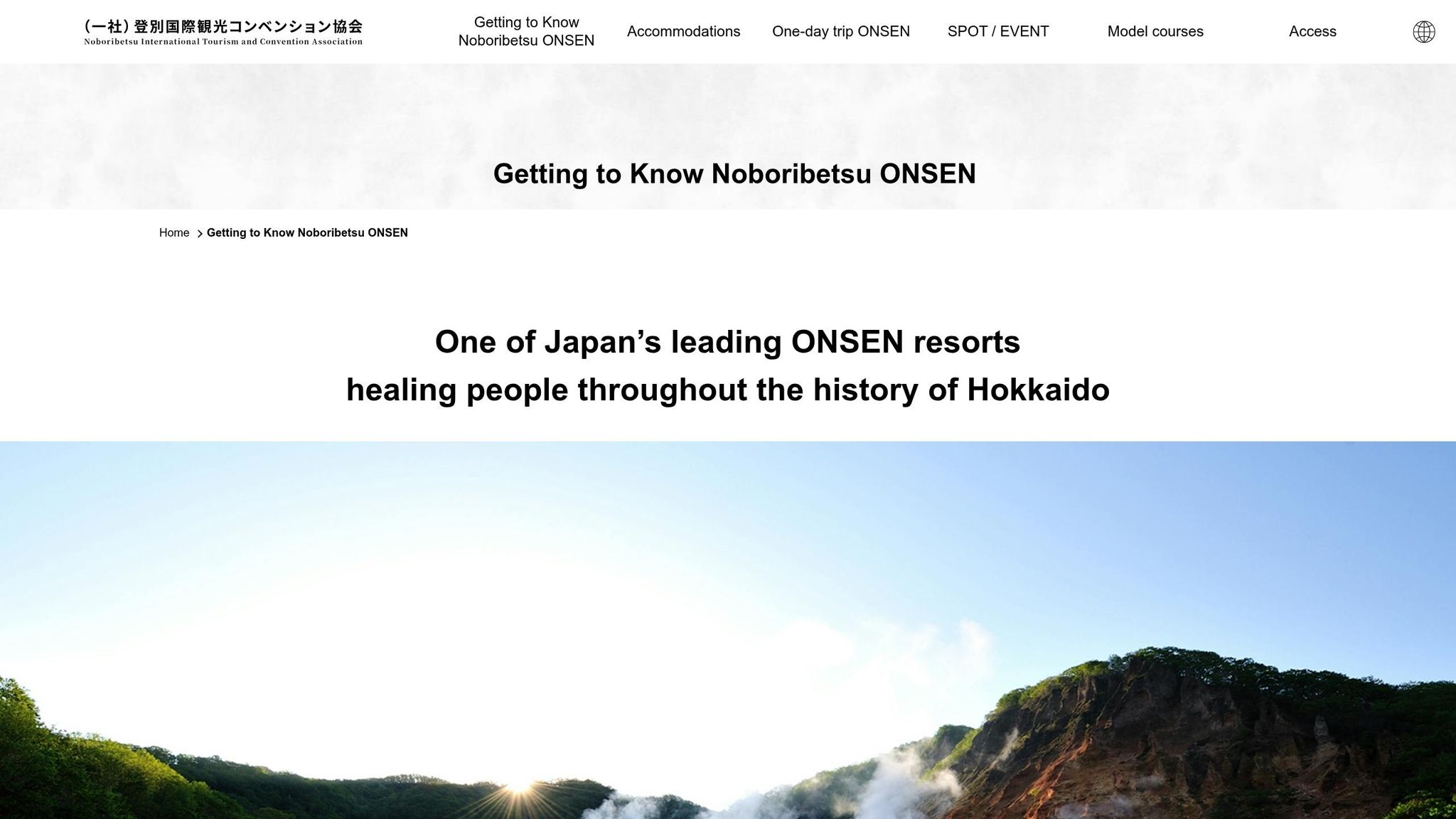
Located near the dramatic Hell Valley (Jigokudani), Noboribetsu Onsen is famous for its volcanic landscape featuring sulfur vents and bubbling mud pools. These natural features feed the area’s renowned mineral-rich waters. During the warmer months, Shikotsu-Toya National Park offers plenty of trekking opportunities, while winter blankets the region in snow, creating a magical contrast with the rising steam from the hot springs.
Hakone Onsen, Kanagawa Prefecture
Hakone is a favorite for its scenic hiking trails, including routes through the Hakone Open-Air Museum grounds and along the historic Tokaido road. Winter and early spring days often provide clear views of Mount Fuji across Lake Ashi, rewarding adventurers with breathtaking vistas. After a day of exploration, a sightseeing cruise on Lake Ashi is the perfect way to unwind.
Kusatsu Onsen, Gunma Prefecture
Famous for its high-quality waters, Kusatsu revolves around the Yubatake, or "hot water field", where spring water is cooled before flowing into local baths. Nestled next to Joshin’etsu Kogen National Park, Kusatsu offers mountain trekking opportunities during summer and fall. In winter, the nearby Kusatsu Kokusai Ski Resort attracts visitors for skiing and snowboarding adventures.
Nozawa Onsen, Nagano Prefecture
Nozawa Onsen is a picturesque village that has maintained its traditional charm over the years. The Nozawa Onsen Snow Resort boasts more than 40 ski runs in winter, while summer transforms the area into a haven for mountain biking enthusiasts. A standout feature of this destination is the soto-yu system – 13 public bathhouses managed by local families and open to visitors at no cost.
Kawayu Onsen, Wakayama Prefecture
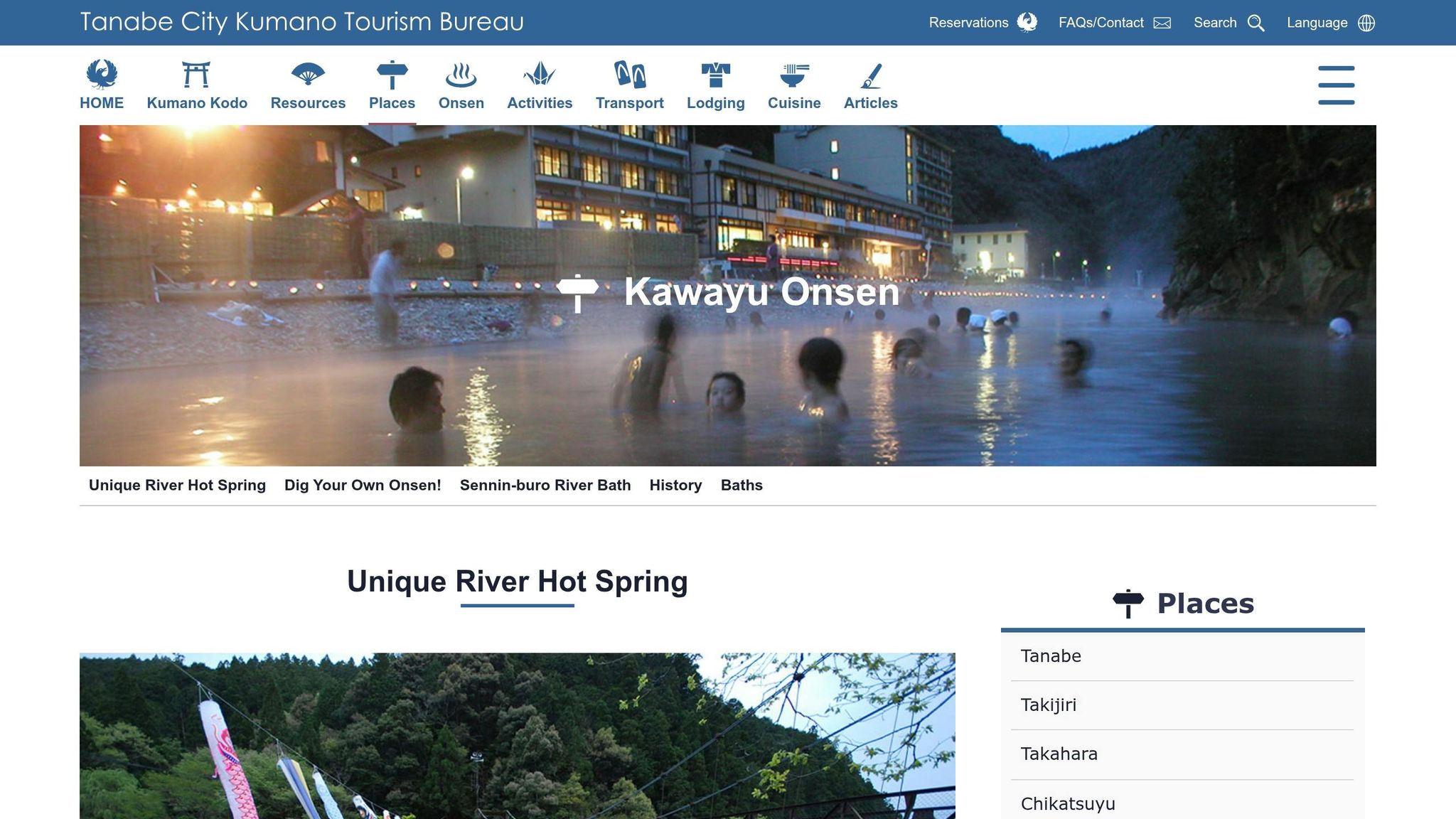
Kawayu Onsen is a haven for outdoor lovers, offering access to ancient cedar forests and the UNESCO-listed Kumano trails in the Kii Peninsula. Its standout attraction is the Oto River, where thermal water naturally bubbles up through the riverbed. In winter, visitors can dig their own shallow pools to soak in the warm waters. Additionally, Kawayu provides a gateway to the Kumano Kodo pilgrimage trail network, making it a perfect blend of cultural exploration and natural relaxation.
How to Choose the Right Onsen Destination for Your Trip
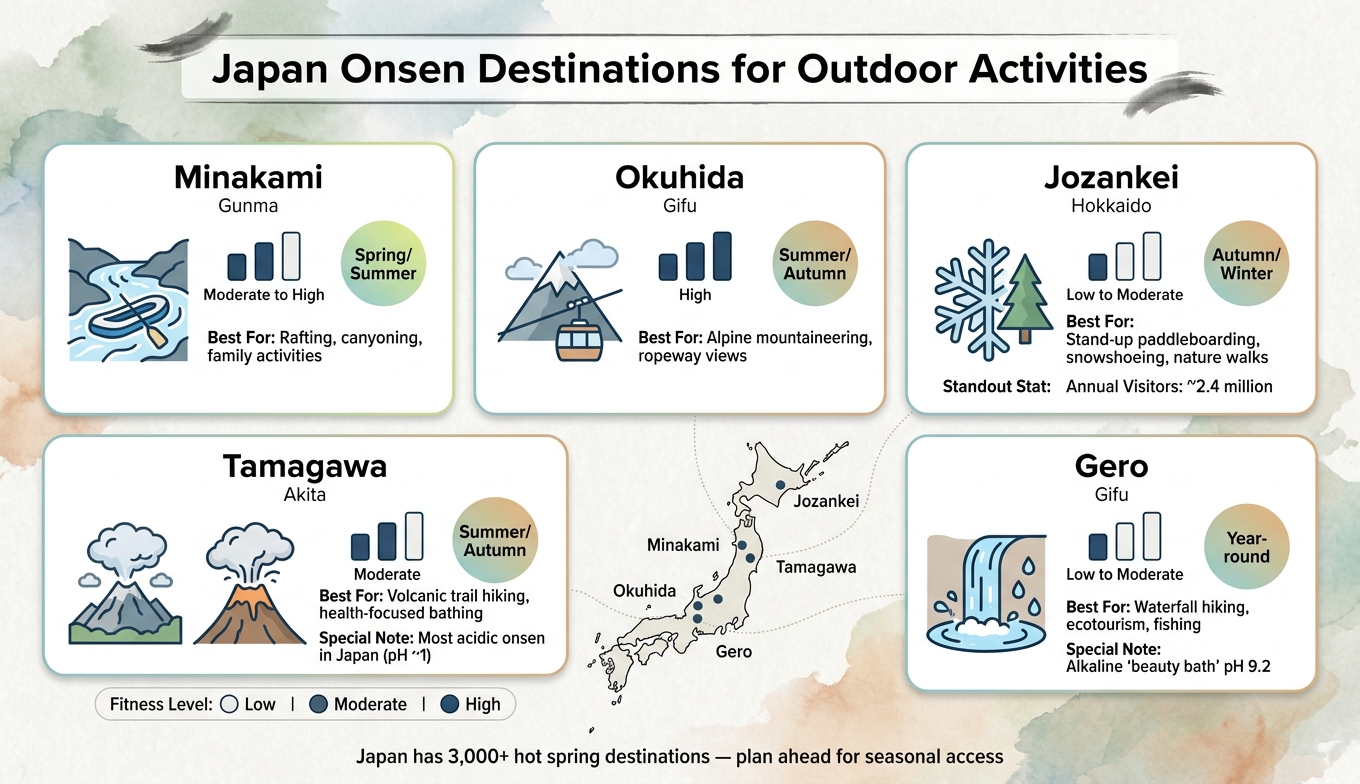
Japan Onsen Destinations for Outdoor Activities: Quick Comparison Guide
Key Factors to Think About
The five destinations mentioned earlier each offer their own charm, so your choice will depend on three main factors: the outdoor activities you’re interested in, your fitness level, and the type of onsen experience you’re after.
If you’re into alpine mountaineering, Okuhida Onsen-go in Gifu is perfect, with easy access to peaks like Mt. Hotaka and Mt. Yarigatake in the Northern Japan Alps. On the other hand, Jozankei Onsen in Hokkaido is great for those who prefer lighter activities like snowshoeing or canoeing – it draws about 2.4 million visitors annually. For families, Minakami in Gunma is ideal, offering gentle adventures such as kayaking and easy hiking trails.
The water itself plays a big role too. If you’re looking for health benefits, Tamagawa Onsen in Akita, with its highly acidic water (pH near 1, the most acidic in Japan), is known for its supposed therapeutic properties. For those focused on skincare and relaxation, head to Gero Onsen in Gifu, which boasts alkaline "beauty baths" with a pH of 9.2.
Destination Highlights by Activity, Fitness, and Season
| Destination | Best For | Fitness Level | Best Season |
|---|---|---|---|
| Minakami (Gunma) | Rafting, canyoning, family activities | Moderate to High | Spring/Summer |
| Okuhida (Gifu) | Alpine mountaineering, ropeway views | High | Summer/Autumn |
| Jozankei (Hokkaido) | Stand-up paddleboarding, snowshoeing, nature walks | Low to Moderate | Autumn/Winter |
| Tamagawa (Akita) | Volcanic trail hiking, health-focused bathing | Moderate | Summer/Autumn |
| Gero (Gifu) | Waterfall hiking, ecotourism, fishing | Low to Moderate | Year-round |
Once you’ve narrowed down your destination, it’s time to think about how you’ll get there.
Getting to Rural Onsen Destinations
After choosing your onsen destination based on your preferences, check how accessible it is. Japan’s rail system makes reaching most onsen towns straightforward, even from major cities. For example, Minakami is just 66 minutes from Tokyo via the Joetsu Shinkansen to Jomo-Kogen Station, with a one-way ticket costing around $43. From there, local buses take you into town. To reach Okuhida Onsen-go, you can take the Shinkansen to Nagoya or Matsumoto and then hop on the Nohi Bus network. From Matsumoto, it’s about a 90-minute bus ride costing roughly $11 one way.
If you’re planning multiple day trips, the JR TOKYO Wide Pass (about $67 for three consecutive days) can save you money. It covers Shinkansen travel to destinations like Minakami, compared to individual round-trip tickets priced at around $85. A helpful tip: many rural ryokan offer private shuttle pickups from the nearest train station if you arrange it in advance, making your journey even smoother.
For winter trips to mountain onsen, ensure your rental car is equipped with snow tires or chains between mid-November and early April.
How Jo Vacations Can Help Plan Your Trip
Planning a trip that combines outdoor activities with onsen visits in Japan can get complicated. Seasonal timing, transportation connections, ryokan bookings, activity reservations, and even understanding onsen etiquette can be overwhelming, especially for first-time visitors. That’s where expert help comes in.
Jo Vacations specializes in creating tailor-made Japan itineraries. Whether you’re planning a week exploring Hakone’s trails and Noboribetsu’s volcanic springs or a multi-region trip through Nagano and Hokkaido, their team takes care of everything. From private airport transfers and carefully chosen ryokan stays to customized activity arrangements and 24/7 concierge support, they handle the logistics so you can focus on enjoying your trip. If you want a stress-free experience, it’s worth reaching out for a consultation to get started.
Practical Tips for Mixing Onsen and Outdoor Activities
Here’s how you can make the most of your outdoor adventures and onsen visits while staying safe and comfortable.
Health and Safety Points to Keep in Mind
Plan your soak after your outdoor activity. Why? Relaxing in an onsen before physical exertion can leave your muscles too loose, potentially affecting your performance. Instead, save the soak for the end of the day. The mineral-rich water, especially from springs with calcium sulfate, works wonders in easing muscle soreness, joint stiffness, and bruises after a long day on the trails.
Hydration is key – before, during, and after your soak. If you’re exploring hot springs at higher altitudes (some are perched between 6,900 and 7,900 feet!), dehydration becomes a real concern. Luckily, many mountain huts in the Japanese Alps have spigots offering fresh mountain water to refill your bottle. Once you’re rehydrated and ready to relax, don’t forget to follow proper onsen etiquette to ensure a clean and enjoyable experience for everyone.
Onsen Etiquette After a Day Outdoors
After a long day of hiking or exploring, proper onsen etiquette becomes even more important. Begin by thoroughly washing off any sweat or dirt at the washing station. Every onsen provides these stations, which come equipped with a stool, handheld showerhead, soap, and shampoo. This step isn’t just polite – it’s an essential part of the onsen experience.
Lily Crossley-Baxter of BBC Travel highlights the cultural significance of this practice:
"The Japanese concept of hadaka no tsukiai, (‘naked communion’), is believed to remove barriers and forge bonds."
This sense of openness and connection depends on everyone maintaining cleanliness. Also, carry a small towel for modesty while moving between the changing area and the bath, but remember – don’t let it touch the spring water. If you have tattoos, check with your ryokan or onsen facility in advance, as policies can differ widely.
What to Pack for an Onsen Adventure Trip
Packing smartly ensures you’re ready for both rugged trails and tranquil onsen visits. For hiking, sturdy mid-cut mountaineering boots are a must to protect your ankles on uneven terrain. Layer your clothing with rain gear and a warm fleece or down jacket, as mountain temperatures can drop quickly, even in summer.
For the onsen, especially if you’re heading to remote mountain springs, bring your own towels. While many ryokans provide a yukata (a lightweight cotton robe) and a small towel, having your own ensures you’re prepared. Don’t forget to carry cash, as many rural onsens only accept it for day-use fees, which typically range from $3.50 to $10 per adult.
Here’s a quick packing checklist:
| Category | What to Pack | Notes |
|---|---|---|
| Footwear | Mid-cut hiking boots, spare socks | Essential for rugged terrain |
| Clothing | Rain gear, fleece/down jacket, extra clothes | Layers are crucial for changing weather |
| Onsen Gear | Small modesty towel, large drying towel | Often not provided at remote onsens |
| Safety | Headlight with spare batteries, first aid kit, map or GPS | Vital for navigating remote trails |
| Personal | Cash, reusable water bottle, sunscreen | Cash is necessary for rural onsens |
With the right preparation, you can enjoy both the thrill of the outdoors and the soothing comfort of an onsen, all in one unforgettable trip.
Conclusion and Next Steps
Japan’s thermal springs offer something for everyone. Take Minakami Onsen, for example – its calcium sulfate-rich waters are paired with thrilling activities like white-water rafting and skiing across nine resorts. If you’re more into hiking, Honzawa Onsen’s "Unjo-no-yu" awaits. Sitting at about 7,050 feet, it boasts Japan’s highest outdoor bath, offering breathtaking views and a sense of accomplishment for seasoned hikers.
Planning a trip to these destinations can be tricky. Many mountain ryokans are only open from July to early October. Guided eco-tours often require reservations at least three weeks in advance, and missing these details can derail your plans. However, the effort pays off with mineral-rich waters that ease sore muscles and rejuvenate the body after a day of outdoor adventure.
If all these logistics feel overwhelming, there’s help available. Jo Vacations specializes in managing every detail of your itinerary. Whether you’re looking for tattoo-friendly onsen, a private konyoku (mixed-gender) bath, or a custom multi-day mountaineering plan, they’ve got you covered.
Skip the hassle and let Jo Vacations handle the hard part. Reach out to them today to craft your perfect Japan getaway – combining the thrill of the outdoors with the tranquility of Japan’s onsen culture.
FAQs
Which onsen is best for my outdoor activity and season?
The best onsen experience often depends on what activities you enjoy and the time of year. If you’re into water sports like rafting or kayaking, Minakami Onsen is an excellent choice during the spring and summer months. For those who love hiking or fishing, Gero Onsen is ideal from March through September. Meanwhile, Jozankei Onsen offers scenic forest trails and enchanting light displays, making it a great destination between July and October.
If winter activities are more your style, both Minakami and Jozankei Onsen are fantastic for skiing enthusiasts. Need help organizing your trip? Jo Vacations can assist in making everything stress-free.
Are tattoos allowed at these onsens and ryokans?
Tattoo rules differ greatly among onsens and ryokans in Japan. While some restrict access to shared bathing areas for guests with visible tattoos, others are more relaxed about it. To avoid any issues, it’s best to check the tattoo policy of your chosen place before making a reservation. For a smoother experience, consider using Jo Vacations – they can assist in finding accommodations that align with your preferences, making your trip easier and more enjoyable.
How do I reach remote onsen towns without a car?
Getting to remote onsen towns without a car often means relying on a mix of trains, buses, and sometimes taxis or pre-booked bus services. Take Takamagahara as an example: you’d start with a bus ride from Toyama to a trailhead near Oritate. From there, it’s a roughly 25-mile hike through forests and rivers, typically requiring overnight stays in mountain huts along the way. Since transportation options can be limited, it’s crucial to plan your journey and return logistics ahead of time.