

If I wanted the easiest all-around time to go, I’d pick September. If that month doesn’t work, I’d look at late May through June. Those periods usually give me warm weather, easier walking, open hotels and tours, and fewer problems with heat and peak-season crowds.
Here’s the short version:
- Best overall: September
- Best for walking and sightseeing: May
- Best for swimming and island hopping: June
- Best for beaches and nightlife: July–August
- Best for Athens, Crete, and slower trips: October
- Best for city trips over island trips: November–March
A few points matter more than people think:
- July through October made up 56.7% of annual accommodation arrivals in the source article.
- August alone accounted for 19% of annual arrivals.
- In July and August, temperatures can reach 95°F (35°C).
- In September, the Aegean Sea is around 75°F (24°C).
- In October, Athens is around 73°F (23°C).
If I were planning my own trip, I’d keep the route simple:
- Athens + one island is the easiest plan
- Two islands max for a 7- to 10-day trip
- Stay at least two nights in each place
- Avoid a same-day island connection before an international flight home
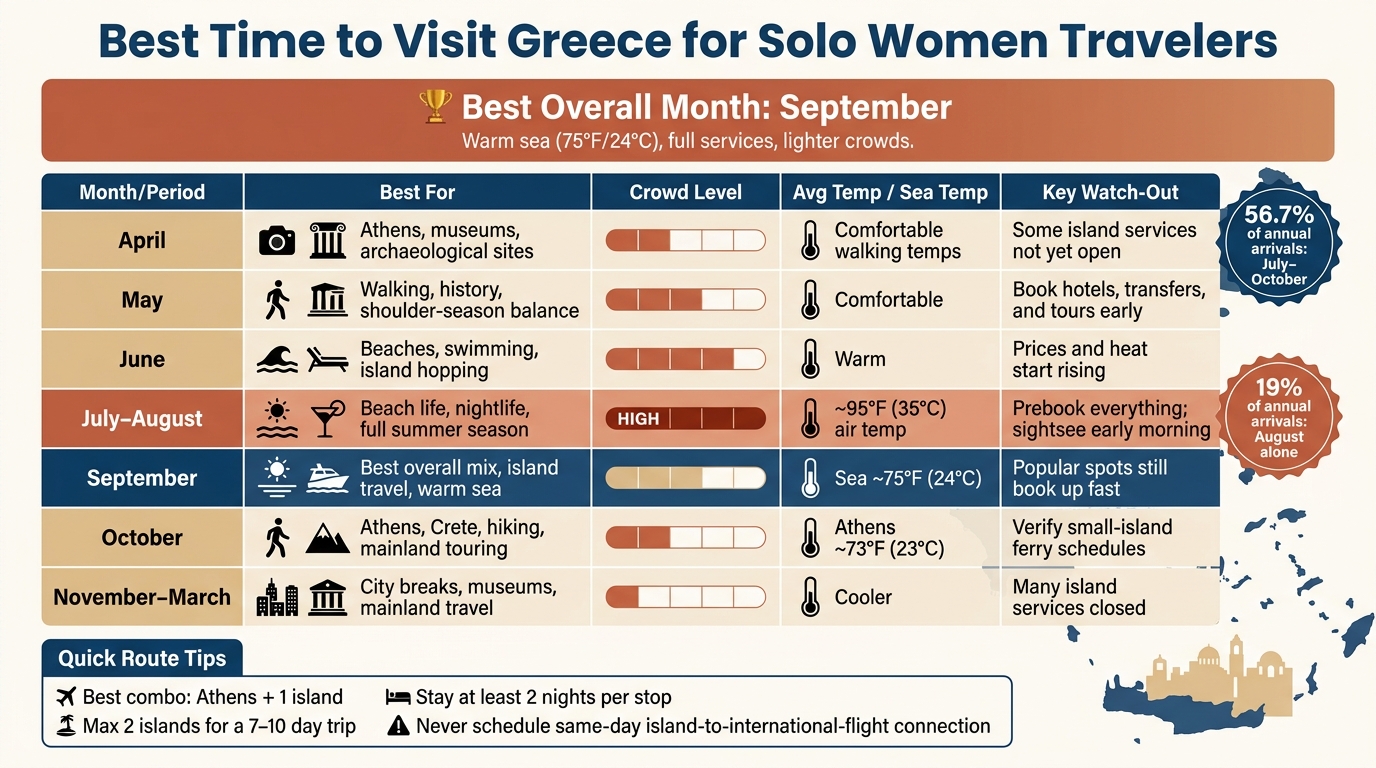
Best Time to Visit Greece for Solo Women Travelers
5 Nights in Skiathos Greece | Solo Women Travel Over 50 is This Greek Island Better Than Santorini?
sbb-itb-6675d37
Quick comparison
| Time | Best for | What I’d watch for |
|---|---|---|
| April | Athens, museums, ancient sites | Some island places may still be closed |
| May | Walking, history, lighter crowds | Book hotels, transfers, and tours early |
| June | Beaches, swimming, island trips | Prices and heat start going up |
| July–August | Full summer, nightlife, beach days | Heat, crowds, and sellouts |
| September | Best overall mix | Popular islands still book up fast |
| October | Athens, Crete, hiking, mainland stops | Smaller island schedules may thin out |
| November–March | City breaks and mainland travel | Many island services cut back |
My main takeaway: if you want Greece to feel simple, warm, and easy to move through on your own, September is usually the top pick. If you care more about long walking days and site visits, go in May. If swimming is near the top of your list, June is a strong choice.
The rest of the article breaks this down by trip style, island plans, evening comfort, and hotel setup.
Choose the Right Season for Your Trip Style
The best month depends on the kind of trip you want. Some months are better for easy walking. Others are better for beach days, island hopping, or a slower trip focused on the mainland. Use that lens first, then match the weather, crowd levels, and transport setup to fit.
Spring and Early Summer: April Through June
April is a strong pick for Athens, museums, and archaeological sites. The city is easy to walk, the light is beautiful, and crowds are lighter than they are in midsummer. The catch is that some smaller island hotels, beach clubs, and boat excursions may not be open yet, so check operating dates before you book any island stops.
May gives you one of the best shoulder-season mixes: more open services, comfortable weather for walking, and crowds that still feel manageable. Ferry schedules are running, most hotels and restaurants are open, and guided excursions are available. Book your hotel, private transfers, and excursions early.
June brings warmer water for swimming, longer daylight hours, and a fuller island experience. At that point, combining Athens with beach time or island hopping works well. Demand and prices climb as the month goes on, so it’s smart to reserve accommodations, private transfers, and guided excursions early.
Peak Summer: July and August
July and August are when Greece is fully in season. Beach clubs, restaurants, nightlife, boat trips, and other seasonal businesses are all running at full speed. Evenings stay long and warm, and swimming conditions are at their best. But there’s no sugarcoating it: temperatures often hit about 95°F (35°C), and places like Santorini and Mykonos fill up fast.
The answer isn’t to skip these months. It’s to plan them well. Visit archaeological sites and do longer walks early in the morning. Save the afternoon for the beach, a spa treatment, or a slow lunch. And prearrange your transfers. In July and August, a private airport meet-and-greet and prebooked ferry tickets matter more than at any other point in the year.
Fall and Winter: September Through March
September is a sweet spot for many travelers. Sea temperatures stay warm – the Aegean Sea averages about 75°F (24°C) – the days are still long enough for full excursions, and the main tourism setup is still running. The pace feels less intense than in July and August. That said, busy spots like Santorini and Mykonos can still get booked up, so reserve top hotels and ferries early.
October shifts the trip style a bit. This is a better month for Athens, Crete, mainland touring, and hiking. In Athens, temperatures ease to around 73°F (23°C), which makes walking and sightseeing much more comfortable. Crete also works well in October because its year-round setup keeps going after smaller Cycladic islands start winding down. Trips built around well-connected places tend to work better than plans that depend on multiple ferries.
November through March is better for a city-and-mainland trip than for island hopping. Athens and Crete are the easiest winter choices because transport, dining, and hotels stay simpler there. Many Cycladic hotels, tavernas, and direct ferry routes cut service or close altogether. Stick with hotels that have year-round staffed reception and on-site or nearby dining.
Use this quick guide to narrow down the month before you lock in exact dates.
| Month | Best For | Key Consideration |
|---|---|---|
| April | Athens, museums, archaeological sites | Some island services not yet open |
| May | Shoulder-season balance, open services | Book transfers and excursions early |
| June | Athens + islands, swimming, longer days | Demand and prices rise through the month |
| July–August | Beach life, full seasonal schedule | Prebook everything; sightsee early morning |
| September | Island travel, warm sea, open services | Popular destinations still fill up fast |
| October | Athens, Crete, hiking, mainland touring | Verify island operating dates |
| Nov–March | Athens, museums, food, mainland stays | Limited island services |
Match the Month to the Trip You Actually Want
Weather matters, but it’s not the whole story. The better way to choose a month is to match it to how you want your days to feel – museum time, beach hours, or moving between islands. Start with the mix of activities, then pick the month that fits.
Best Months for Culture, Beaches, and Island Hopping
May is a strong pick for culture and long walks. June and September fit trips that mix beach time with island stops. October works well for quieter, culture-first plans.
May and October are the best fit when your main goal is touring, walking, and spending time with history and local life. Temperatures are comfortable enough for full days at archaeological sites or wandering through Athens neighborhoods without planning every hour around the heat.
June and September make more sense when you want beaches, swimming, island hopping, and long dinners in the evening. Ferries run often, and restaurants, tours, and excursions remain open. September stands out for a Santorini-focused trip: sea temperatures are around 77°F, the pace feels calmer than in July and August, and most restaurants, guided tours, and boat trips are still running. You get a lot of what people want from peak summer, without the same level of pressure.
| Month | Best For | Walkability | Island Connectivity | Evening Dining and Tours |
|---|---|---|---|---|
| May | Culture, walking, gentle island hopping | Excellent | Good and increasingly frequent | Strong availability; less crowded than summer |
| June | Beaches, swimming, island hopping | Good | Very good | Broad range of dining, tours, and excursions |
| September | Swimming, Santorini, relaxed evenings | Very good | Strong | Restaurants and tours widely available |
| October | Culture, food, photography, quieter stays | Excellent | Adequate; verify schedules | Many venues remain open early in the month |
If you’re planning more than one island, keep the route simple.
When to Keep the Route Simple
For most solo travelers, Athens plus one well-connected island is enough – two islands at most – and it helps to stay at least two nights in each stop.
Every ferry change adds friction: getting to and from the port, handling luggage, watching check-in times, and dealing with possible weather delays. Staying two to three nights in each base gives you time to settle in, join one of many exclusive packages, and enjoy slow evenings instead of burning energy on constant moves. Add a second island only if the ferry is direct.
Walkability, Evenings, and On-the-Ground Support
Once you’ve picked the right month, your Athens base and transfer plan can make the trip feel smooth – or way more tiring than it needs to be.
Athens Neighborhoods That Work Well for Solo Women
In Athens, your neighborhood shapes more than convenience. It affects how safe the area feels, how easy it is to get around on foot, and how comfortable evenings are.
Plaka and Anafiotika are the easiest for access to the Acropolis, Acropolis Museum, Syntagma, and Monastiraki. But the hotel itself matters just as much as the area. A visible entrance, good lighting, and 24-hour reception can make a big difference. Koukaki has more of a local feel, with the Acropolis Museum and Acropoli Metro station nearby. Kolonaki is a good fit for travelers who like polished boutique hotels, galleries, and upscale shopping, though it’s hillier and less direct for walking to the ancient sites. Syntagma is often the most practical choice if you care most about a central base and easy Metro links.
At night, it’s smart to use licensed taxis or prearranged transfers, especially near Omonia, Psyrri, and Metaxourgeio. Greece is currently listed at Level 1 by the U.S. State Department, which means normal precautions apply.
If Athens is your first base, the next decision is simple: pair it with one island, or keep the trip focused on the mainland.
Island Choices by Travel Style
Island choice matters just as much as timing.
- Santorini fits boutique luxury and private transfers.
- Crete works well for longer trips with a mix of beaches, food, and history.
- Rhodes gives you medieval history plus beaches.
- Mykonos is a strong pick for dining and nightlife, but in July and August, booking ahead is a must.
The Logistics That Make the Trip Feel Easy
The best trip support cuts out stress before it even starts.
A private airport meet-and-greet and a hotel with staffed, visible reception can make arrival much easier, especially if you’re landing late. Hosted excursions help add structure where it counts most – a private Acropolis visit the morning after arrival, a guided boat trip from Santorini, or a food tour through a local market. They also give you a set return time and a local contact, which can be a huge relief when you’re traveling solo.
For ferry or domestic flight legs, leave extra time before any onward connection. Popular summer routes can sell out weeks in advance, while shoulder-season departures are often easier to book closer to your travel dates.
For travelers who want those logistics handled from start to finish, Jo Vacations offers bespoke solo women’s Greece itineraries with handpicked boutique hotels, private airport and port transfers, guided experiences, and 24/7 on-trip concierge support throughout the journey.
These are often the details that shape how easy the trip feels day to day – not just how much you manage to fit into it.
FAQ: Common Questions About Greece for Solo Women
Use these quick answers to narrow your timing, route, and hotel picks.
What is the best month to visit Greece for solo women travel?
September is the easiest all-around month for a polished solo trip. Crowds are lighter, the sea is still warm, and the pace feels easier.
If September doesn’t work, late May through June is the best backup window. One thing matters either way: always confirm ferry operating dates before you book. Frequency and seasonal service can change from island to island.
Is Greece good for a first solo luxury trip?
Yes – if you keep the route simple and set up bespoke travel services and hotels in advance.
For a first trip, Athens plus one island usually works best. It keeps the trip smooth without making every other day about moving around. Choose centrally located hotels with 24-hour reception, and include a private airport transfer or meet-and-greet.
It also helps to build in some guided time. A food tour, a private archaeological guide, or a scheduled driver can make the trip feel far less stressful. You spend less time figuring out transport on your own, and each day has a clearer shape.
How many islands should a solo traveler include?
For a 7- to 10-day trip, keep it to Athens plus one island, or at most two islands that connect well.
Athens plus one island gives you the easiest, lowest-friction plan. Add a second island only if the connection is direct by ferry or a short domestic flight. Any more than that, and vacation time starts turning into transit time.
Should you choose ferries or domestic flights?
The route should decide.
| Option | Best for | Trade-offs |
|---|---|---|
| Ferry | Nearby island routes, especially late May through September | Wind can cause delays; requires port transfers and luggage handling |
| Domestic flight | Longer routes or tight schedules | Adds airport transfers, check-in, security, and baggage rules |
Whichever option you choose, don’t schedule a same-day international departure right after an island connection. An overnight in Athens before your flight home gives you a much safer buffer.
What hotel features matter most for solo women in Greece?
Start with the basics that make arrival and day-to-day movement easier:
- 24-hour front desk staffing
- A central location
- Clear arrival instructions
- Easy vehicle access
- Staff who can arrange taxis or transfers
It also helps to look for luggage assistance, dependable Wi‑Fi, in-room climate control, and nearby dining.
On the islands, check a few extra details before booking. Make sure the property is reachable by car, find out how far it is from the port, and ask whether staff can collect bags on arrival.
Which Month Should You Choose? A Simple Decision Guide
The Short List by Priority
Pick the month that lines up with your main goal. If you want one simple rule, use the table below.
| Your Priority | Best Month | Key Trade-Off |
|---|---|---|
| Comfortable walking and sightseeing | May | Some beach services and ferry frequencies may be less extensive than in midsummer |
| Swimming, long days, and active island travel | June | Demand and heat begin rising; book hotels and transfers early |
| Best overall balance | September | Still popular, so premium properties and excursions need advance planning |
| Athens, Crete, mainland touring, slower pace | October | Small-island services and ferry schedules may begin winding down |
| Beach weather and nightlife | July–August | Highest heat, crowds, and prices |
| Museums, history, and mainland culture | November–March | Better for Athens and mainland travel than for an island-first itinerary |
For many first-time solo travelers, one month rises to the top: September is the best all-around choice for most first-time solo women: warm sea, full services, and lighter crowd pressure.
If September isn’t an option, May is a strong pick for walking and culture. June makes more sense if you want beach time, long daylight hours, and active island-hopping.
October can work well too, especially if your trip focuses on Athens, Crete, or mainland stops. If you plan to add a smaller island, check ferry, hotel, and excursion schedules first.
When to Get Professional Trip Support
When a trip has a lot of moving pieces, the month is only part of the equation. The planning style matters too.
Some Greece trips are pretty simple. Others get tricky fast. If your plan includes multiple islands, a late-night arrival into Athens International Airport, a private transfer from Piraeus, or premium seasonal hotels that book up early, extra help can make the whole trip feel much smoother.
That kind of support can take the pressure off timing flights, lining up ferry connections, and making sure hotel check-ins actually fit the route.
Jo Vacations handles boutique hotels, private transfers, guided experiences, and 24/7 concierge support – keeping logistics invisible so the trip stays enjoyable. To get started, request a complimentary tailor-made consultation for a fully planned Greece itinerary built around your travel dates and priorities.