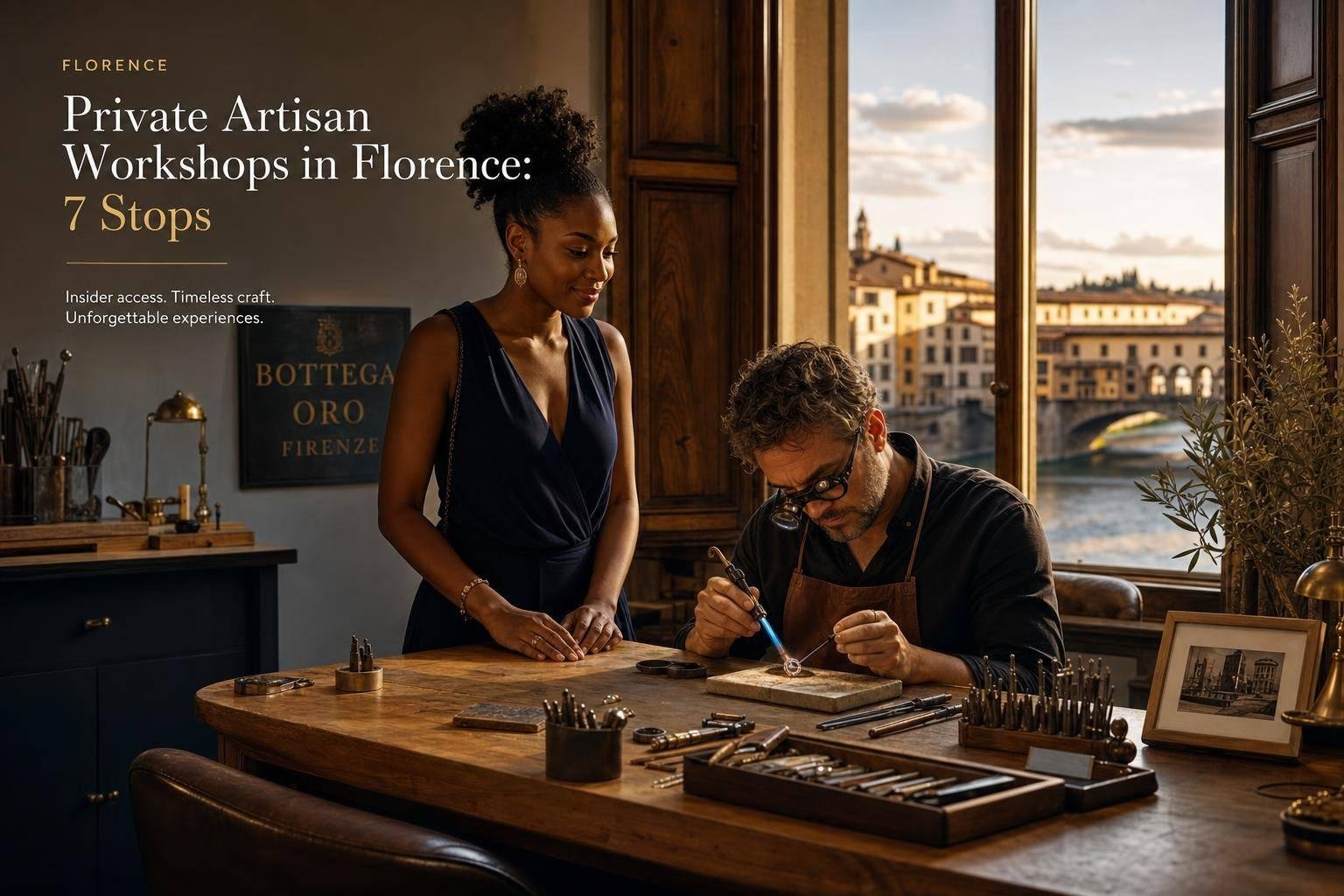
You can see Florence’s craft side in one day – but only if you keep it to 3 to 4 well-timed stops. The best route usually links Santa Croce, Oltrarno, San Frediano, and Ponte Vecchio, with bespoke studio visits set in advance and enough buffer time for walking, lunch, and late starts.
If I were planning this day, I’d focus on 7 Italy tour packages featuring workshop options: Scuola del Cuoio, Giulio Giannini e Figlio, Antico Setificio Fiorentino, Scarpelli Mosaici, a Ponte Vecchio goldsmith bench visit, an Oltrarno mixed artisan route, and a paper marbling/bookbinding session outside the center. Visit length runs from 30 minutes to 2 hours, hands-on time ranges from none to light, and some stops work best with a car.
Here’s the short version:
- Best number of stops in one day: 3 to 4
- Best area for clustering visits: Oltrarno
- Best for hands-on time: paper marbling, leather, book arts
- Best for watch-only visits: silk weaving, stone mosaics, goldsmith benches
- Most common booking window: 4 to 8 weeks ahead
- Good use of a private car: routes outside the center or across several districts
- Good family picks: leather and paper; older kids often do better than younger ones in tool-heavy studios
Italy Leather Making School | Scuola del Cuoio: A Florence Family Affair | Kirby’s Grand Italy Tour
sbb-itb-6675d37
Quick Comparison
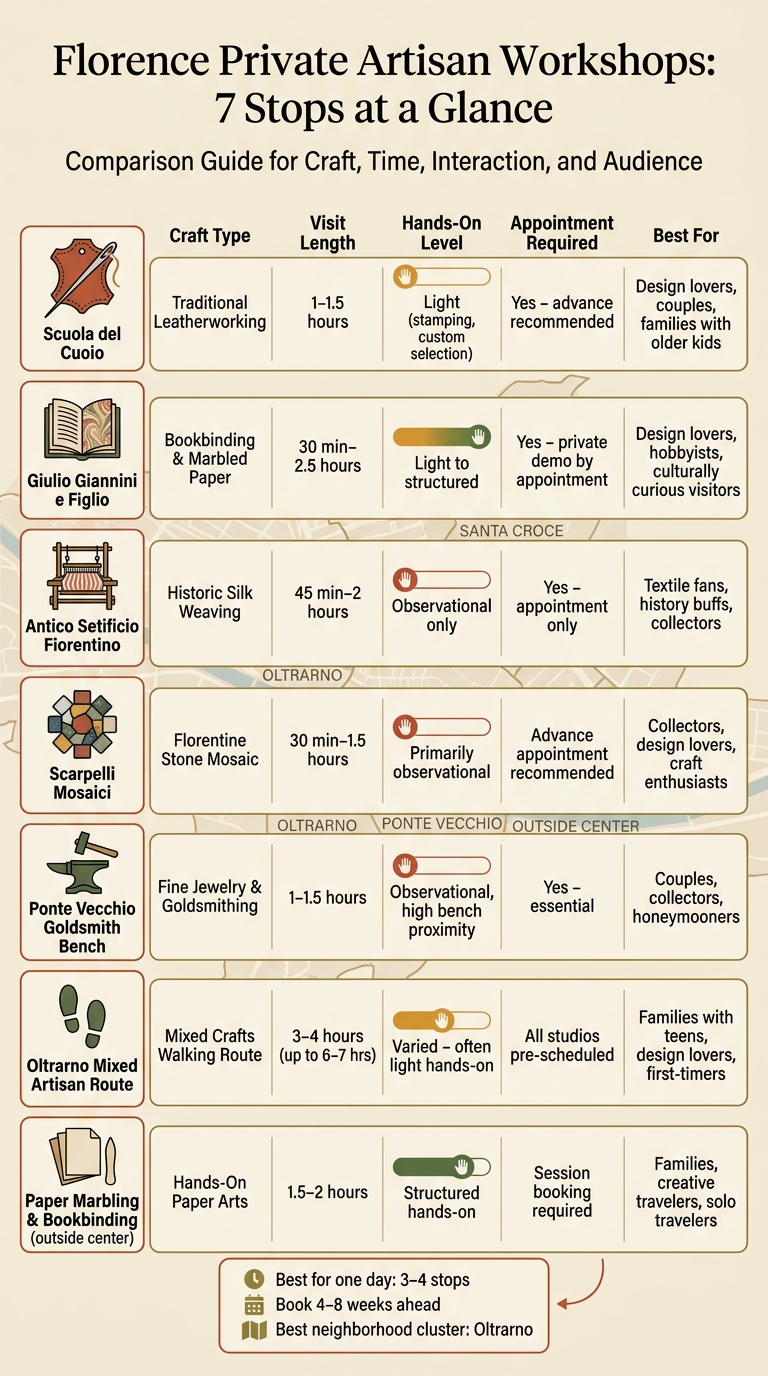
Florence Private Artisan Workshops: 7 Stops at a Glance
| Stop | Main craft | Time | Hands-on | Best fit |
|---|---|---|---|---|
| Scuola del Cuoio | Leather | 1 to 1.5 hours | Light | First stop, Santa Croce |
| Giulio Giannini e Figlio | Marbled paper, bookbinding | 30 to 40 mins or longer | Light to structured | Short booked visit in Oltrarno |
| Antico Setificio Fiorentino | Silk weaving | 45 mins | No | Textile and history fans |
| Scarpelli Mosaici | Stone inlay | 30 to 90 mins | Very limited | Art and design-minded visitors |
| Ponte Vecchio goldsmith bench | Jewelry | 60 to 90 mins | Limited | Couples, collectors |
| Oltrarno mixed route | Mixed crafts | 3 to 4 hours | Varies | Slow walking route |
| Paper marbling outside center | Paper, notebook making | About 2 hours | Yes | Families, hobbyists |
Bottom line: if you want the day to feel calm instead of rushed, I’d group stops by neighborhood, book early, and build the route around process rather than shopping.
How a Private Artisan Day in Florence Actually Works
Private Access vs. a Class or Shop Visit
A retail stop in Florence is set up for browsing and buying. A private studio visit is built for something else: seeing how a craft is made.
When you visit a workshop by appointment, you’re walking into a working production space, not a showroom. You may see tools on the bench, raw materials, and pieces still in progress. You can also ask more detailed questions than you usually could in a retail setting.
The difference comes down to depth. This isn’t about shopping first. It’s about getting close to the process itself.
The visit can also be shaped around what matters most to you, whether that’s leather, paper, mosaics, textiles, goldsmithing, or the family story behind the studio. The focus is access to the work, not a retail stop.
A Sample Day Schedule from Morning Pickup to Afternoon Return
Here’s a practical template for a private artisan day:
| Time | Activity |
|---|---|
| 9:30 a.m. | Hotel pickup by private driver |
| 10:00 a.m. | First workshop visit |
| 11:30 a.m. | Second stop or transfer to the next district |
| 1:00 p.m. | Seated lunch |
| 2:30–3:30 p.m. | Buffer, transfer time, or a short break |
| 3:30 p.m. | Afternoon workshop visit |
| 5:00–6:00 p.m. | Return to hotel |
Three to four studios in one day is usually the right limit if you want time to settle in at each stop. That pace works because each visit is planned around workshop opening hours and short transfer windows.
When a Private Driver Makes a Difference
Once your route starts crossing neighborhoods like Oltrarno, Santa Croce, and Ponte Vecchio, or includes a studio outside the center, a private driver changes the day in a big way.
The driver handles hotel pickup, door-to-door transfers, and any purchases you collect along the way. That keeps the day moving cleanly and on time. It matters most when the plan stretches beyond a single neighborhood.
What a Guide Handles on the Day
A licensed guide handles access, context, and timing.
They introduce you to the artisan before you go in, since most workshops accept only prearranged visits. They also explain what you’re seeing as it happens and place each stop within Florence’s artisan history, while showing how each workshop fits into that larger story.
If timing shifts, the guide can adjust the order of stops on the spot. Jo Vacations can coordinate the guide, driver, studio appointments, and same-day changes.
With the logistics in place, the seven stops below show how each studio fits into a private artisan day.
1. Scuola del Cuoio
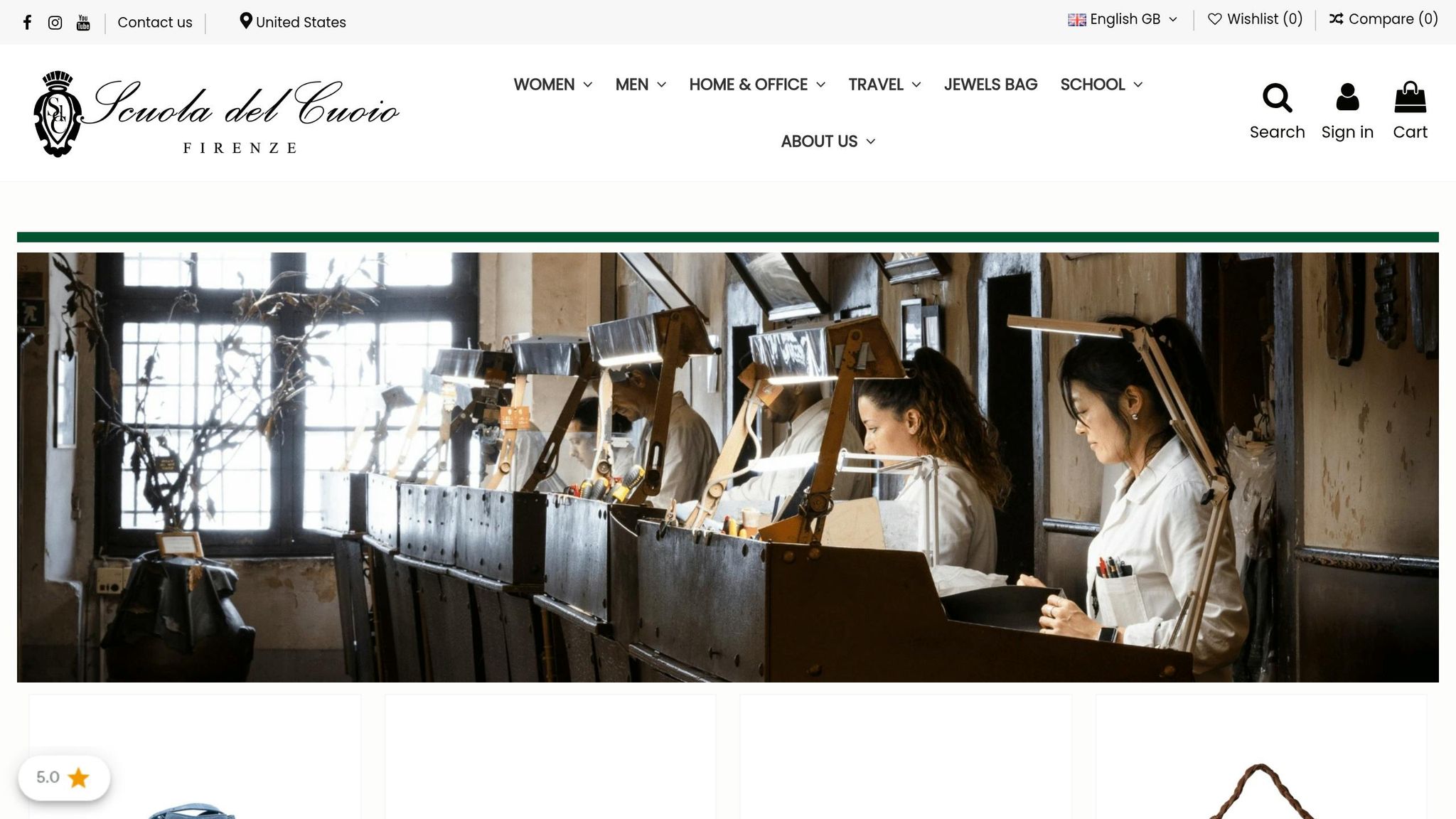
Scuola del Cuoio is a smart first stop if you want a clear look at Florence’s living craft scene. Founded in 1950 in the Santa Croce monastery complex, it still runs as a working leather studio inside Santa Croce. You’ll find it in the cloisters behind the church, near Piazza Santa Croce. The location helps a lot: it’s central, well known, and easy to combine with a visit to Santa Croce or a walk toward Oltrarno.
Walk-in entry is free, and there’s a daily guided tour at 12:00 p.m. for €10. Paid workshops are available too. If you go on a weekday morning, you have the best shot at seeing leatherwork as it happens. That’s when the place feels most alive. A guide can also help you find your way through the cloister setting and ask about monogramming or custom orders.
What makes this stop work so well early in the day is the mix: live demonstration, deep local history, and the option to get hands-on if you want more than a quick look. It’s a good fit for travelers who care about how something is made, not just what ends up in the shop window. From here, the route can move from leather into paper, silk, or goldsmithing.
2. Giulio Giannini e Figlio
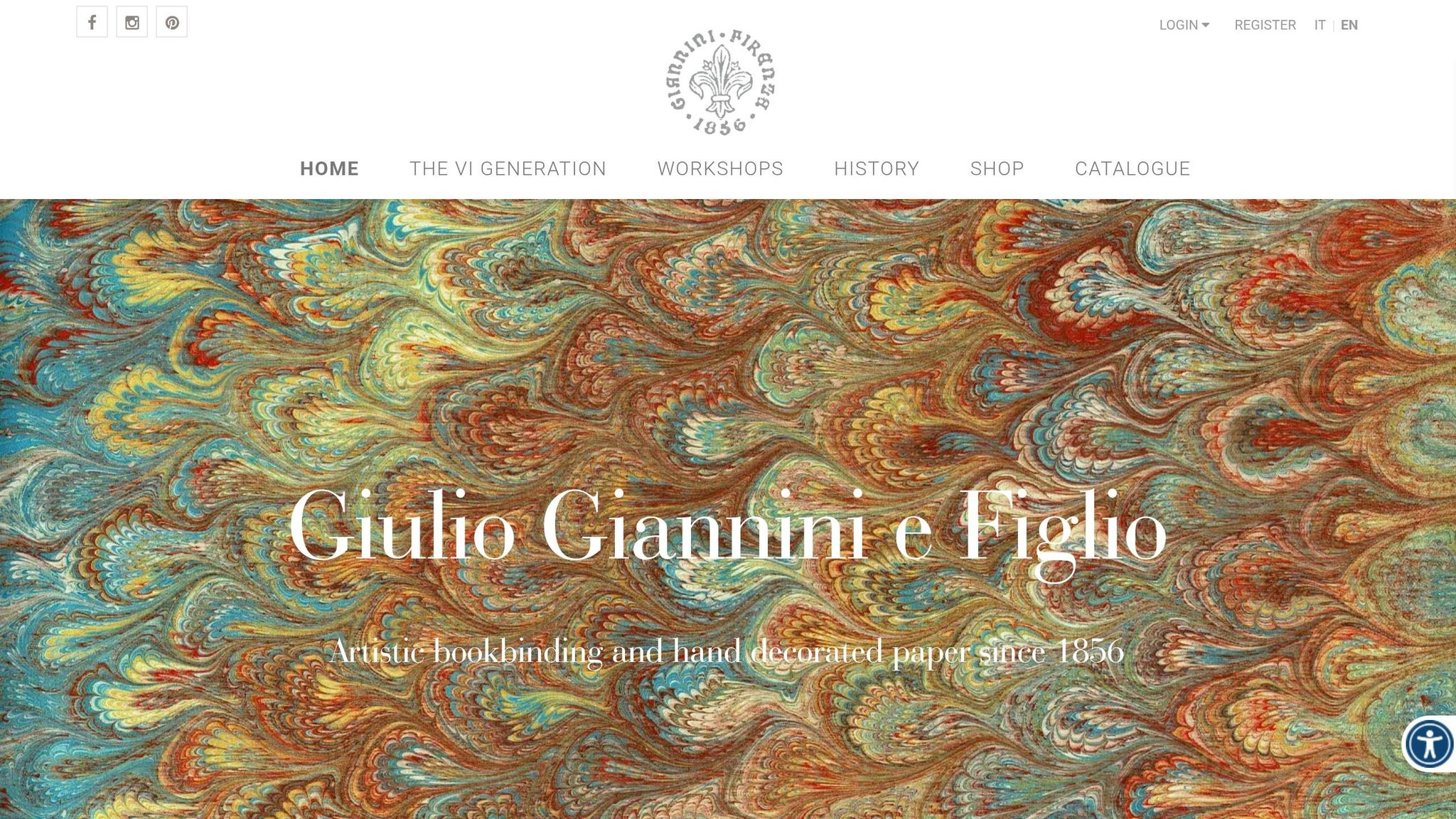
In Oltrarno, just across the Arno, Giulio Giannini e Figlio has been in business since 1856 at Piazza Pitti 37r, right across from Palazzo Pitti. The shop is still run by the Giannini family, now in its sixth generation. Because it sits in the heart of Oltrarno, it’s also an easy stop to combine with other nearby artisan visits.
Inside, the work centers on two closely linked crafts: hand-decorated marbled paper and artistic bookbinding. The shop still uses antique tools and production methods from the 19th century.
Private visits come in two options. The shorter private demonstration lasts 30 to 40 minutes, takes up to 12 guests, and shows how pigments are floated on water before being transferred onto paper. If you want more time, there’s a longer hands-on workshop where guests learn marbling and bind a personalized leather-covered book. Sessions are offered in English, Italian, and French.
The private demonstration costs €250 per group. It’s best to book 3 to 4 days in advance, and entry is just off the square at Via dei Velluti 1r.
This is a good fit for travelers who want a short, appointment-only craft visit with a strong design and book-arts focus. Its compact setup makes the most sense as one part of a larger private artisan day.
3. Antico Setificio Fiorentino
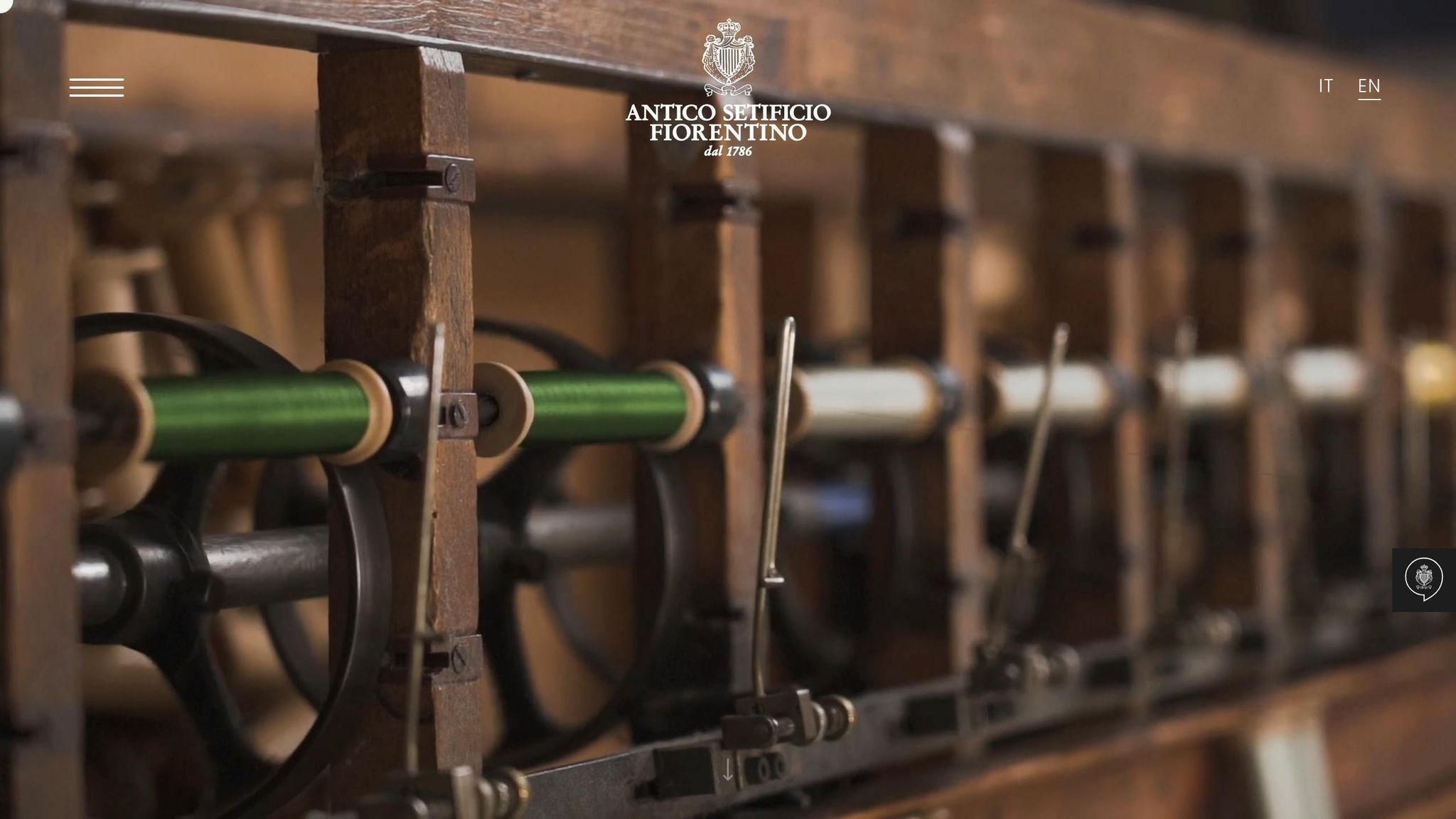
In San Frediano, on the Oltrarno side of the Arno, Antico Setificio Fiorentino has been at work since 1786. It’s also one of the rare workshops still running with original 18th-century looms and methods. From here, the route can move from Florence’s textile past into the more hands-on craft stops across Oltrarno.
Visits are by appointment only. A standard visit includes a guided tour of the weaving floor and the showroom. On the weaving floor, visitors see 12 antique looms and an 18th-century warping machine built from a design linked to Leonardo da Vinci. The showroom at the end helps place the finished fabrics in context, so you’re not just seeing the process, but the final result too.
Groups stay small, usually up to about 15 participants, and tours last around 45 minutes. They generally run Monday through Friday from 9:00 a.m. to 12:00 p.m. and 2:00 p.m. to 5:00 p.m.
This is an observation-only stop. You’ll watch artisans produce Renaissance damasks, brocatelles, lampas, taffeta, and passementerie, often from patterns dating back to the Medici era. That makes it a strong short stop between more interactive workshop visits. It works especially well as the textile point in a broader artisan day.
A private guide can make the technical terms much easier to follow, and a private driver can save time in San Frediano’s tighter streets.
After silk, the day can continue with nearby paper, mosaic, or goldsmith workshops.
4. Scarpelli Mosaici
After the Oltrarno workshops, head north to a stone-inlay studio right near the Duomo. At Via Ricasoli 59/r, close to both the Duomo and the Galleria dell’Accademia, Scarpelli Mosaici is a family-run workshop and gallery that keeps a Medici-era craft alive. Master artisan Renzo Scarpelli works alongside his son Leonardo, and family members often greet visitors and talk through what’s happening at the benches.
The space is both a working studio and a gallery. During regular hours – Monday through Saturday, 9:30 a.m. to 6:30 p.m. – you can watch artisans at work and look through finished pieces. Private visits can be set up ahead of time, with a closer look at the workshop, how stones are chosen, and the steps used to make each piece.
Most visits are observational, which is part of the appeal. You stand by the workbenches and watch thin slices of stone being cut, shaped, and fitted together with great care. Some private visit formats may include light supervised interaction, like handling stone samples or watching a simple demonstration up close, but this is not a standard hands-on class. For timing, plan about 30 to 45 minutes for a short stop or 60 to 90 minutes for a more in-depth walkthrough.
This is one of the easiest workshop stops to fit into a day in central Florence. It works especially well with a morning visit to the nearby Opificio delle Pietre Dure, and it’s within easy walking distance of many major sights in the historic center. A private driver can drop you close by, though the last stretch is done on foot.
Scarpelli Mosaici tends to suit travelers who care more about craft process, art history, and one-of-a-kind objects than a fast shopping stop. It often clicks with collectors, design-minded visitors, and curious families. The workshop can ship purchases worldwide, including to the United States, and Jo Vacations can help arrange timing, translation, and shipping.
5. Ponte Vecchio Goldsmith Bench Experience
After stone inlay, the next stop is Ponte Vecchio, home to Florence’s most visible jewelry craft. The bridge’s goldsmith tradition goes back to the 16th century, and Casa dell’Orafo still holds about 20 active workshops just steps away. Shops such as Nerdi Orafi and Fratelli Piccini are still working ateliers, where artisans use hand-engraving, fretwork, and long-used metalworking methods tied to Florentine masters.
A private bench visit gives you far more than what you’ll see in the bridge’s storefronts. These sessions usually last 60 to 90 minutes. They start with a short safety briefing, then the goldsmith walks you through the piece on the bench and the tools being used. Open-flame soldering and gemstone handling are for demonstration only. In some cases, you may be allowed to try simpler tasks, like texturing a test strip or helping with a final polish, though hands-on time is limited where permitted.
A guide helps bridge the gap between workshop jargon and plain English. They translate technical terms, explain Florentine hallmarking, and help travelers see the difference between bespoke work and mass-produced jewelry. Similar sessions generally cost €100 to €300 per person. Since the bridge area gets packed, it’s best to handle the last stretch on foot after a nearby drop-off.
This kind of visit also works well if you’re thinking about a custom commission. Secure shipping to the United States can be arranged after the visit. Jo Vacations can coordinate studio access, language support, and shipping logistics for commissioned work.
6. Oltrarno Leathercraft & Mixed Artisan Route
After the individual workshop stops, Oltrarno works best as one linked walking circuit. It’s the best part of Florence for a compact artisan route, since leather, paper, jewelry, and wood studios sit close to one another.
A private guide can open doors to prebooked studios that don’t accept walk-ins. That matters a lot here. The strongest Oltrarno routes usually mix two or three studios without forcing you to zigzag across the neighborhood.
A compact route usually includes three stops in about 3 to 4 hours. If you want a broader craft day, you can stretch that to four or five studios over 6 to 7 hours, with about 45 to 75 minutes at each stop. And leather doesn’t have to be the whole story. A mixed itinerary can also include a jewelry bench, a paper or bookbinding atelier, or a wood-carving studio, so you get a better sense of Florence’s craft scene.
Hands-on time depends on the studio. In some places, you might stamp initials on leather, marble paper, or help bind a notebook. In more machine-heavy workshops, the visit is mostly observational.
The area is compact and easy to cover on foot. Walk between studios in Oltrarno, and use a car only for hotel transfers or if you want to add stops outside the district. This route works well for design-minded travelers, couples, and multigenerational groups with older children or teens who want a day that feels slower and more relaxed than a museum-heavy schedule. Jo Vacations can coordinate guide language, workshop access, and same-day adjustments. For more travel inspiration, explore our bespoke travel blog.
7. Paper Marbling & Bookbinding Sessions Beyond the Historic Center
If you want a paper-focused stop after the central workshops, it’s worth heading a bit farther out for a quieter, appointment-only session. Il Papiro near Grassina is the best paper marbling and bookbinding stop outside central Florence. It’s about 20 to 30 minutes from the historic center and takes appointments on Tuesdays from about 9:30 a.m. Sessions last about 2 hours and are kept small, with just 2 to 7 participants. It works well as a last stop after you’ve finished the central workshops.
In a hands-on session, you’ll pull your own marbled sheets and finish a simple notebook. If you’d rather watch than take part, observation visits let you see the whole process, from preparing the bath and combing patterns like peacock or stone to hand-sewing spines, without putting your hands in the tray.
A private driver makes the transfer to Grassina much easier and helps save time. One smart way to plan the day is a morning leather or mosaic stop in Oltrarno, then lunch nearby, followed by a mid-afternoon ride to the bookbindery. That keeps the day at a comfortable 6 to 7 hours. It’s an easy fit with an Oltrarno morning and makes neighborhood planning much simpler.
Paper marbling tends to work well for many ages, including children 8 and up, and couples marking a big trip can make a custom journal with embossed initials as a keepsake. Marbled sheets are rolled or packed flat, albums come boxed, and larger custom pieces can often be shipped internationally with tracking. Jo Vacations can coordinate the studio visit, language support, and transfers so everything fits neatly into a one- or two-day route.
Quick Comparison of All 7 Florence Workshop Stops
Use this table to line up each stop with your travel style, how much time you have, and how involved you want to be.
| Workshop Stop | Craft Type | Approx. Visit Length | Hands-On Potential | Appointment Required | Ideal Traveler Type |
|---|---|---|---|---|---|
| Scuola del Cuoio | Traditional leatherworking & accessory design | 1–1.5 hours | Light hands-on (stamping, custom piece selection) | Yes, advance appointment strongly recommended | Design lovers, collectors, couples, families with older kids |
| Giulio Giannini e Figlio | Artisan bookbinding & fine paper arts | 30–40 minutes to 2.5 hours | Light to structured hands-on (on request) | Private demo by appointment | Design lovers, serious hobbyists, culturally curious visitors |
| Antico Setificio Fiorentino | Historic silk weaving & textile heritage | 1–2 hours | Primarily observational | Yes, appointment only | Design lovers, collectors, textile professionals, history buffs |
| Scarpelli Mosaici | Florentine stone mosaic (commesso fiorentino) | 1–1.5 hours | Primarily observational with minimal hands-on | Advance appointment recommended | Collectors, design lovers, serious craft enthusiasts |
| Ponte Vecchio Goldsmith Bench Experience | Fine jewelry & goldsmithing | 1–1.5 hours | Primarily observational, high proximity to bench work | Advance appointment essential | Couples, collectors, jewelry enthusiasts, honeymooners |
| Oltrarno Leathercraft & Mixed Artisan Route | Mixed crafts route | 2–3 hours | Varied; often light hands-on across several studios | All studios scheduled in advance | Families with teens, design lovers, culturally curious first-timers |
| Paper Marbling & Bookbinding Sessions Beyond the Historic Center | Hands-on paper marbling & contemporary book arts | 1.5–2 hours | Structured hands-on | Session booking required | Families, creative travelers, serious hobbyists, solo travelers |
Use this table to pick your studio mix before building a one-day or two-day route. The differences here make it simple to group stops by neighborhood, pace, and how much bench-side time you want.
How to Group the 7 Stops Into a One- or Two-Day Itinerary
These stops are easiest to enjoy when you group them by neighborhood, pace, and access. If you plan them without thinking about location, a craft-focused day can turn into a lot of zigzagging across the city. The clusters below help turn the list into a route that feels smooth instead of hectic.
A One-Day Version with Three to Four Stops
For one day, aim for three to four stops, with lunch between the second and third visit.
A strong route looks like this: Scuola del Cuoio (9:30–11:00 a.m.) → Giulio Giannini e Figlio (11:45 a.m.–1:00 p.m.) → lunch near Piazza Santo Spirito → Scarpelli Mosaici (2:30–4:00 p.m.) → optional Ponte Vecchio goldsmith bench (4:15–5:15 p.m.).
This sequence works well because it moves from Santa Croce to Oltrarno to Ponte Vecchio without sending you back over the same ground. With a guide, timed entries and pacing are easier to handle, so private access at each stop stays on track.
A Two-Day Version for Deeper Access
If you want more time at each stop and a slower rhythm, split the same route over two days.
Day 1 works well for Santa Croce and the historic core: a longer visit at Scuola del Cuoio, followed by the Ponte Vecchio goldsmith bench in the late afternoon.
Day 2 fits Oltrarno and the stops beyond the center: morning at Giulio Giannini e Figlio and nearby studios, lunch in Santo Spirito, then a private car to Antico Setificio Fiorentino and a paper marbling or bookbinding session outside the core.
This setup also gives a guide more room to handle studio timing and language help without rushing from one appointment to the next.
Best Neighborhood Pairings
The easiest way to build the day is by district, not workshop by workshop. Grouping stops around Santa Croce, Oltrarno, Ponte Vecchio, and studios outside the center keeps each half-day focused and cuts down on extra transfers.
| Cluster | Stops | Best Time Slot |
|---|---|---|
| Santa Croce | Scuola del Cuoio | Morning (9:30–11:00 a.m.) |
| Ponte Vecchio / historic core | Goldsmith bench experience | Late afternoon (4:15–5:15 p.m.) |
| Oltrarno (Pitti / Santo Spirito) | Giulio Giannini e Figlio, Scarpelli Mosaici | Late morning or early afternoon |
| San Frediano / Oltrarno west | Oltrarno mixed artisan route | Mid-morning or early afternoon |
| Outside the center | Antico Setificio Fiorentino, paper marbling & bookbinding | Morning slot (9:00 a.m.–12:00 p.m.) via private car |
Sticking to one cluster per half-day cuts out repeat river crossings and helps each block stay centered on one or two craft themes.
When to Walk and When to Use a Private Car
Inside the historic center, Santa Croce, and core Oltrarno, most places are only about a 10- to 15-minute walk apart. A private car starts to make sense when your plan includes studios outside the compact center, during July and August when afternoon temperatures often go above 86°F, or when you’re traveling with older guests or anyone with mobility concerns.
Once the route starts crossing districts or heading beyond the center, transportation becomes part of the plan instead of something to figure out at the last minute. Jo Vacations can coordinate the driver, guide, and timed entries so the day runs smoothly.
Booking Notes, Timing Tips, and What to Expect
Once you’ve picked your stops, it’s time to sort out the small details that make the day run well.
How Far Ahead to Book
Book private workshop visits 4 to 8 weeks in advance. Many studios also ask for full payment about one month before the visit. Once that’s set, the focus shifts to how each studio stop will work on the day.
Language Support and Studio Etiquette
A guide handles translation, keeps things moving, and makes the introductions. These are working studios, not staged demos, so it helps to keep voices low, avoid touching tools or materials unless you’re invited, and follow the guide’s lead.
Age Suitability and Hands-On Limits
The right fit depends on the studio. Observation-heavy visits, like silk weaving and stone mosaics, tend to suit older children better. Lighter hands-on stops, like paper marbling and leatherwork, are often a better match for families.
Share the ages in your group with your travel planner before booking so each stop can be matched well.
Why Flexibility Matters on the Day
Even a well-planned artisan day needs a bit of breathing room. Workshop timing can shift based on production pace or changes to timed entry, so buffer time between stops matters. Jo Vacations can adjust timing or switch the visit order in real time, so one delay doesn’t throw off the whole day.
FAQ
Use these quick answers to fine-tune your route, pacing, and transport for a private artisan day in Florence.
How many private artisan workshops can you realistically visit in one day in Florence?
Three to four workshops is the upper limit for most travelers once you factor in lunch and transfers. Go past that, and the day usually starts to feel rushed.
Are Florence’s private workshop visits good for families with children or teens?
Yes, if you pick the right stops. Teens often enjoy visual, hands-on crafts, especially when they can leave with something they made. Younger kids usually do better with shorter, watch-and-learn visits, mainly in studios where heat or sharp tools are involved. Share your children’s ages before booking so each stop fits the group.
Do you need a private guide for artisan visits in Florence?
A guide isn’t required, but it can make a first visit much easier. They can help with translation, studio etiquette, and timing, so the day keeps moving smoothly from one stop to the next.
Can artisan purchases be shipped to the United States?
In many cases, yes. Larger or fragile items are often better shipped than packed in your luggage. Before you buy, confirm the packaging, insurance, estimated delivery time, and whether the workshop can provide export paperwork. Non-EU residents may also qualify for a VAT refund on invoices over €70 if the goods leave the EU within three months and customs validation is completed at your final EU departure point.
Is a private driver necessary for an artisan itinerary in Florence?
Not always. If you’re staying within the historic center or Oltrarno, walking between studios is usually easy enough. A driver makes more sense for routes that cross neighborhoods, include tight timed entries, or head outside the historic core. That’s when having a car helps most.
Conclusion
After seven workshop stops, the goal isn’t to move fast. It’s to give each studio enough time to count. A few close-up moments at each stop do more than a rushed checklist ever could. The best private artisan day in Florence comes down to pace, access, and attention – not how many doors you can squeeze into one day.
These seven stops create one connected route through Florence’s living craft scene. That mix works best when it’s grouped by neighborhood and built around actual workshop hours, with enough room for proximity, variety, and time to speak with each artisan.
Good coordination is what turns separate appointments into one smooth artisan day. Timed appointments, a private driver, and a bilingual guide keep everything moving well, especially across Oltrarno, the historic center, and any stop outside the core. Jo Vacations handles that coordination end to end, so the itinerary stays on track from hotel pickup to return.
What you bring back isn’t just an object. It’s a day shaped around craft, access, and place.