If you want private art tours in Japan, the main choice is simple: pick the right format, city, and booking window first. Most private tours run 4 or 8 hours, full custom trips to Japan often last 10–12 days, and peak-season bookings should be made about 6 months ahead. For fully arranged trips, I’d expect roughly $350–$500 per person per day, with many operators asking for a $200 deposit per person.
Here’s the short version:
- Tokyo works best for contemporary galleries, design areas, and private viewings.
- Kyoto fits craft-focused trips, including textiles, ceramics, and studio visits.
- Kanazawa adds a calmer pace and more craft-based stops.
- Naoshima is the pick for art, architecture, and island routing.
- Shinkansen usually covers Tokyo–Kyoto travel, while private cars are common for city touring.
- Peak periods are late March to mid-April and November.
- Private access can include ateliers, private collections, limited-entry viewings, and hands-on workshops such as kintsugi.
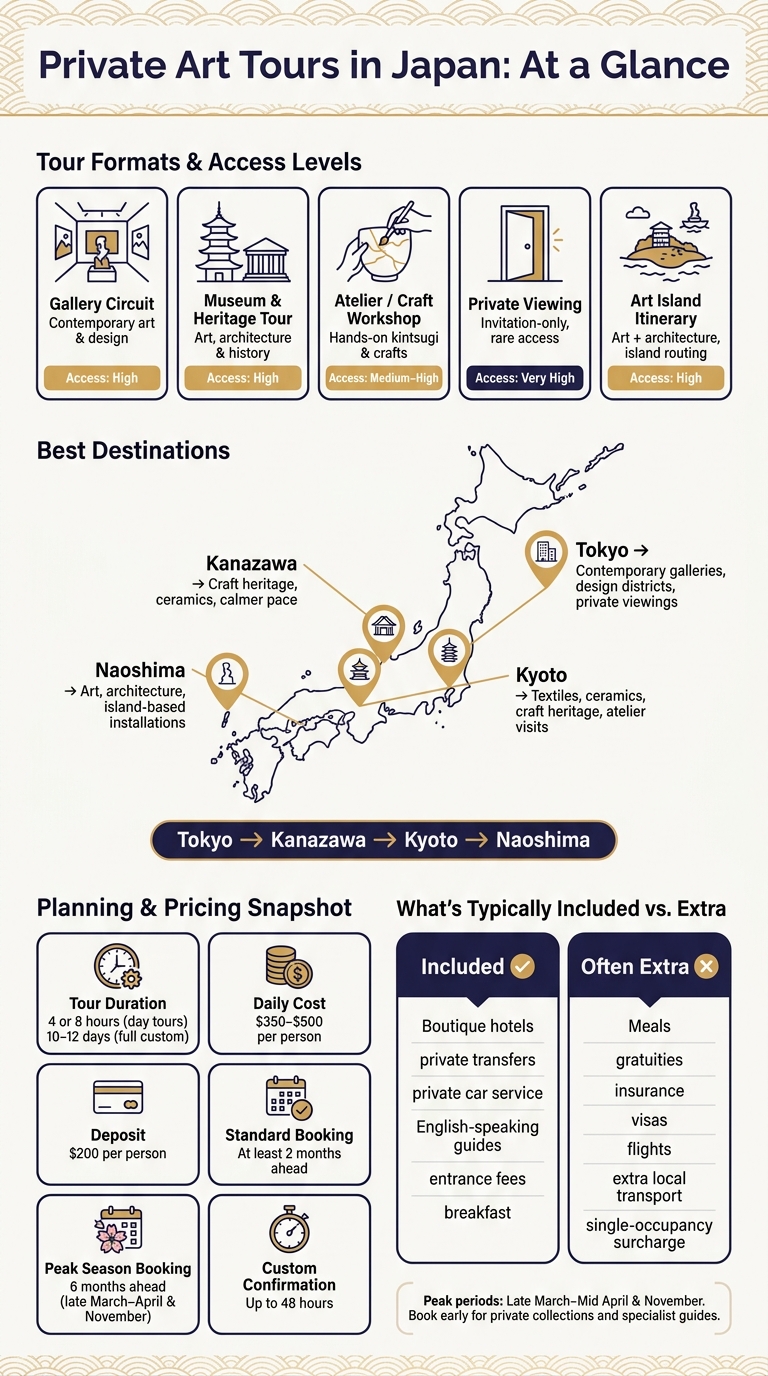
Private Art Tours in Japan: Destinations, Formats & Booking Guide
Quick Comparison
| Option | Best For | Access | Time / Booking Notes |
|---|---|---|---|
| Gallery circuit | Contemporary art and design | High | Good for short stays in Tokyo |
| Museum and heritage tour | Art, architecture, and history | High | Works well in major cities |
| Atelier / workshop | Hands-on craft learning | Medium to high | Some sessions book out early |
| Private viewing | Rare, limited-entry visits | Very high | Needs advance planning |
| Art island itinerary | Art + architecture trips | High | Needs more travel time |
If I were planning this trip, I’d start with the art style I care about most, then match it to the city, then book around the season and access rules.
sbb-itb-6675d37
Private Art Tour Formats in Japan: An Overview
Once access and logistics are sorted out, the next step is picking the format that fits the trip.
Tour Types: Galleries, Museums, Ateliers, and Private Collections
Gallery circuits in Tokyo are a good fit for travelers who lean toward contemporary art and design-led spaces. Museum and heritage tours suit people who want more context around Japanese art, architecture, and history. Atelier and craft workshop visits move the experience from looking to making. Kintsugi workshops are a strong example. Private viewings open the door to invitation-only access. Art island itineraries bring together art, architecture, and private transportation for a more complete art-and-architecture trip.
In plain terms, each format changes the level of access, context, and participation you get.
What a Luxury Art Experience Actually Includes
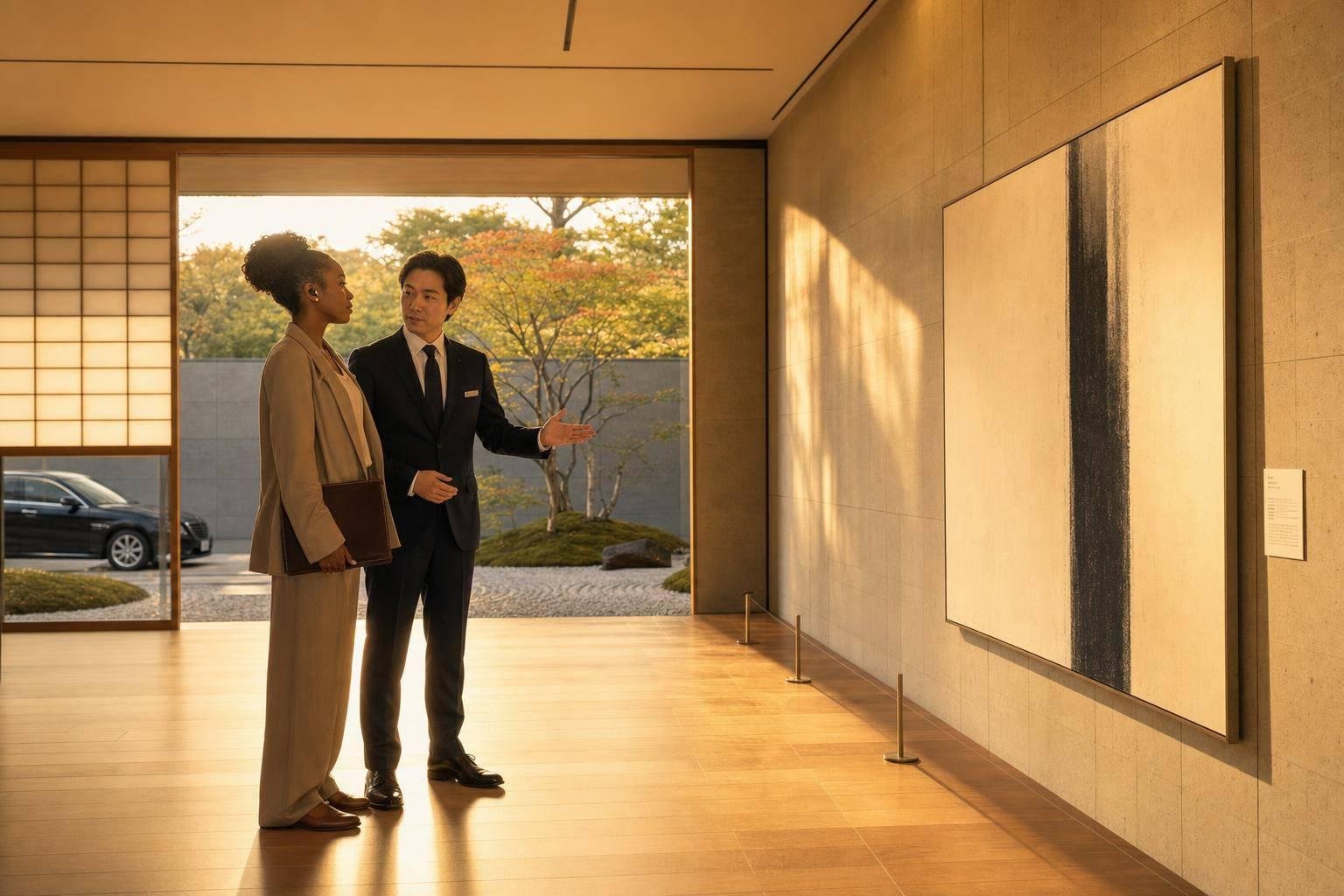
A luxury private art tour brings together the right format, expert guidance, prearranged access, and smooth transportation. A bilingual specialist explains the work and the context around it. Transportation is set up ahead of time, usually with a private car for city tours and a chartered boat for island routes. If the experience includes invitation-only access or limited spots, your tour planner handles those arrangements in advance.
Comparison Table: Choosing the Right Private Art Tour Format
| Tour Format | Ideal For and Typical Focus | Access Level |
|---|---|---|
| Gallery circuit | Contemporary art and design fans; Tokyo galleries and design-forward spaces | High |
| Museum and heritage tour | History and architecture enthusiasts; art, architecture, and heritage context | High |
| Atelier / craft workshop | Hands-on learners; kintsugi and other craft-based activities | Medium to high |
| Private viewing | Travelers seeking rare access; invitation-only or behind-the-scenes experiences | Very high |
| Art island itinerary | Architecture and installation fans; island-based art and architecture experiences | High |
With the format in place, the next step is matching it to the right destination.
Best Destinations for Private Art Experiences in Japan
Japan’s strongest private art experiences tend to gather in a few key hubs. Each one offers a different mix of access, pace, and setting. Some are better for contemporary work. Others lean into craft, architecture, or a quieter, more personal kind of visit.
That’s why your destination matters just as much as the tour format.
Tokyo: Contemporary Galleries, Design Districts, and Private Viewings
Tokyo is the best fit for contemporary galleries, design districts, and private viewings of modern collections.
Kyoto and Kanazawa: Craft Heritage, Textiles, Ceramics, and Atelier Visits
Kyoto is a strong match for travelers drawn to craft heritage and atelier visits, with a focus on textile work, ceramics, tea culture, and private craft visits in historic neighborhoods such as Gion. Kanazawa pairs well with Kyoto if you want craft heritage, ceramics, and a calmer pace.
Taken together, these cities give you a strong mix of contemporary art, craft heritage, and intimate access. Naoshima adds architecture and large-scale installation viewing.
Planning, Pricing, and Logistics for Private Art Tours in Japan
When to Go, How Far Ahead to Book, and How to Pace Your Trip
Once you’ve picked the right tour style and destination, timing becomes the big thing. It’s smart to book at least two months in advance. Most private art tours run 4 or 8 hours, and custom requests can take up to 48 hours to confirm.
If you’re visiting more than one city, don’t pack the schedule too tightly. Japan’s transit system is strong, but cross-city travel still takes time. Add some breathing room for intercity transfers, weather shifts, and local events. A lighter schedule usually makes the trip feel smoother and gives you more time to enjoy each stop instead of rushing through it.
Pricing Formats, What Is Included, and Transportation Expectations
Booking earlier can affect both access and price, especially if you want entry to private collections or time with a specialist. Private art tours are usually priced per person, often based on two travelers sharing a room, and a $200 per person deposit is commonly required to lock in the itinerary.
Most packages usually include:
- Boutique hotels
- Private transfers
- Private transport for scheduled visits
- English-speaking guides
- Entrance fees
- Breakfast
A few things are often billed separately: meals, gratuities, insurance, visas, flights, and extra local transportation. If you’re traveling alone, there’s usually a single-occupancy surcharge.
For transportation, intercity travel between Tokyo and Kyoto is usually handled by Shinkansen. Within each city, scheduled visits are generally covered by private car service.
Comparison Table: Destinations, Access Level, and Booking Considerations
Use the table below to compare access and booking needs by destination.
| Destination | Typical Focus | Access Level | Booking Considerations |
|---|---|---|---|
| Tokyo | Contemporary art, design, and private viewings | High | Usually available year-round, excluding New Year |
| Kyoto | Crafts, textiles, ceramics, and heritage | High | Specialized sessions book an average of 41 days in advance |
Arrive on time. Missed services are usually nonrefundable, and photography rules can change from one venue to the next.
How to Build a Luxury Art Itinerary in Japan
Sample Itinerary Structures by Travel Style
Your trip length should shape the route just as much as your art interests. Most private art itineraries run 10–12 days, which gives you enough time to move between cities without turning the trip into a blur.
A focused Tokyo long weekend of 3–5 days is a strong fit for contemporary art. It gives you room for private gallery visits, plus one or two exclusive collection appointments. If your interests lean more toward craft, a Kyoto + Kanazawa pairing makes sense. In that case, give Kyoto 2–3 full days for textile ateliers, ceramics studios, and heritage spaces.
If you want a slower, quieter rhythm, extend the route to Naoshima. It changes the pace of the trip in a good way.
A classic multi-stop route usually follows a clean flow: Tokyo → Kanazawa → Kyoto → Naoshima.
How Bespoke Travel Planning Improves Access and Logistics
Once the route is locked in, logistics start to matter just as much as the destinations. That’s where a travel designer can make a big difference. They handle guides, timed entries, and hotel routing so the trip feels easy instead of packed too tight.
Private car transfers help keep multi-stop days on track. They’re especially useful in Kyoto, where travel time between appointments can eat into the day fast.
A bespoke planner can also handle:
- Transfers between cities and venues
- Concierge support during the trip
- Last-minute schedule changes
Key Points for Planning Private Art Tours in Japan
When you’re planning for peak season, timing and budget matter as much as the route itself. Start with your art interests, then build the itinerary around the places that match them.
Cherry blossom season from late March to mid-April and autumn foliage in November are the hardest booking windows. Hotels and private tours during those periods should be reserved at least 6 months ahead. Even outside those months, it still helps to plan early if you want private guides, dining reservations, and special access.
For a fully arranged private tour, expect to spend around $350–$500 per person per day, depending on group size and what’s included. That extra cost gives you more privacy, expert guidance, and a slower pace.
FAQs
Which city best fits my art interests?
For private art tours in Japan, Kyoto is the best fit if you’re drawn to Japanese arts and older forms of culture. The city’s historic neighborhoods, temples, shrines, and carefully planned guided experiences make it a strong choice for an expert-led, exclusive look at local artistic heritage.
It also gives you the freedom to spend more time in the places that interest you most.
How far in advance should I book private access?
Book early. For private access and other high-demand experiences in Japan, reserve at least 3–6 months in advance.
If you’re planning for peak seasons or trying to lock in a hard-to-get private option, aim for 6–12 months ahead. That gives you a much better shot at finding open availability.
What is usually not included in the price?
Usually, the price doesn’t include international flights, visas for U.S. passport holders, lunches and dinners, travel insurance, or anything not clearly listed in the itinerary or package.