If I were planning this trip, I’d lock in the ryokan first, keep the trip to 2–3 bases, and book key meals and sake visits 1–6 months ahead depending on season. That one move cuts stress fast, especially in spring and fall when rates can jump 30%–50% and top stays fill early.
Here’s the short version:
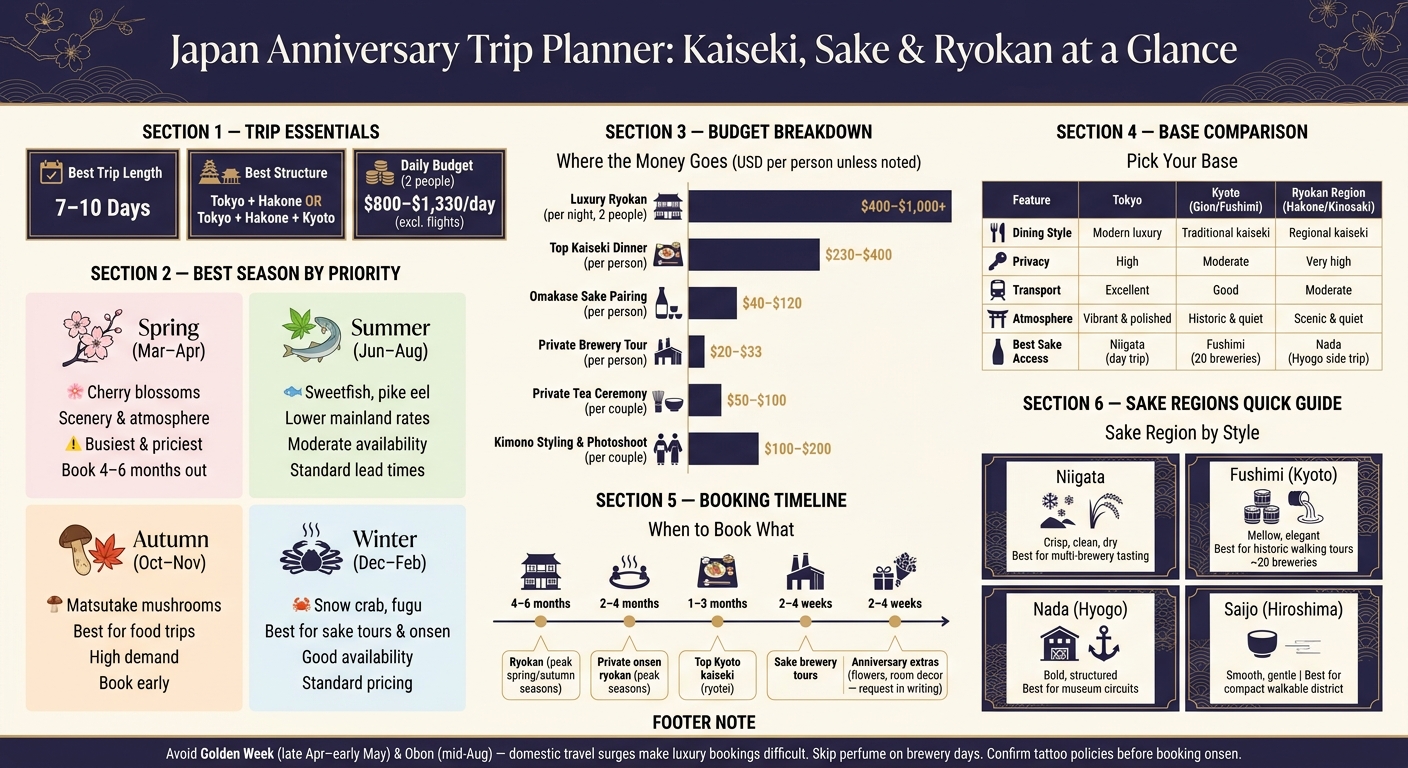
- Best trip length: 7–10 days
- Best structure: Tokyo + Hakone or Tokyo + Hakone + Kyoto
- Best seasons:
- Fall: best for food
- Winter: best for sake brewing and onsen
- Spring: best for scenery, but busiest
- Budget for two: about $800–$1,330 per day, not counting flights
- Book ahead:
- Ryokan: 2–6 months
- Kyoto kaiseki: 1–3 months
- Anniversary extras: 2–4 weeks
- Best sake areas by base:
- Useful small details: use luggage delivery, stay near dinner, skip perfume on brewery days, and confirm tattoo rules before booking onsen
Japan Anniversary Trip: Kaiseki, Sake & Ryokan Planning Guide
Best Kyoto Sake & Food Tour | Fushimi District Best Sake In Japan
sbb-itb-6675d37
Quick Comparison
| Focus | Best Base | Best For | Booking Pressure |
|---|---|---|---|
| Kaiseki | Kyoto | Multi-course dinner, evening walks | High |
| Ryokan | Hakone, Kinosaki, Arima | Private bath, slow pace, in-house dinner | High |
| Sake | Fushimi, Niigata, Nada, Saijo | Tastings, brewery visits | Medium to high in brewing season |
I’d treat this trip like a short list of high-priority bookings, not a loose vacation plan. Consider our bespoke travel services to handle the logistics. Pick one main focus, match it to the season, and build your Japan travel route around dinner timing, bath privacy, and easy transfers.
Trip Vision, Timing, and Budget Checklist
Once you know what kind of trip you want, season helps narrow everything else: the menu, the mood, and how far ahead you need to book.
Choose the Best Season for Menus and Atmosphere
Season affects the food, room demand, and rates.
Autumn (October–November) is often the sweet spot for a food-focused anniversary trip. Matsutake mushrooms are at their peak, the weather is comfortable, and fall foliage adds a romantic backdrop. Demand is high, but it’s usually less intense than spring.
Winter (December–February) works best for sake-focused trips. Brewing season runs from December through March, so brewery visits can line up with active production. It’s also the time for matsuba-gani (snow crab) kaiseki and private onsen stays surrounded by snow.
Spring (late March–April) has the strongest atmosphere, but you’ll pay for it. Room rates and restaurant demand can jump 30–50% during cherry blossom season, and top ryokan fill fast. If that’s your ideal window, book 4–6 months in advance.
Skip Golden Week (late April–early May) and Obon (mid-August). Domestic travel surges during those periods, which makes high-end bookings much tougher to get.
| Season | Kaiseki Highlights | Best For | Availability |
|---|---|---|---|
| Spring | Bamboo shoots, mountain vegetables | Atmosphere, scenery | Lowest; book 4–6 months out |
| Autumn | Matsutake mushrooms, chestnuts | Food-focused trips | High demand; book early |
| Winter | Snow crab, fugu | Sake tours, onsen | Good; standard pricing |
| Summer | Sweetfish (ayu), pike eel (hamo) | Lower mainland rates | Moderate; lower mainland rates |
Once you’ve picked the season, set the budget around room rates and kaiseki spending.
Build a Luxury Anniversary Budget in U.S. Dollars
For a 7- to 10-day luxury anniversary trip, expect to spend about $800–$1,330 per day for two, not including international flights. If you want premier suites, private guides, and exclusive-access experiences, that number can climb to $2,000+ per day.
Here’s where the main costs usually land:
| Category | Estimated Cost (USD) |
|---|---|
| Luxury ryokan or hotel (per night, two people) | $400–$1,000+ |
| Top-tier kaiseki dinner (per person) | $230–$400 |
| Omakase sake pairing (per person) | $40–$120 |
| Private sake or brewery tour (per person) | $20–$33 |
| Private tea ceremony (per couple) | $50–$100 |
| Kimono styling and photoshoot (per couple) | $100–$200 |
One thing helps here: most luxury ryokan rates include dinner and breakfast, so you’re not just paying for the room. On the other hand, sake pairings, private tours, and anniversary add-ons usually cost extra. It’s smart to leave some breathing room in the budget.
Decide Whether You Want Full-Service Planning Support
For peak seasons, reserve private onsen ryokan 2–4 months ahead. Top-tier Kyoto restaurants (ryotei) usually need 1–3 months of lead time. Anniversary extras like flower arrangements, celebratory sake, or room decorations should usually be requested 2–4 weeks before arrival, often in writing and sometimes in Japanese.
Jo Vacations can help with hard-to-get reservations, private transfers, and on-trip concierge support if you want a fully tailor-made anniversary trip to Japan.
Use those timing targets and budget ranges to choose your base and property next.
Destination and Stay Checklist for Kaiseki and Ryokan Experiences
Where you stay shapes almost everything else. It affects the food you eat, how far you need to travel after dinner, and how private the whole trip feels. Your base sets dinner timing, late-night transport, and the pace of the trip. Start by choosing a base that fits your food plans, privacy needs, and transfer limits. Then narrow your stay by culinary style, travel time, and room setup.
Pick the Right Base: Tokyo, Kyoto, or a Ryokan Region
Tokyo works well for international arrivals who want modern luxury and sake-led dining. It also gives you direct Shinkansen access to Niigata, one of Japan’s strongest sake regions.
Kyoto is the natural pick for traditional kaiseki, especially around Gion and Pontocho. Fushimi, the city’s historic sake district, has been brewing since the 14th–16th century and now has about 20 breweries.
If you want a quieter ryokan stay, look at Hakone, Kinosaki Onsen, or Arima Onsen. Hakone fits couples who want a short escape from Tokyo. Kinosaki is a good match for winter trips. Arima sits close to Nada, one of Japan’s major sake areas.
Shortlist Hotels and Ryokan with Strong Culinary Programs
Look for properties that focus on regional ingredients, offer a clear sake list, and have staff who can explain pairings in plain terms.
For more privacy, check for in-room dining or a private dining room. Also ask if the sake pairing is chef-selected, which means the kitchen chooses each pour to match each course. That pairing usually costs ¥6,000–¥12,000 per person, and it’s smart to request it when you book, not when you arrive.
For anniversary trips, confirm whether the room includes a private open-air bath instead of shared facilities. Luxury ryokan with this setup usually cost ¥30,000–¥60,000 per couple per night.
Match Your Location to Evening Reservations and Day Trips
Stay close to your kaiseki reservation, especially if dinner includes sake pairings. If you’re dining in Gion or Pontocho, book a stay in the same area or within a short taxi ride. In Tokyo, the same rule applies. Hotels near Ginza or Azabu make evening dining much easier and cut down on late-night travel.
Your location also shapes how easy tasting days will be. For brewery visits, plan around transport first:
- Fushimi is easy to reach from central Kyoto.
- Niigata works as a day trip from Tokyo by Shinkansen.
- Rural producers such as Yamanashi often need private car access.
City Hotels vs. Ryokan Stays: A Side-by-Side Comparison
| Feature | Tokyo Luxury Hotels | Kyoto Stays (Gion/Fushimi) | Ryokan Regions (Hakone/Kinosaki) |
|---|---|---|---|
| Dining Style | Modern luxury | Traditional kaiseki | Regional kaiseki with privacy |
| Privacy | High | Moderate | Very high |
| Transport Ease | Excellent | Good | Moderate |
| Atmosphere | Vibrant and polished | Historic and quiet | Scenic and quiet |
| Best Anniversary Fit | Arrival convenience and modern luxury | Kaiseki and evening walks | Privacy and onsen retreat |
Once the base is set, lock in the kaiseki table and map out the sake route. For a fully managed experience, consider exploring bespoke Japan travel packages that handle these logistics for you.
Kaiseki Dining and Sake Tour Booking Checklist
Once your base is set, it’s time to book the parts of the trip that give the stay its character: the kaiseki dinner and the sake tour. Both take planning. Both go much more smoothly when couples decide early what kind of experience they want.
Reserve the Right Kaiseki Setting for Your Celebration
Start with the setting. The best choice depends on whether you want a quiet, private meal or a more social evening with direct contact with the chef.
In-room dining gives you the most private anniversary setup. Counter seating feels more interactive and lets you follow the chef’s work course by course.
Book early, especially if you’re traveling during cherry blossom season or autumn foliage season. Add the anniversary note to the reservation so the venue can prepare a small extra. If you want flowers, ask 2–4 weeks ahead and set aside ¥3,000–¥5,000.
Be clear about dietary needs when you book. Plant-based and Halal kaiseki often need direct confirmation by email 2–4 weeks in advance. Before you pay, check the cancellation policy. Seasonal ingredient sourcing often means refund rules are strict.
Mid-range ryokan kaiseki usually runs ¥15,000–¥25,000 per person, while luxury multi-course dinners at top Kyoto ryotei can reach ¥30,000–¥60,000 per person or more when premium seasonal ingredients such as matsutake mushrooms or wagyu are involved.
Once dinner is set, move to the sake region that fits your route and energy level.
Choose a Sake Region and Tour Format
Your sake region shapes the whole tasting day. Styles vary from one area to another, and the logistics can change how you map the rest of the day.
| Sake Region | Style | Best For |
|---|---|---|
| Niigata | Crisp, clean, dry (tanrei karakuchi) | Multi-brewery tasting |
| Fushimi (Kyoto) | Mellow, elegant (onna-zake) | Historic walking tours |
| Nada (Hyogo) | Bold, structured (otoko-zake) | Museum circuits |
| Saijo (Hiroshima) | Smooth, gentle | Compact walkable district |
Choose the region that works best with your hotel base and transfer plan. From December–March, brewing is active, so visits may include live production. Outside that season, most breweries shift toward guided tours of the kura and tasting rooms. Private access to koji rooms often calls for a specialized tour.
Private brewery tours should be booked at least 2–4 weeks ahead. During peak travel periods, give yourself 1–2 months. Walk-ins are often turned away, especially in active brewing season.
After that, sort out transport before you lock in tastings.
Plan Pairings, Transport, and Tasting Logistics
For kaiseki, one of the best upgrades is an omakase sake pairing. The kitchen matches each pour to each course, which can make the meal feel much more dialed in. This usually costs ¥6,000–¥12,000 and should be requested at booking, not when you arrive.
Set up return transport before tasting starts. This part isn’t optional. Japan’s drinking-and-driving laws are strict, so prearranged transport is required. Fushimi and Saijo are both easy to reach on foot from their local train stations. Rural breweries may need private transport.
One small detail that matters: don’t wear perfume or cologne on a sake tour day. Strong scents can interfere with the brewers’ sensory assessment.
Private vs. Small-Group Sake Tours: A Side-by-Side Comparison
| Feature | Private Tour | Small-Group Tour |
|---|---|---|
| Cost | Higher (premium pricing) | Moderate to budget-friendly |
| Flexibility | Fully custom schedule and pace | Fixed route and meeting times |
| Language Support | Dedicated English-speaking guide | May rely on translated signage |
| Access | Koji rooms, production areas, direct time with brewers | Public tasting rooms and museum areas |
| Anniversary Suitability | Ideal – intimate, unhurried, exclusive | Better for social travelers |
For an anniversary trip, a private tour often earns its higher price. You set the pace, you get deeper access, and the day feels like it belongs to the two of you instead of a group. If you need to watch costs, a small-group tour in a walkable area like Fushimi can still give you a strong tasting day, even if the behind-the-scenes access is lighter.
Jo Vacations can coordinate kaiseki reservations, private sake tours, ryokan stays, and transfers in one itinerary. With those bookings handled, the next step is etiquette, packing, and departure checks.
Etiquette, Packing, and Final Anniversary Checklist
With dinner and tasting reservations locked in, this last step is all about the small things that make the trip feel smooth instead of stressful. A little prep goes a long way here.
Prepare for Dining, Ryokan, and Onsen Etiquette
At many ryokans, you’ll take your shoes off right at the entrance. Slip-on shoes make that much less of a hassle, especially when you’re in and out during the day.
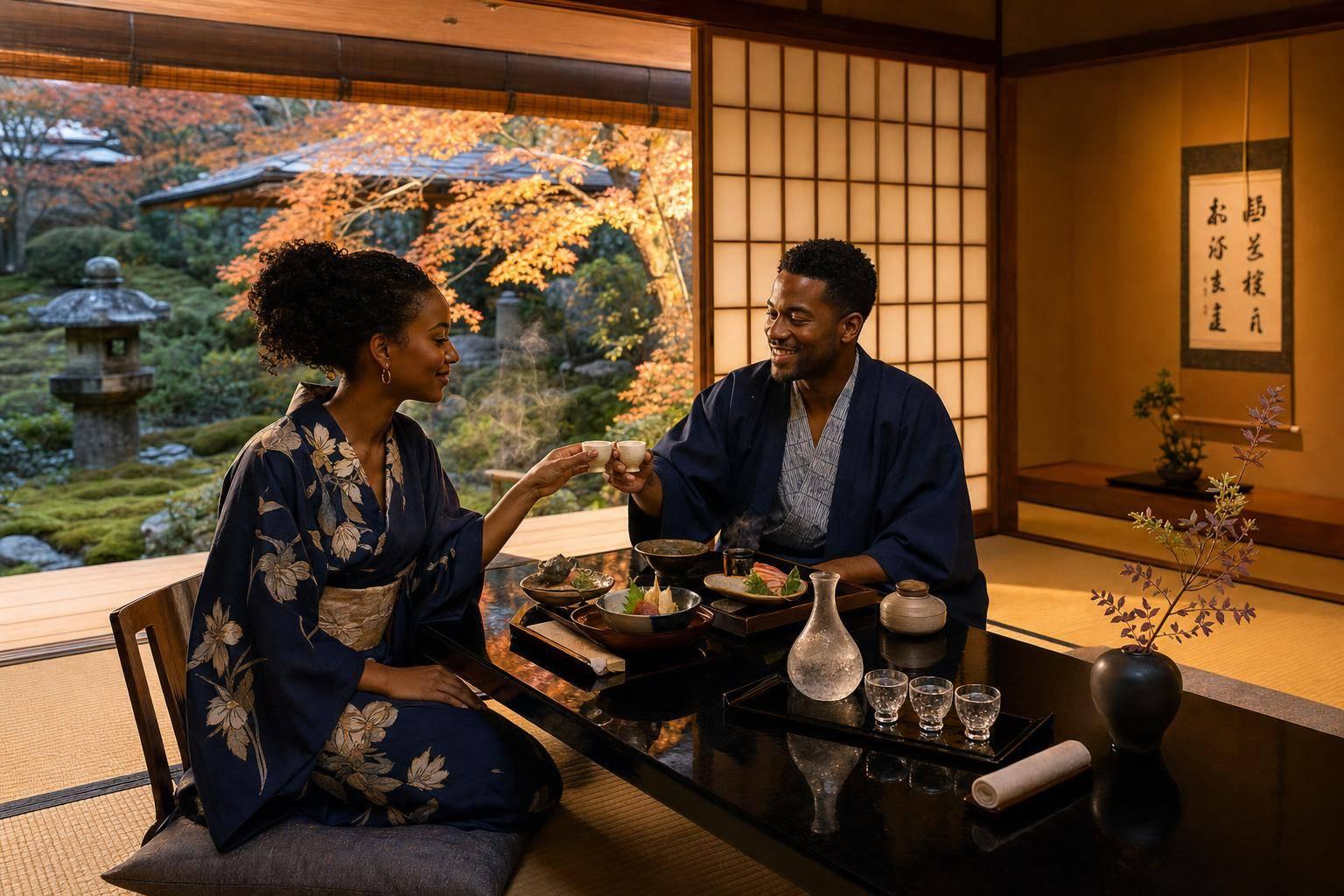
Once you’re inside, the inn’s yukata is usually fine for dinner and for walking around the property or nearby onsen towns. It’s part of the rhythm of staying in a ryokan, and it helps you settle into the experience fast.
For onsen time, it’s often better to book a private open-air bath (kashikiri rotenburo) instead of counting on communal baths, which are usually split by gender. If either of you has tattoos, check the ryokan’s policy before you book. Many high-end properties only permit tattooed guests to use private bath facilities.
At kaiseki, you can ask for sake served chilled, at room temperature, or gently warmed so it fits the course.
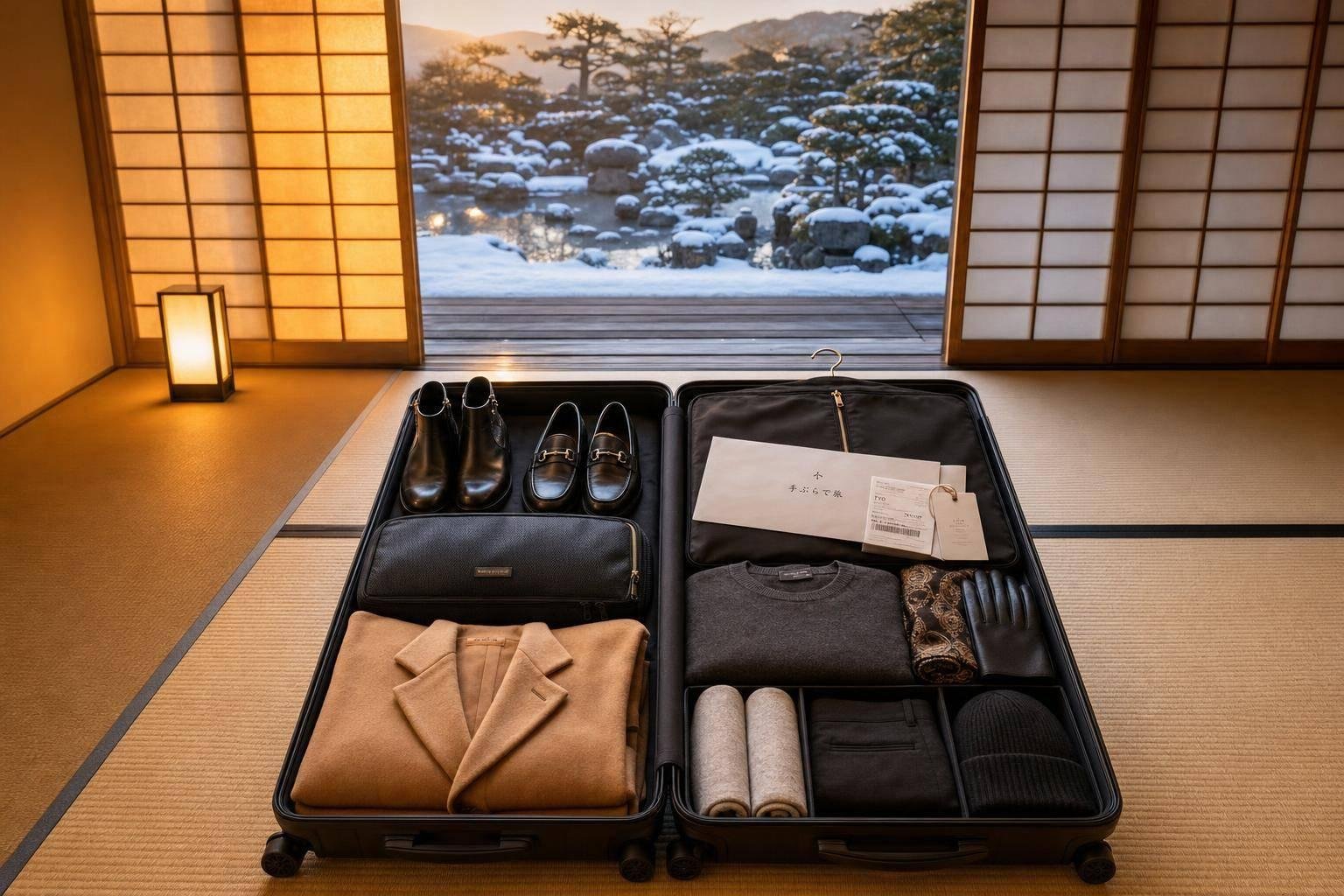
Pack for Refined Evenings and Easy Transit
You don’t need to overpack. Bring one or two polished evening outfits for kaiseki and ryokan dinners, then keep the rest practical.
A few items matter more than the rest:
- Comfortable walking shoes that are easy to remove
- Layers that fit the season
- No perfume or cologne on brewery days
That last point is worth taking seriously. Brewery floors can be wet and uneven, and temple visits often mean removing your shoes at the entrance. Strong scents can also get in the way of tasting.
Seasonal weather can shift a lot, so pack with that in mind:
| Season | Typical Temps (°F) | Key Packing Notes |
|---|---|---|
| Spring (Mar–May) | 50–70°F | Light layers, trench coat |
| Summer (Jun–Aug) | 80°F+ | Breathable fabrics, compact umbrella |
| Autumn (Sep–Nov) | 50–65°F | Light sweaters, refined layers |
| Winter (Dec–Feb) | 30–45°F | Heavy coat, thermals for brewery visits |
One tip that can save you a lot of effort: use takuhaibin (luggage delivery) to send large bags between cities for about ¥1,500–¥2,500, or around $10–$17, per bag. In most cases, luggage arrives the next day. That means you can ride the Shinkansen with just a day bag instead of wrestling with a full-size suitcase. In many ryokans, hallways are narrow, and bulky luggage can feel like a bad fit fast.
Final Booking Check Before Departure
Before you leave, reconfirm each reservation directly. That includes your kaiseki dinner, private sake brewery tour, and any anniversary add-ons.
Have the Japanese address for every hotel and ryokan saved on your phone. Taxi services and private drivers often need the exact address to get you where you’re going without confusion. It’s also smart to carry ¥5,000–¥10,000 in small bills, since smaller breweries may not take credit cards for tastings.
If you’re working with Jo Vacations, send in your final documents – passport copies, flight details, and any remaining deposits – at least two months before departure. Their 24/7 concierge support can help if plans shift while you’re on the ground.
FAQ: Planning an Anniversary Trip to Japan
If you’re still locking in reservations, four timing choices matter more than anything else.
How Far in Advance Should You Book Kaiseki and Ryokan Stays?
Book sooner than most people expect. Top ryokans in Kyoto, Hakone, and Yufuin often fill up months in advance. If you’re traveling during cherry blossom season or autumn foliage, plan to book 3 to 6 months ahead. For kaiseki, leading Kyoto ryotei usually need about 1 to 3 months’ notice.
Once your dates are set, send over any dietary notes before that booking window slips away.
It’s best to book with the restaurant directly, or have your travel planner handle the reservation and mention that it’s your anniversary. Many properties will add small touches, like room decorations or complimentary upgrades, when they know you’re celebrating.
Can Kaiseki Meals Accommodate Allergies or Dietary Restrictions?
Yes, but you need to give notice ahead of time and send it straight to the restaurant. Some kitchens can’t do much with major dietary changes, especially strict vegetarian requests, because the classic menu format doesn’t leave much room for last-minute swaps.
Is One Sake Tour Enough for a 7- to 10-Day Trip?
Yes. For a 7- to 10-day anniversary trip, one well-planned sake tour is usually enough. Japan has more than 1,400 active sake breweries, but only a small share offer private, English-language access. In most cases, one focused visit gives you more than trying to squeeze in several stops and stretching the day too far.
Once dining and tastings are set, transportation becomes the last big moving piece.
Are Private Transfers Worth It for an Anniversary Trip?
For this kind of trip, yes – in the right situations. Use a private car for brewery days, remote ryokans, and timed kaiseki dinners. For major city-to-city routes, stick with the Shinkansen. A late arrival can throw off dinner service, and a private transfer to a remote ryokan helps the day run smoothly.
Conclusion: Key Steps for a Smooth Anniversary Trip in Japan
Once your reservations and transport are set, the last job is simple: tighten up the details and confirm everything. The main idea throughout this checklist is clear: book ryokan first, then plan kaiseki and sake experiences around those dates. That step matters even more during cherry blossom season and autumn foliage, when rooms can go fast. Locking in your stay first helps protect the rest of the trip.
Try to keep your itinerary to two or three bases, and leave some breathing room between major meals and transfer days. Fewer hotel changes usually mean more time to settle into a ryokan and enjoy kaiseki dinners at a relaxed pace. That’s often the part of the trip people remember most.
Use takuhaibin for luggage, request omakase in writing, avoid strong perfume on tasting days, and tell the ryokan about the anniversary 2 to 4 weeks in advance.
If you’d rather have one team handle the trip from end to end, Jo Vacations can take care of the moving parts – ryokan bookings, kaiseki reservations, private transfers, and 24/7 concierge support – so you can keep your attention on the celebration instead of the planning.