Planning a luxury trip to the Middle East? Timing is everything. Our bespoke travel services help you navigate these seasonal nuances for a seamless experience. Here’s the short version:
- Dubai: Best weather from November to March (61–79°F), ideal for outdoor activities. Summer (June–August) is extremely hot (113°F+), but offers lower rates and quieter attractions.
- Cairo: Visit during spring (March–May) or autumn (September–November) for mild temperatures (72–86°F) and fewer crowds. Winter (December–February) is peak season with cooler weather but higher prices.
- Amman: Spring and autumn (61–81°F) are perfect for sightseeing and mild weather. Summer is hot but less humid than Gulf cities, with lower hotel prices.
Key Tip: Shoulder seasons (March–May, September–November) offer a balance of pleasant weather, fewer tourists, and moderate pricing across all destinations.
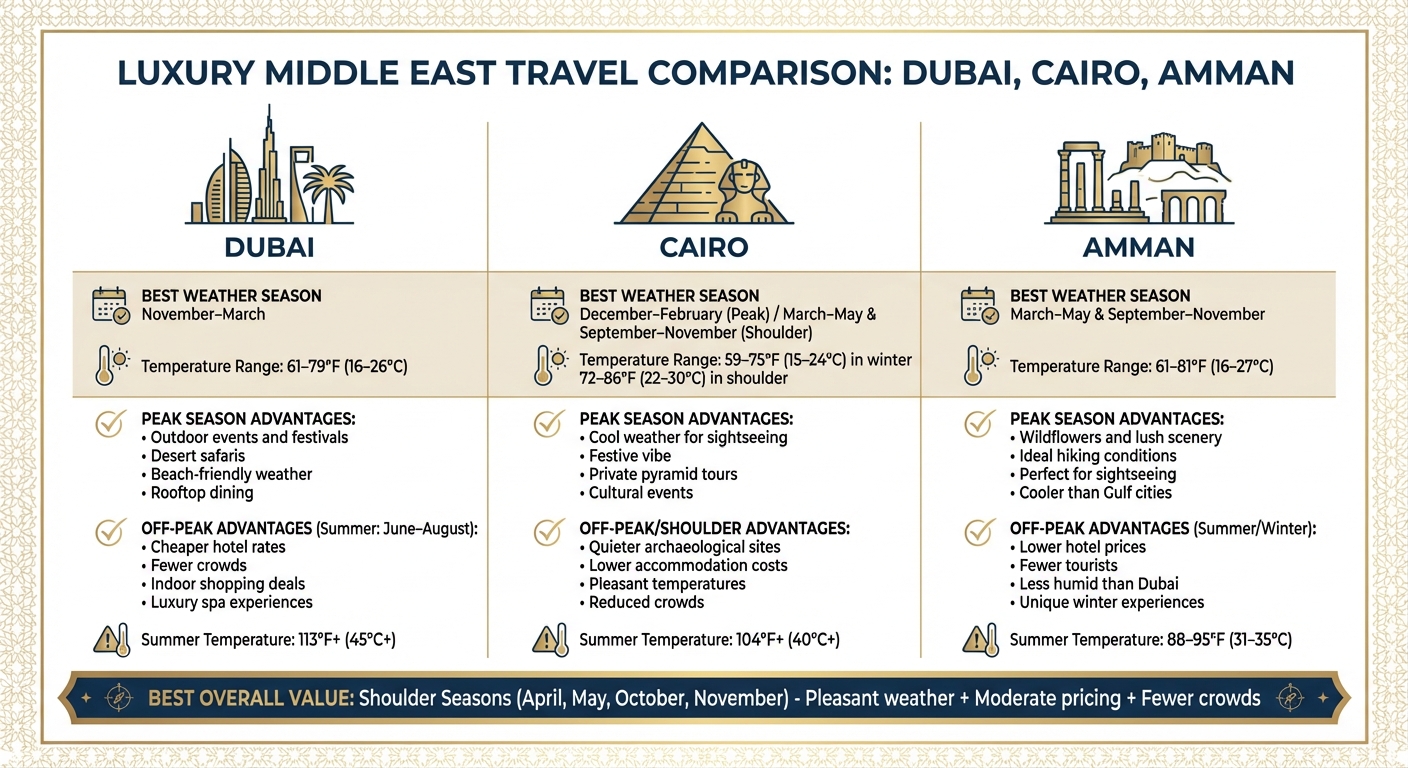
For a quick comparison, see the table below:
| Destination | Best Weather Season | Temperature Range | Peak Advantages | Off-Peak Advantages |
|---|---|---|---|---|
| Dubai | November–March | 61–79°F | Outdoor events, mild weather | Cheaper rates, fewer crowds |
| Cairo | December–February | 59–75°F | Cool weather, festive vibe | Quieter sites, lower costs |
| Amman | March–May, Sep–Nov | 61–81°F | Ideal for hiking, sightseeing | Lower prices, fewer tourists |
Whether you prefer mild weather, quieter attractions, or budget-friendly luxury, timing your trip right ensures a better experience.
Middle East Luxury Travel: Best Seasons Comparison for Dubai, Cairo, and Amman
1. Dubai
Optimal Travel Seasons
The best time to visit Dubai is between November and March, when temperatures range from a pleasant 61°F to 79°F (16–26°C). This season is perfect for outdoor adventures like desert safaris or enjoying rooftop dining. If you’re looking for slightly quieter times, the shoulder months – March to April and October to November – offer mild weather and are great for water activities like swimming and snorkeling.
On the flip side, summer in Dubai (June through August) comes with intense heat, often exceeding 113°F (45°C). During these months, the focus shifts indoors, with opportunities to explore luxury shopping malls, indulge in exclusive spa treatments, and savor fine dining. The bonus? Hotels are much more affordable, and top attractions are far less crowded.
Luxury Experiences by Season
Dubai’s luxury offerings change dramatically with the seasons. Winter, from December to March, is the prime time for outdoor indulgence. Think desert stargazing under crystal-clear skies, lounging at beach clubs, or attending iconic events like the Dubai World Cup in March, the world’s richest horse race. Notable events like the Dubai Shopping Festival in January and Art Dubai in March also make this season a magnet for high-end travelers.
During the summer, the focus shifts indoors to escape the heat. Visitors can enjoy world-class spas, sprawling luxury malls, and indoor theme parks. The Dubai Summer Surprises festival in June adds a touch of entertainment tailored for this off-peak season.
Crowd Levels and Pricing Trends
Winter in Dubai draws the largest crowds and highest prices, especially around New Year’s Eve, when the Burj Khalifa fireworks light up the city. If you’re planning to visit during this time, make sure to book accommodations and experiences well in advance.
For those seeking luxury on a budget, summer is ideal. From June to September, hotel rates drop significantly, and during Ramadan, travelers can enjoy even lower prices along with unique Iftar experiences and adjusted business hours. The shoulder months of March–April and October–November strike a balance, offering moderate pricing and manageable temperatures – perfect for those seeking affordable luxury.
sbb-itb-6675d37
2. Cairo
Optimal Travel Seasons
Cairo shines as a luxury destination during the shoulder seasons – spring (March–May) and autumn (September–November). These months bring mild temperatures, typically between 72°F and 86°F (22–30°C), making outdoor activities more enjoyable. Plus, hotel rates tend to dip compared to the busier winter months. Spring offers an added bonus with the blooming landscapes and the chance to experience the ancient Sham El-Nessim festival, celebrated on Easter Monday with picnics along the Nile.
Winter (December to February) is Cairo’s peak season, attracting large crowds thanks to its cooler weather. During this time, luxury Nile cruises and five-star hotels are in high demand, especially around Christmas and New Year, so early booking is essential. On the flip side, summer (June to August) brings scorching heat, often exceeding 104°F (40°C), which can make outdoor sightseeing tough. However, early morning visits to iconic sites like the Giza Plateau offer a quieter, more exclusive experience during these hotter months.
Each season brings its own flavor to luxury travel in Cairo, creating unique opportunities for visitors.
Luxury Experiences by Season
Winter is the prime time for indulgent experiences. Visitors can enjoy private guided tours of the Pyramids, exclusive access to select archaeological sites, and even intimate dinners set against the backdrop of ancient monuments. Cultural events like the Cairo International Book Fair in January and the Cairo International Film Festival in November add another layer of sophistication to the season.
In the summer, luxury shifts indoors to escape the heat. The Grand Egyptian Museum, kept at a cool 73°F (23°C), offers a refreshing retreat alongside its world-class exhibits. Evening activities like sunset felucca dinner cruises along the Nile provide a relaxing escape, and during Ramadan, the Iftar feasts and lively street celebrations transform the city’s evenings into a vibrant cultural experience.
These seasonal changes not only shape the types of experiences available but also influence crowd sizes and pricing.
Crowd Levels and Pricing Trends
Winter sees the highest demand, with large crowds and premium pricing. For instance, a luxury Cairo and Nile packages can cost around $14,395 per person. Popular accommodations like the iconic Mena House Hotel often require reservations at least a month in advance during this busy period. By contrast, summer offers fewer tourists and lower rates, making it a quieter and more budget-friendly option. The shoulder seasons strike a balance, combining pleasant weather with reasonable prices, making them ideal for extended archaeological adventures.
3. Amman
Optimal Travel Seasons
Spring (March–May) and autumn (September–November) are the ideal times to visit Amman, offering mild temperatures ranging from 61°F to 81°F. As one expert puts it, "The best time to visit Amman… is between March and May. These are Jordan’s spring months and temperatures are warm but not too hot… perfect for sightseeing and exploring the Citadel". October is also a standout month: "Sunny days, clear skies and temperatures that are warm, rather than hot are perfect for sightseeing".
Spring brings a burst of color with blooming wildflowers and lush landscapes, particularly around spots like Ajloun Forest. Autumn, on the other hand, is a great time for coastal trips, thanks to warmer water temperatures. With its elevation of about 2,600 feet, Amman enjoys cooler weather than areas like the Dead Sea, and with over 310 sunny days a year, the city offers plenty of opportunities for outdoor exploration.
These seasons set the stage for a variety of luxury activities and destinations, as outlined below.
Luxury Experiences by Season
Spring and autumn are prime times for indulging in unique experiences. Visitors can enjoy evening street food tours in May or explore archaeological sites like Jerash with fewer crowds. Shoulder months like March and November are increasingly popular for travelers seeking quieter visits to historical landmarks.
Winter offers cozy indoor activities, such as professional cooking classes, while summer’s heat – July averages 88°F, with highs reaching 95°F – makes early morning sightseeing a smart choice. Travelers often pair a Jordan itinerary with luxury trips to Dubai to experience the full breadth of the region. Amman’s cooler climate compared to the Dead Sea, where temperatures can soar past 104°F, adds to its appeal during the hotter months.
These seasonal variations also impact pricing and crowd levels, as described below.
Crowd Levels and Pricing Trends
High-end hotels like the Fairmont Amman and The Ritz-Carlton are in high demand during peak months like April, May, and October, often booking up quickly. Travelers can sometimes access perks like $100 resort credits or room upgrades at premier accommodations, arranged through specialized advisors.
In contrast, summer (June–August) and winter (December–February) bring reduced rates, as hotels adjust pricing to attract visitors willing to face more extreme weather. For those visiting during peak months, cool evenings make packing layers essential for outdoor dining or enjoying sunset views.
Comparison: Advantages and Drawbacks by Season
When planning your trip, think about what matters most – whether it’s ideal weather, saving money, or avoiding crowds. Each city has its own perks depending on the time of year.
Dubai shines from November to March, with temperatures ranging from 61°F to 79°F – perfect for desert safaris and beach outings. The downside? This comfort comes with higher hotel prices and busier attractions. On the flip side, summer (June–September) brings intense heat, but you’ll find cheaper hotel rates, fewer tourists, and plenty of air-conditioned indoor activities to enjoy.
Cairo offers a different set of seasonal pros and cons. Its peak season, December through February, boasts great weather for sightseeing but also high demand, requiring early reservations. If you visit during the shoulder months (March–May or September–November), you’ll enjoy pleasant weather, reduced crowds, and more affordable accommodations. Summer, while extremely hot, offers quieter archaeological sites like the Pyramids.
Amman provides a cooler climate compared to Dubai, averaging 63°F versus Dubai’s 83°F, and experiences all four seasons. Spring and autumn are ideal for visiting landmarks like Jerash or the Citadel, thanks to mild temperatures. Winter can bring rain and even occasional snow at higher elevations. While summers are hot, they’re less humid than in the Gulf states, and hotels often lower their rates during this time for travelers willing to brave the heat.
Here’s a quick look at how each city’s seasons impact luxury travel, highlighting the benefits and challenges:
| Destination | Best Weather Season | Temperature Range | Peak Advantages | Off-Peak Advantages |
|---|---|---|---|---|
| Dubai | November–March | 61–79°F | Outdoor festivals, desert safaris, and beach-friendly weather | Cheaper rates, fewer crowds, and indoor shopping deals |
| Cairo | December–February | 59–75°F | Perfect for exploring ruins and enjoying a festive vibe | Quieter archaeological sites and lower costs in shoulder seasons |
| Amman | March–May & September–November | 61–81°F | Wildflowers, lush scenery, and ideal hiking conditions | Fewer tourists and the rare chance to see snow in the desert |
If you’re looking to balance luxury and affordability, consider Dubai in the summer or during Ramadan (April–May), Cairo during the shoulder seasons, or Amman in June–August when hotel prices drop. The key is finding the right balance between comfort and budget.
Conclusion
Plan your luxury getaway to the Middle East by considering the best balance of weather, crowd levels, and costs. The shoulder months – April and October – are ideal for experiencing the region in all its splendor, offering pleasant temperatures, fewer tourists, and more affordable rates.
In Dubai, temperatures in the mid-70s°F during these months create a perfect setting for water sports and outdoor festivals. Cairo also shines during this time, with breezy days in April and balmy October evenings that are ideal for exploring the Pyramids or cruising along the Nile. Meanwhile, Amman offers its own seasonal highlights – April brings vibrant wildflower blooms, while October’s autumn harvest transforms the landscape with rich, colorful hues. Each destination offers its own unique charm during these months, making for a truly personalized luxury experience.
As travel writer Jack Beckford puts it:
The best time to visit the Middle East is spring (April–May) or autumn (October–November). These months allow you to avoid the intense summer heat while still enjoying warm weather across the region.
These shoulder months provide the perfect backdrop for a range of activities, from early-morning archaeological tours to breathtaking desert safaris and rooftop dining under the stars. Whether you’re exploring Dubai, Cairo, or Amman, timing your visit during these months ensures a more enjoyable and luxurious experience.
For those seeking exceptional value and unforgettable moments, Cairo and Amman in April or October offer average highs of about 86°F and 81°F, respectively. Dubai also delivers a well-rounded mix of adventure and relaxation during these months, making it an excellent choice for travelers.
Whether you’re drawn to Dubai’s modern allure, Cairo’s historical treasures, or Amman’s natural beauty, visiting in April or October guarantees a balanced and enriching journey. At Jo Vacations, we specialize in creating tailored itineraries that align with the best seasonal windows, ensuring your trip is perfectly suited to your preferences and budget.
FAQs
How far in advance should I book for peak season?
To make sure you get the accommodations and availability you want during busy travel seasons, aim to book your trip 3 to 6 months in advance. Months like April, May, October, and November are especially popular and tend to sell out fast. Planning early can help you avoid last-minute stress and enjoy a smoother experience.
What should I pack for Dubai, Cairo, and Amman by season?
In Dubai, summer (June–September) calls for lightweight clothing, plenty of sun protection, and swimwear. For winter (December–February), pack sweaters and a light jacket to stay comfortable during cooler evenings.
For Cairo and Amman, spring and fall are best suited for breathable layers and a light jacket. Winter months require warm clothing, such as sweaters and scarves. During summer, stick to lightweight, modest outfits. No matter the season, comfortable shoes and sun protection are essential for exploring outdoors.
Is Ramadan a good time for luxury travel in Dubai or Cairo?
Ramadan offers a unique opportunity for luxury travel in destinations like Dubai and Cairo. During this time, visitors can experience the festive atmosphere, complete with dazzling lights, lively night markets, and exclusive dining events. Despite the holy month’s significance, most major attractions continue to operate as usual, allowing travelers to explore these cities while enjoying a deeper connection to local traditions and celebrations.