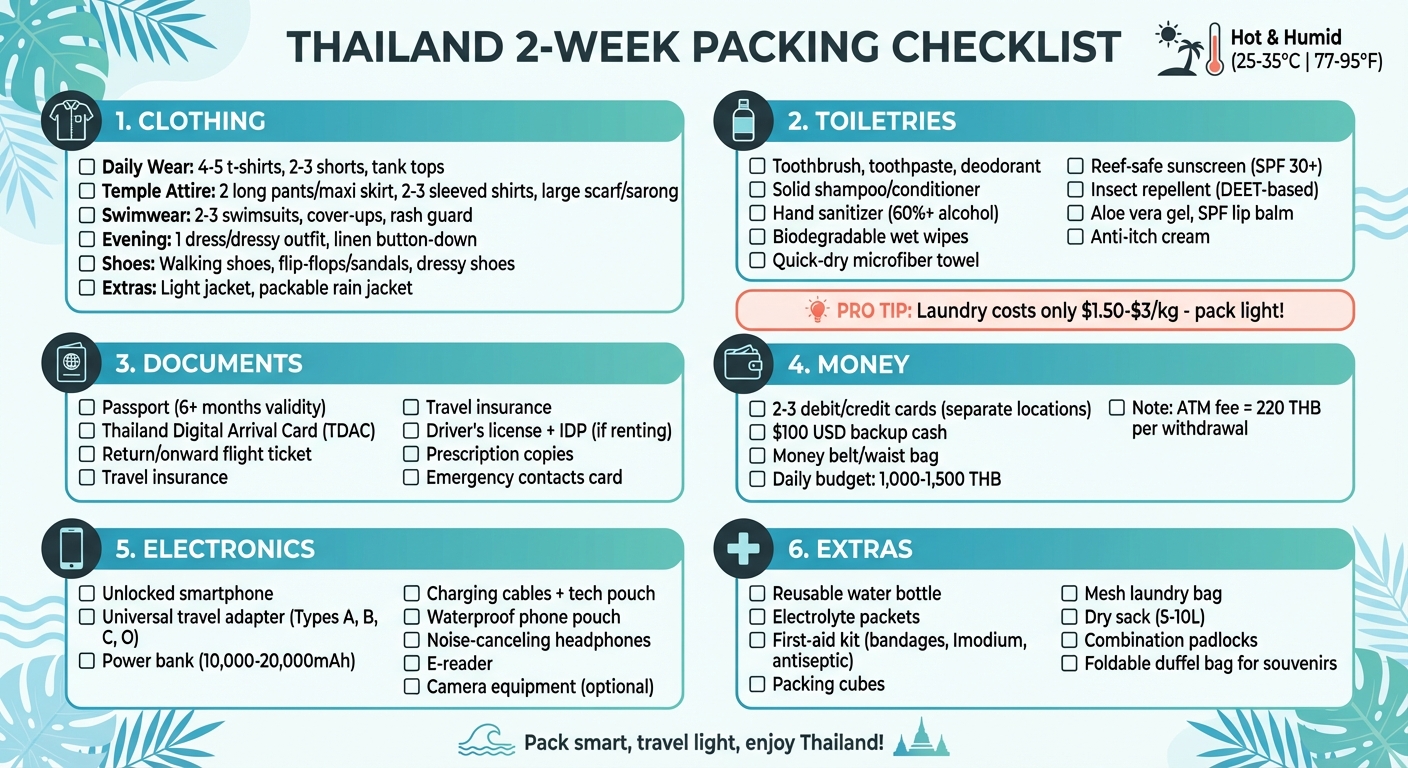
Packing for a two-week trip to Thailand can feel overwhelming, but it doesn’t have to be. Here’s the quick version: Stick to lightweight, breathable clothing for the tropical heat, modest outfits for temple visits, and versatile pieces that work for both casual days and upscale evenings. Add swimwear, sun protection, and comfortable shoes, and you’re set. Don’t forget travel documents, toiletries, and key electronics like power banks and adapters. Pack light – you can always do laundry locally for just $1.50–$3 per kilogram.
Essentials at a Glance:
- Clothing: Linen/cotton tops, shorts, temple-appropriate outfits, swimwear, and eveningwear.
- Shoes: Walking shoes, sandals, and dressy options.
- Toiletries: Reef-safe sunscreen, insect repellent, and solid toiletries.
- Documents: Passport (6-month validity), travel insurance, and Thailand Digital Arrival Card.
- Electronics: Universal adapter, power bank, and waterproof phone pouch.
- Extras: Reusable water bottle, quick-dry towel, and a first-aid kit.
Travel light, stay comfortable, and enjoy everything Thailand has to offer – from bustling cities to serene beaches.
Complete Thailand Packing Checklist for Two-Week Trip
Clothing to Pack for Two Weeks in Thailand
Lightweight Basics for Daily Activities
Thailand’s heat and humidity call for breathable, natural fabrics that keep you cool and comfortable. Pack 4–5 short-sleeve t-shirts in light cotton or moisture-wicking materials, 2–3 pairs of shorts made from linen or quick-dry fabrics, and a couple of tank tops for casual outings. Skip heavy fabrics like denim, leather, and polyester – they tend to cling uncomfortably in the humidity.
Opt for loose, light-colored clothing to stay cool and reflect sunlight. Fabrics such as linen, bamboo, and rayon are great choices – they dry quickly if you’re caught in a tropical downpour or work up a sweat. While white clothing may seem like a good idea, it can stain easily from dust or perspiration, and local laundry services may struggle to restore its brightness.
"Remember, you may be sweating plenty, and heavy fabrics glued to your skin as you contemplate delicate temple architecture will be the last thing you want on your mind." – Aube Rey Lescure, Editor-in-Chief, Off Assignment
When packing, also consider clothing suitable for Thailand’s revered temples.
Temple-Appropriate Clothing
Visiting Thailand’s 40,000+ temples requires modest attire. Make sure your shoulders and knees are covered out of respect. Pack two pairs of long linen pants or a maxi skirt along with 2–3 t-shirts or button-downs with sleeves. Avoid tank tops, cropped tops, shorts above the knee, and tight leggings.
A large scarf, shawl, or sarong is a versatile addition to your wardrobe. It can be used to cover your legs or shoulders as needed and also doubles as a layer against the intense air conditioning in malls and public transport. If you need extra modest clothing, you can pick up a pair of "elephant pants" at a local night market. For footwear, bring slip-on shoes or sandals, as you’ll need to remove them before entering temples.
Swimwear and Beach Clothing
For beach days and poolside relaxation, pack 2–3 swimsuits so you always have a dry option. Lightweight cover-ups like a cotton kaftan, a linen shirt, or a sarong are perfect for transitioning between the water and casual dining spots.
Quick-dry fabrics are a must if you’re planning frequent dips in the water, especially during private beach outings arranged through Jo Vacations. If you’re into water activities like snorkeling or kayaking, consider packing a rash guard or swim shirt for extra sun protection.
Evening and Fine Dining Outfits
Thailand’s vibrant nightlife and fine dining scenes call for a couple of dressier outfits. Women might pack a classic black dress, a maxi skirt with a silk camisole, or wide-leg linen trousers paired with a cropped satin top. Men can go for a linen button-down shirt with slacks or dark jeans. Loafers or boat shoes are ideal for men, while women can opt for neutral flats or dressy sandals – perfect for navigating uneven walkways.
For Bangkok’s rooftop bars like Sirocco Sky Bar or Moon Bar, a polished look is essential. Bring a light cardigan, pashmina, or thin long-sleeved shirt to stay comfortable in air-conditioned venues. If you need to refresh your eveningwear, local laundry services are affordable, charging just $1–$2 per kilo.
Shoes and Light Jackets
Comfortable walking shoes with good arch support are a must for exploring Bangkok’s bustling streets and markets. For beach days and temple visits, pack flip-flops or slip-on sandals. Reserve a pair of dressy sandals or loafers for upscale evenings.
A light jacket, linen shirt, or shawl is handy for air-conditioned spaces, including malls, buses, and hotels. It’s also useful during Thailand’s rainy season (May to October) or cooler evenings in the northern regions. Consider adding a thin, packable rain jacket to your bag – it takes up minimal space and is a lifesaver during unexpected tropical downpours.
sbb-itb-6675d37
Minimalist Thailand Packing List: What to Pack For 2 Weeks!
Toiletries and Personal Care Items
When you’re planning a luxurious trip, packing the right toiletries and personal care items can make all the difference. These essentials combine practicality and comfort, ensuring you feel refreshed and ready for every adventure.
Basic Hygiene Products
Start with the basics: travel-size toothbrush, toothpaste, deodorant, shampoo, and conditioner. Solid toiletries are a smart choice – they save space and eliminate the risk of leaks. If you prefer liquids, use leak-proof silicone bottles to avoid messy spills.
It’s a good idea to bring deodorant from home, as many products sold in Thailand contain skin-whitening ingredients, which might not suit everyone. Hand sanitizer and biodegradable wet wipes or tissues are must-haves, especially since many public restrooms don’t supply toilet paper. A microfiber quick-dry towel is another practical addition. It dries quickly, even in Thailand’s humid climate, and takes up very little luggage space.
Once you’ve got hygiene covered, shift your attention to skincare and sun protection – key for navigating Thailand’s tropical weather.
Skincare and Sun Protection
Pack a reef-safe sunscreen with SPF 30 or higher. Thailand has banned sunscreens containing harmful chemicals like oxybenzone and octinoxate in marine national parks to protect coral reefs. Since reef-safe options can be pricey and hard to find locally, it’s best to bring your own. Supergoop! Unseen Sunscreen is a popular pick for its lightweight, matte finish, while Sun Bum Original SPF 50 is a reliable choice for full-body coverage.
"Make sure to bring reef-safe sunscreen if you plan to hit the beach, as it’s not widely available in local shops. Certain chemicals in sunscreen can harm or even kill the coral reef." – Tida Harnpanpongse, Public Relations Manager, Tourism Authority of Thailand
Don’t forget aloe vera gel or after-sun lotion to soothe your skin after a day in the sun, and pack SPF lip balm to protect your lips. Lightweight, gel-based moisturizers or Vitamin C serums are better suited for Thailand’s humidity than heavy creams. Apply sunscreen first, wait 10–15 minutes for it to absorb, and then layer insect repellent on top to ensure both products work effectively.
Speaking of insect repellent, DEET-based or high-quality natural options are essential to guard against mosquitoes, which can carry diseases like dengue fever or malaria. While mosquito spray is available at local 7-Elevens for about $2, bringing a trusted brand like Badger Anti-Bug Shake & Spray ensures you’re protected from day one. Also, pack anti-itch cream to handle any bites you might get.
Beyond these essentials, consider a few optional items to cater to your personal preferences.
Optional Personal Items
If you wear makeup, stick to minimal, waterproof options like mascara and SPF-tinted moisturizer. For feminine hygiene, bring a two-week supply of your preferred products, as they may be harder to find outside major cities like Bangkok.
Rehydration salts or electrolyte packs can help you stay hydrated in the heat, and a small first-aid kit is always a good idea. Include blister plasters, antiseptic wipes, anti-diarrheal medication, and paracetamol. Keep prescription medications in your carry-on, along with a copy of the prescription, to avoid complications if your checked luggage gets lost. A hanging toiletry bag is another handy addition, especially for hotels with limited counter space.
Travel Documents and Money
Sorting out your documents and finances before your trip can save you a lot of trouble upon arrival. Thailand’s entry process is simple, but missing even one document can create unnecessary delays at immigration.
Required Travel Documents
Your passport needs to be valid for at least six months beyond your arrival date and must have at least one blank page for the entry stamp. Starting May 1, 2025, all travelers entering Thailand must complete the Thailand Digital Arrival Card (TDAC) within three days before arrival. Even if you’re eligible for visa-free entry, this online registration is mandatory. Be sure to print or save the confirmation to show immigration officials.
You’ll also need a confirmed return or onward flight ticket, as officials may ask for proof that you’re leaving the country. Additionally, immigration officers might request proof of sufficient funds, typically 10,000 to 20,000 Thai Baht per person in cash or its equivalent. If you’re coming from or transiting through a yellow fever risk country, don’t forget to carry a Yellow Fever vaccination certificate. Planning to rent a scooter or car? Bring both your home driver’s license and an International Driving Permit (IDP).
While travel insurance isn’t mandatory, it’s highly advisable to have coverage for medical expenses and emergencies. For prescription medications, keep them in their original packaging along with a copy of your doctor’s prescription to avoid any issues at customs. Make sure to store both physical and digital copies of your passport, TDAC confirmation, insurance details, and prescriptions for easy access.
"Make sure to bring some practical items, such as Ziploc bags to store valuables, as you never know when Mother Nature decides to bless you with the rain and rainbows." – Tida Harnpanpongse, Public Relations Manager, Tourism Authority of Thailand
Protect your important documents from the rain by using Ziploc bags or dry sacks. Jo Vacations recommends leaving original documents in your hotel safe and carrying photocopies when you’re out exploring. Keep a contact card with your hotel’s address, the nearest U.S. embassy or consulate, and emergency numbers like 191 (police) and 1155 (Tourist Police).
With your documents sorted, the next step is managing your finances.
Money and Payment Methods
Thailand is still a cash-heavy society, especially when it comes to street food, markets, and smaller vendors. Plan to withdraw Thai Baht from official ATMs upon arrival. Note that Thai banks charge a 220 THB fee for foreign card withdrawals, so it’s better to withdraw larger amounts less often to save on fees. A daily budget of 1,000–1,500 THB should cover most of your expenses.
To avoid being stranded without access to funds, carry 2–3 debit or credit cards stored in different places. Travel-friendly cards like Revolut or Wise can help you save on exchange rate fees. While major credit cards like Visa and Mastercard are widely accepted in malls and upscale restaurants, it’s smart to keep around $100 USD in cash as a backup.
For security, use a money belt or waist bag to keep your cash and cards safe. Notify your bank about your travel dates to prevent any issues with international transactions. Avoid storing valuables like money or electronics in bus cargo holds or roof compartments, as theft from these areas is a known problem.
If you need assistance with secure transfers or local financial advice, Jo Vacations concierge services are available to help.
Electronics and Tech Gear
Once your documents and finances are in order, it’s time to focus on the tech essentials that can elevate your travel experience. When it comes to luxury travel in Thailand, having the right gadgets ensures seamless navigation, reliable communication, and an overall hassle-free journey.
Required Travel Electronics
Your unlocked smartphone is non-negotiable. Make sure it supports local eSIMs or physical SIM cards so you can easily use apps like Grab or Bolt for transportation, navigate with Google Maps, and stay in touch with services like Jo Vacations concierge. For areas with spotty service, download offline maps in advance.
Thailand uses a variety of plug types – A, B, C, and O – so a universal travel adapter is a must. To keep your phone charged throughout the day, carry a 10,000–20,000mAh power bank in your carry-on. Organize your charging cables in a tech pouch to avoid tangling, and protect your devices from water damage with a waterproof phone pouch or dry bag – especially useful for boat rides, beach outings, or unexpected rain showers.
Thailand’s standard voltage is 220V, so most modern chargers for phones and laptops will work without issue. However, leave high-wattage appliances like hair dryers at home.
For uninterrupted internet access, consider purchasing a tourist eSIM through apps like Airalo before your trip or pick up a local SIM card at the airport. For instance, DTAC’s Happy Tourist eSIM offers 15 days of unlimited 5G data and calls for just 699 baht (around $20). To protect your data on public Wi-Fi, install a VPN before your trip.
Once your connectivity is sorted, it’s time to gear up for entertainment and capturing memories.
Entertainment and Camera Equipment
Long journeys and stunning sights call for gear that keeps you entertained and helps you document your adventures. Noise-canceling headphones are a lifesaver on overnight trains or noisy buses, while an e-reader like a Kindle is perfect for carrying an entire library in one lightweight device – ideal for relaxing by the pool or on the beach.
For photography enthusiasts, a mirrorless camera equipped with a 24-70mm lens is a versatile choice for capturing high-quality shots. Enhance your photos with a circular polarizing filter, which helps create vivid blue skies and reduces reflections on water surfaces. If underwater adventures are on your itinerary, a GoPro or waterproof action camera is essential for snorkeling and other water activities.
A lightweight carbon fiber tripod is handy for capturing long exposures at night markets or temples. If you’re into aerial photography, the DJI Mini 4 Pro drone is compact (under 249g) and shoots stunning 4K videos – just make sure to check Thailand’s drone regulations before taking to the skies. To safeguard your photos, always back them up to at least two portable SSDs, keeping them in separate bags to avoid losing everything in case of theft or accidents.
"The number one rule I came away with after countless customer interactions is, always backup your shit." – Logan Brown, Travel Photographer
For spontaneous moments, attach your camera gear to your backpack with a Capture Clip, ensuring you’re always ready to snap that perfect shot.
Luggage and Packing Organization
Now that your tech essentials are sorted, it’s time to focus on choosing the right luggage and organizing it effectively. Thoughtful luggage selection can make your journey between Thailand’s bustling cities and serene islands much smoother.
Selecting Your Luggage
For luxury city travel with private transfers, a wheeled suitcase is a smart choice. These suitcases are perfect for keeping formalwear wrinkle-free and are especially convenient in dynamic cities like Bangkok, where hotel staff often assist with luggage. However, if your plans include hopping between islands on long-tail boats or navigating uneven terrain, a 40–55L travel backpack – like the Osprey Farpoint or Fairview – offers better flexibility. Opt for lightweight, water-resistant luggage, and consider packing a foldable duffel bag for any souvenirs you pick up along the way.
Once you’ve selected the right luggage, keeping it organized is the next step.
Packing Tools for Organization
Packing cubes are a game-changer for staying organized and maximizing luggage space. These handy tools let you sort clothing by category or outfit, making it easy to grab what you need without unpacking everything. This level of organization is especially helpful when transitioning between urban luxury and laid-back island escapes.
Mesh laundry bags are another must-have, ideal for separating damp swimwear or sandy clothes from clean items after a day at the beach. A 5–10L dry sack can safeguard your electronics and important documents during boat rides or unexpected rain. Reusable shopping bags are also versatile – they work as market totes and help reduce single-use plastics.
Protecting Your Luggage
To travel worry-free, prioritize security and weather protection. Use combination padlocks to secure your bags and pack a rain cover to shield them from sudden downpours. A small crossbody bag is perfect for keeping essentials like your passport and wallet within easy reach. For added peace of mind, distribute valuables across different bags and save digital copies of important documents both offline on your phone and in cloud storage.
Comfort and Extra Items
With your essentials packed and organized, adding a few comfort and leisure items can make long journeys and downtime during your trip much more enjoyable.
Travel Comfort Accessories
Thailand’s planes, buses, and private vans often crank up the air conditioning, leaving you shivering even in the tropical heat. Bring a lightweight scarf or shawl, along with a light hoodie or cardigan, to stay cozy in these chilly environments. You’ll find this handy not just during travel but also in frigid cinemas, buses, and even some convenience stores.
Staying hydrated is non-negotiable in Thailand’s heat. Carry a reusable water bottle and throw in some electrolyte packets. When the humidity takes its toll, plain water alone may not be enough to replenish lost electrolytes. A compact USB-rechargeable fan (which you can snag for under $10) is another game-changer, offering instant relief when stepping out of chilly air-conditioned spaces into the tropical warmth. For long flights, earplugs and a sleep mask are must-haves to block out noise and light, helping you catch some rest.
Being ready for minor inconveniences can also save you a lot of trouble.
First-Aid and Emergency Supplies
Packing a compact first-aid kit tailored for tropical climates is a smart move. Include waterproof bandages and antibacterial ointment to keep minor cuts from getting infected in the humid environment. Antidiarrheal medication, like Imodium, and oral rehydration salts are also essential, as dehydration is a common issue for travelers in Southeast Asia.
"When you have ‘Bali Belly,’ you lose electrolytes, not just water. Drinking plain water can actually flush out remaining electrolytes and make you feel worse." – Jun, pharmacist
In addition, hydrocortisone cream can soothe insect bites, and antifungal powder helps prevent skin issues caused by the humidity. If you need medication while in Thailand, stick to reputable chains like Boots or Watsons to avoid counterfeit products. And don’t forget hand sanitizer (at least 60% alcohol) and wet wipes – many public restrooms lack soap, so these will come in handy.
Entertainment and Leisure Items
For downtime at the beach or by the pool, the e-reader and noise-canceling headphones you packed earlier will be your best friends. If you’re planning water activities, bringing your own snorkel kit ensures a more hygienic and comfortable fit compared to rentals. A deck of cards or a good-quality notebook is perfect for some low-tech entertainment when you’re unwinding after a day of exploring.
These thoughtful additions to your packing list will help you stay comfortable, prepared, and entertained throughout your Thai adventure.
Conclusion
Packing for two weeks in Thailand calls for a thoughtful and efficient approach. Start with a capsule wardrobe made up of lightweight, breathable pieces in neutral tones that are easy to mix and match. Since laundry services in Thailand are incredibly affordable, costing just $1.50–$3.00 per kilogram, you can get by with only a week’s worth of clothing. This not only keeps your luggage manageable but also leaves room for the beautiful Thai silk, handmade crafts, and other unique finds you’ll want to bring back home.
Focus on multi-purpose essentials to maximize both space and functionality. For example, a quality sarong can serve as a temple cover-up during the day and a beach blanket in the evening. A one-piece swimsuit can double as a chic bodysuit for a night out. Stick to lightweight fabrics like cotton and linen, and limit yourself to three pairs of shoes: comfortable walking sandals, slip-ons suitable for temple visits, and versatile trainers for travel days.
Consider packing a foldable duffel bag for your return trip. With Thailand’s vibrant markets and boutiques offering so many irresistible items, having extra space ensures you can shop without worrying about how to fit everything into your luggage. Paired with Jo Vacations’ concierge support, moving seamlessly between Bangkok and Phuket becomes a breeze. By packing only the essentials, you’ll avoid the hassle of overpacking and enjoy a more relaxed travel experience.
Smart packing is all about choosing items that enhance your trip. With these simple yet effective tips, your time in Thailand will be as smooth and enjoyable as the journey itself.
FAQs
How many outfits do I really need for 2 weeks in Thailand?
For a two-week trip to Thailand, aim to pack 7 to 10 versatile outfits made from lightweight, breathable fabrics. The hot and humid weather calls for clothes that keep you cool while being comfortable. Plan for a mix of activities – beach days, temple visits (where shoulders and knees need to be covered), and even upscale dining. Choose pieces you can easily mix and match, so you stay stylish without overpacking. This way, you’ll strike the perfect balance between practicality and keeping your luggage light.
What should I wear to Thai temples?
When visiting Thai temples, it’s important to dress modestly to honor local customs. Make sure your outfit covers both your shoulders and knees – this means skipping sleeveless tops, tank tops, or short shorts. Since the tropical climate can be quite warm, opt for lightweight fabrics like cotton or linen to stay comfortable. Bringing along a scarf or shawl is a smart idea, as it can easily be used to cover your shoulders if needed. Dressing respectfully reflects your acknowledgment of the temples’ deep religious and cultural importance.
Do I need a Thailand Digital Arrival Card (TDAC)?
Yes, filling out the Thailand Digital Arrival Card (TDAC) is required for everyone traveling to Thailand. Completing it ahead of your trip helps streamline the arrival process.