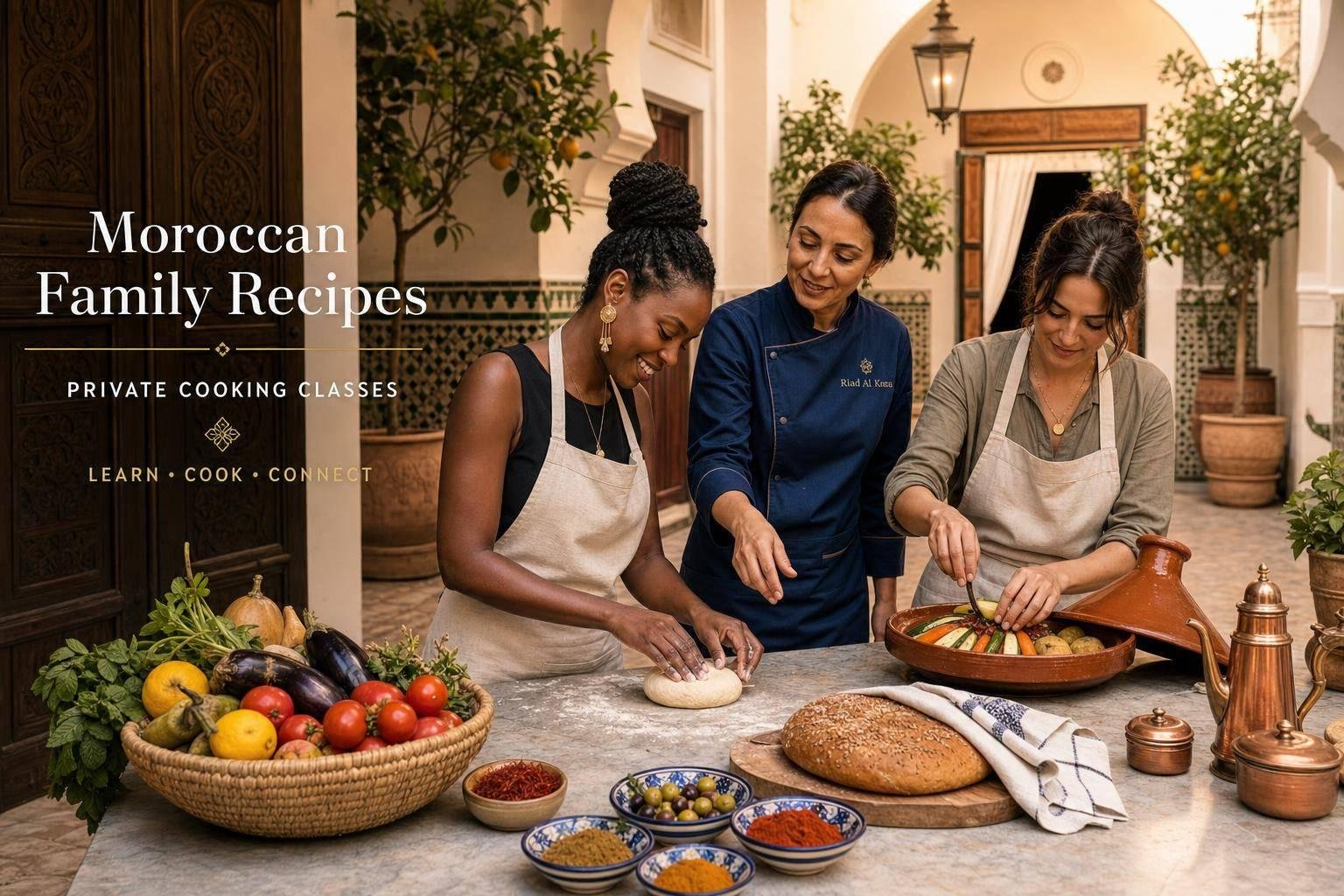
If I want a more personal cooking day in Morocco, a private class is usually the better pick. I get more control over the menu, more time with the host, and a setting that can range from a city riad to a farm outside town.
Here’s the short version:
- Private classes are built around the host’s family dishes
- I can focus on bread, tagine, couscous, salads, and mint tea
- Classes often include a market stop, hands-on cooking, and a shared meal
- City classes fit busy itineraries
- Farm and countryside classes suit slower, longer days
- Many classes run for a half day, while some farm days last about 6 to 7 hours
- Spring and fall are often the easiest times for outdoor cooking and market walks
In plain terms, this kind of class is less about a fixed lesson and more about learning how food is made at home. I’d look at location, host style, menu, transport, language, and dietary needs before booking.
| Option | Best for | Usual setting | Time |
|---|---|---|---|
| City class | Short stays, sightseeing days | Riad, home kitchen, medina | Half day |
| Countryside class | Slower day trips, small groups | Farm, garden kitchen, guesthouse | Half day to full day |
If I’m planning a trip, the right choice comes down to one thing: do I want cooking to fit into a city day, or do I want the cooking day to be the main event?
What sets a Moroccan family recipe class apart
A standard group cooking lesson usually sticks to a set menu and a set pace. A private family recipe class feels different right away. It revolves around the host’s own dishes, their way of teaching, and the rhythm that works for your group. The whole thing feels more personal from the first minute.
Family kitchens and handed-down technique
A lot of the learning happens with your hands, not just by watching. Guests learn tagine technique and bread-making skills like the hand-turning method used for khobz. That’s the kind of detail that makes Moroccan cooking feel closely tied to life at home.
Private classes are often led by local hosts who shape the lesson around your interests. So if you want to pause, ask more questions, or spend extra time on one part of the meal, you usually can. It feels less like following a script and more like cooking with someone who knows these dishes by heart.
How a private format changes the experience
The private setup gives you more say over the class. You can focus on the dishes you want and go through each step at a pace that suits your group. Many classes also take place on farms or in private countryside villas, which adds a quieter, more intimate setting.
The meal you share at the end is part of the draw too. Many classes wrap up with a sit-down dinner, sometimes on a private farm or by a riverbank. And the place itself shapes the mood, whether you’re cooking in a city riad or out on a countryside farm.
sbb-itb-6675d37
Where private cooking classes take place in Morocco
Once you’ve picked a private class, the next step is the setting.
City settings: Marrakech, Fez, Casablanca, and Rabat
Marrakech is one of the easiest places to book a private cooking class. Many sessions start with a guided walk through a souk or local market, where you buy vegetables, herbs, olives, spices, and bread ingredients. That market stop isn’t just part of the outing. It sets up the meal you’re about to make.
One well-known example is Riad Vendôme in the Dar El Bacha medina, where Chef Naima leads private sessions that include a market tour, three traditional dishes, and lunch. You shop in the medina, prep ingredients in a shaded kitchen, and then eat in a courtyard or on a rooftop terrace. It feels like cooking inside a real home, not showing up for a fixed class.
Fez works best for classes led by family cooks who teach recipes the way they’ve long been made at home. The old medina streets and slower rhythm make Fez a strong pick for travelers who want family methods and regional dishes, rather than something more polished.
Casablanca and Rabat tend to feel quieter and more residential. Classes there often feel less like a lesson and more like spending time in someone’s home. That can be a good match for travelers on a short stay or adding a class to the end of a work trip.
Jo Vacations can schedule city classes around your hotel, driver, and day plans.
Countryside and farm settings
Farm-based classes usually take place in garden kitchens or rural guesthouses, where guests cook with produce grown nearby. Many use wood-fired ovens and open-air prep spaces, which changes the whole mood of the day.
A farm class near Essaouira runs as a 7-hour experience with a rural souk visit, farm cooking, and a shared lunch. A Fez-area farm-to-fork class runs from 10:00 a.m. to 4:00 p.m. and includes outdoor cooking, an al fresco lunch among apple orchards, and a private transfer.
Countryside classes usually feel slower, more spacious, and more tied to the season. The setting also affects how many dishes you can make and how hands-on the class can be.
What you learn and how a class is structured
Once you’ve picked the setting, the next piece is simple: what you’ll make and how the class moves from start to finish.
Core dishes and hands-on techniques
Most private family recipe classes focus on the foods families cook day to day: tagine, couscous, khobz, and one or two salads, with mint tea included.
This isn’t about watching someone plate a fancy menu from the sidelines. It’s about getting your hands in the work.
With tagine, you usually learn how to layer ingredients, manage heat, and time each stage so the dish cooks the way it should. With khobz, the lesson tends to center on shaping the dough, getting the timing right, and doing the final flip. You’ll also work with spices and herbs such as saffron and mint to balance flavor.
The point is home cooking – the kind of food people make in their own kitchens. Mint tea often comes at the end of the lesson.
How the class runs
The flow is usually straightforward: source, prep, cook, eat.
Back in the kitchen, the host walks you through each dish step by step, usually starting with the item that takes the longest to cook. The order follows the same rhythm used in the family kitchen, which gives the class a natural feel. Most classes run for a half day. Full-day packages give you more time for sourcing and a longer meal together.
Then comes one of the best parts: everyone sits down and eats what they made. That shared lunch or dinner isn’t just a box to check. It’s part of the class itself.
Most hosts also send guests home with written recipe notes so the dishes can be recreated at home. Private classes can often be adjusted for dietary needs, including vegetarian menus or versions without dairy or bread, but it’s best to make those requests at the time of booking.
How to choose the right private class for your trip
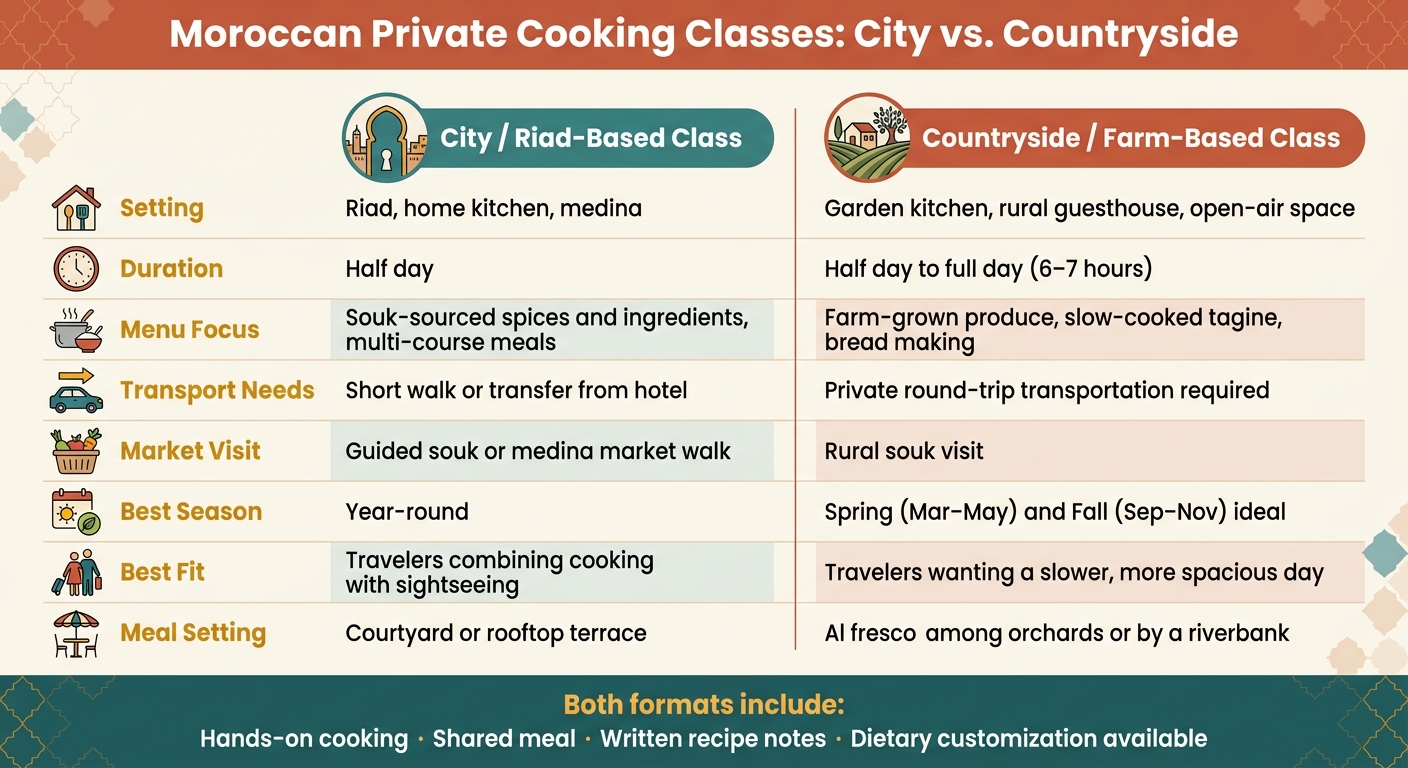
Moroccan Private Cooking Classes: City vs. Countryside Comparison
Comparing class formats before you book
Once you’ve picked between the city and the countryside, the next step is simpler: look at the host style and the day-to-day logistics. That’s usually what decides whether a class feels easy and fun or like too much of a detour.
| Format | Menu Focus | Transport Needs | Best Fit |
|---|---|---|---|
| City/Riad-Based | Souk-sourced spices and ingredients, multi-course meals | Short walk or transfer from your hotel | Travelers combining cooking with city sightseeing |
| Countryside/Farm-Based | Farm-grown produce, slow-cooked tagine, bread making | Private round-trip transportation required | Travelers looking for a slower, more spacious day |
A city or riad-based class tends to work well if your schedule is packed and you want cooking to fit neatly into a sightseeing day. A countryside or farm-based class usually suits travelers who want more room to slow down, spend time around the kitchen, and enjoy a less rushed pace.
Some hosts focus on hand-turning techniques for khobz and other inherited methods. If that matters to your group, check in advance that the class includes English-speaking guidance.
If you’d rather not piece the day together yourself, Jo Vacations can add a private cooking class to a custom Morocco trip, along with private transfers, host coordination, and 24/7 concierge support.
Spring, from March to May, and fall, from September to November, usually bring the most comfortable weather for market visits and outdoor cooking.
Conclusion: The right class fits your itinerary
Pick the format that matches the rhythm of your trip – city or countryside – and the rest gets much easier.
FAQs
How private are these classes?
These classes are private, exclusive experiences built just for your group, whether you’re traveling solo, as a couple, or with family and friends.
Instead of being pushed through a fixed group-tour schedule, you’ll learn from local culinary experts in a more personal, flexible setting and move at your own pace.
Can beginners join a Moroccan cooking class?
Yes. Beginners are welcome in Moroccan cooking classes, and Jo Vacations can tailor the experience to match your skill level.
These hands-on sessions give you a chance to learn Moroccan recipes and cooking methods with local experts at a pace that feels comfortable. If you’re brand new to the kitchen, that’s fine. If you’ve cooked before and want a bit more depth, that works too.
What should I wear or bring for the class?
You won’t need to bring any special equipment for your private cooking class in Morocco.
Just wear comfortable, modest clothing and closed-toe shoes. That matters even more if your class includes a visit to rustic farms or hands-on prep with fresh ingredients.
If you have any dietary needs or food preferences, let your Jo Vacations concierge know ahead of time so your experience can be tailored to you.