Planning a Maldives vacation can feel overwhelming with its 1,192 coral islands, 150+ resorts, and complex logistics. This guide simplifies your trip planning, covering everything from choosing between overwater bungalows and beach villas to budgeting for hidden costs like $350 dinners or $8 bottled water. Here’s what you need to know:
- Resort Selection: Pick based on accommodation type, distance from the airport, and amenities. Overwater villas offer lagoon access but cost 20%-40% more than beach villas.
- Transfers: Speedboats ($100–$350 round trip) are ideal for resorts near Velana Airport, while seaplanes ($290–$900 round trip) are for distant locations but operate only during daylight.
- Meal Plans: Choose wisely – All-Inclusive often saves money on expensive resort dining ($75–$120 per meal).
- Activities: Book in advance for popular options like underwater dining, snorkeling, or spa treatments.
- Budgeting: Factor in taxes (27%), transfers, and extras. A 7-day luxury trip for two can cost $14,000–$32,000.
Prepare for your trip by packing essentials like reef-safe sunscreen, lightweight clothes, and a universal adapter. Notify your bank and plan finances with USD for tipping and resort expenses. With the right planning, your Maldives escape can be smooth and stress-free.
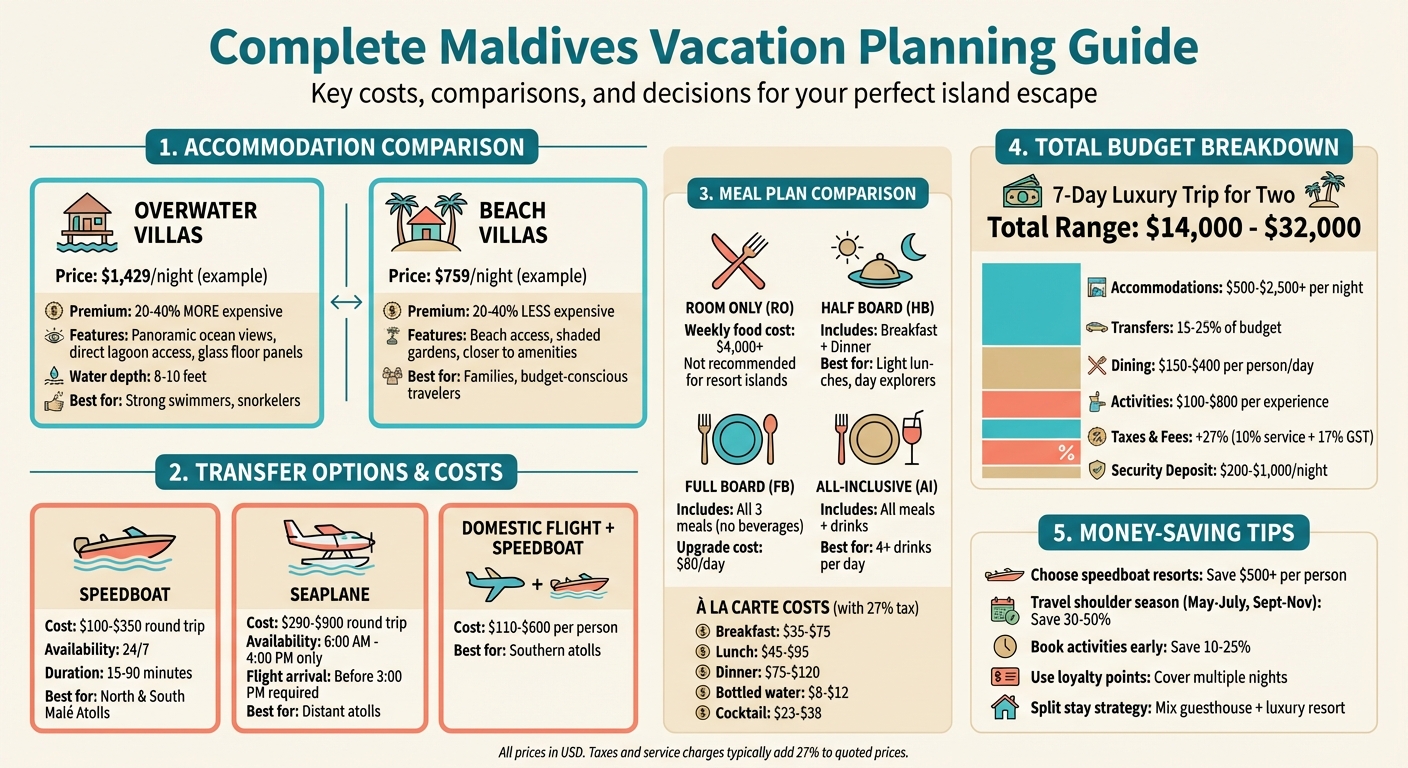
Maldives Vacation Cost Breakdown and Planning Guide
THE ULTIMATE MALDIVES TRAVEL GUIDE | Flights, Resorts, Cost, Budget v/s Luxury Islands, Etc
How to Select Your Maldives Resort
Your choice of resort will define your Maldives adventure. With around 150 to 165 private island resorts to pick from, the decision often boils down to three key factors: accommodation type, proximity to the airport, and available amenities and activities.
Overwater Bungalows vs. Beach Villas
When it comes to deciding between overwater bungalows and beach villas, it’s all about your preferences. Beach villas offer easy access to the sand, shaded private gardens, and are usually closer to restaurants and kids’ clubs. Plus, they’re often more budget-friendly, costing 20%–40% less than overwater villas. For instance, at Sun Siyam Iru Fushi, Pool Beach Villas start at about $759 per night, while Water Villas with Infinity Pools are priced around $1,429 per night.
Overwater villas, on the other hand, deliver that quintessential Maldives vibe – panoramic ocean views and direct lagoon access. They’re ideal for strong swimmers and snorkelers since the water depth is generally 8 to 10 feet. These villas often feature unique touches like glass floor panels for observing marine life below.
“Sometimes the beach villa is actually the better choice… Beach villa at a better resort often beats water villa at a lower-tier resort.” – DMC Quote Travel Team
For a balanced experience, many travelers opt for a split stay – spend a few nights in a beach villa and the rest in an overwater villa. This approach lets you enjoy both worlds while managing costs. Keep in mind, overwater villas don’t always guarantee better snorkeling; some beach villas are closer to house reefs than villas positioned over sandy lagoons. Also, if you’re sensitive to motion, beach villas might be a better choice since overwater structures can sway slightly with the waves.
Next, think about how far the resort is from Velana International Airport and how that impacts your transfer options.
Distance from Velana International Airport
The location of your resort affects both transfer logistics and costs. Resorts in the North and South Malé Atolls are accessible by 24/7 speedboat transfers, which cost between $100 and $350 for a round trip. This makes them convenient for late-night arrivals. More distant resorts require seaplanes (priced at $290–$900 round trip) or domestic flights (ranging from $110 to $600). However, seaplanes only operate between 6:00 AM and 4:00 PM.
If you’re arriving after 3:00 PM, you’ll need to stay near the airport overnight to catch a seaplane the next day. For late arrivals, choosing a speedboat-accessible resort can save time and hassle. Transfer costs can account for 15%–25% of your overall vacation budget, so it’s worth considering this when planning.
“In the Maldives, the journey is part of the magic. Whether you’re skimming across the ocean in a speedboat or soaring over atolls in a seaplane, getting to your resort is more than just a transfer – it’s the beginning of your island adventure.” – This Island Life
Keep in mind that remote resorts often have higher rates for rooms and dining due to the cost of transporting supplies. Additionally, seaplane luggage allowances are stricter – usually 20 kg for checked bags and 5 kg for hand luggage.
Lastly, evaluate the resort’s amenities and activities to ensure they align with your vacation goals.
What Resorts Offer: Amenities and Activities
The size of the island plays a big role in shaping your experience. Smaller islands like Milaidhoo, with 50–100 villas, cater to couples seeking intimate, personalized service. Larger islands, such as Soneva Fushi, offer a livelier atmosphere, diverse dining options, and more facilities.
For snorkeling enthusiasts, look for resorts with a house reef accessible from the beach. This eliminates the need for frequent boat trips and enhances your underwater adventures. Visibility in Maldivian waters can reach up to 130 feet, making it one of the best destinations for observing marine life.
Dining options vary widely. Resorts like the Waldorf Astoria Maldives Ithaafushi boast 11 restaurants, including unique offerings like Levantine cuisine and garden-to-table dining. Smaller resorts may focus on private, tailored dining experiences. Check whether your all-inclusive package covers non-motorized water sports (like kayaks and paddleboards) or snorkeling gear, as these can sometimes come with extra fees at luxury resorts.
Families should prioritize resorts with kids’ clubs and multi-bedroom villas, while couples might prefer adults-only islands or secluded sections of larger resorts. Wellness seekers can find overwater spas offering yoga, meditation, and signature treatments. If you’re interested in marine conservation, some resorts, like Sirru Fen Fushi, allow guests to participate in programs like turning recycled plastic into jewelry and furniture.
Timing your trip can also enhance your experience. Visit between May and November to spot whale sharks and manta rays, especially in the Baa Atoll. By considering these factors, you can ensure your Maldives getaway is tailored to your preferences and priorities.
Meal Plans and Dining Options
Once you’ve picked your dream resort, the next big decision is choosing the right meal plan. This choice can make or break your budget, especially since resorts typically offer only on-site dining. With à la carte meals ranging from $75 to $120 per person, planning ahead is key.
What Each Meal Plan Includes
Knowing what’s included in each plan is essential to avoid surprises. Here’s a breakdown of the main options:
Room Only (RO) or Bed & Breakfast (BB) plans are generally not recommended for private island resorts. A week-long stay without meals can easily add over $4,000 to your food and drink expenses. These plans are better suited for local islands like Maafushi, where dining at local cafes can cost as little as $5–$15 per meal.
Half Board (HB) covers breakfast and dinner, making it a great option for travelers who prefer a light lunch or plan to explore during the day. Full Board (FB) includes all three meals but typically excludes beverages, even basics like water or soft drinks, which are charged separately. Keep in mind that both HB and FB plans come with a mandatory 10% service charge and 17% Goods and Services Tax (GST), adding about 27% to the listed prices.
All-Inclusive (AI) plans bundle all meals with a selection of alcoholic and non-alcoholic drinks. Premium or “Dine Around” options often include access to specialty restaurants, excursions, and stocked minibars. For instance, in November 2025, Kurumba Maldives offered a “Dine Around All-Inclusive” package with breakfast at multiple venues, lunch at three locations, and dinner at seven specialty restaurants. This was a step up from their standard Full Board plan, which limited dining to a single buffet restaurant.
The “3-Drink Rule” can help you decide if an AI plan is worth it. If you and your partner consume more than four beverages a day (including water at dinner), a Premium AI plan might save you money. On the other hand, non-drinkers should weigh the cost of Full Board plus any additional charges for soft drinks to avoid paying for alcohol they won’t use.
One thing to watch out for is bottled water, which many resorts exclude during meals. Bottled water can cost $8–$12 per bottle after taxes, so it’s worth confirming if it’s included in your plan.
Additionally, mandatory holiday gala dinners for Christmas Eve or New Year’s Eve can be an extra expense, ranging from $250 to $350 per adult, and these are often not covered by Half Board plans. For example, Holiday Inn Kandooma charged $250 (around $317 with taxes) for Christmas Eve and $350 (about $444 with taxes) for New Year’s Eve in October 2025.
Booking your meal plan in advance is a smart move, as upgrading on-site is typically more expensive. At Kurumba Maldives, upgrading to Half Board costs $50 per day, while Full Board adds $80 per day if done upon arrival.
Dining Costs Without a Meal Plan
Opting out of a meal plan means you’ll face resort prices, which can be steep. Here’s a snapshot of typical 2025/2026 menu prices (including the 27% tax and service charge):
- Still Water: $5.10–$12.70
- Soft Drinks: $8.90–$11.45
- Beer: $12.70–$25.00
- Glass of Wine: $17.80–$28.00
- Cocktail: $22.90–$38.10
- Breakfast (à la carte): ~$35.00–$75.00
- Lunch (à la carte): ~$45.00–$95.00
- Dinner (à la carte): ~$75.00–$120.00
A dinner for two with alcohol can easily cost $300–$800. For example, in April 2025, Summer Island Maldives listed their cheapest bottle of wine at $65 (about $82.55 after taxes), which highlights how quickly minibar charges can add up.
When comparing costs, a 5-night luxury stay illustrates the difference: a Premium All-Inclusive plan might cost $9,000 flat, covering transfers, meals, premium drinks, and taxes. Meanwhile, going à la carte could exceed $13,125, with a $4,000 base rate plus additional expenses for dining, drinks, and transfers.
“Unexpected charges… turn a ‘$5,000 vacation’ into a ‘$7,200 vacation’ before you leave.” – Maldives Magazine
Ultimately, the right meal plan can help you manage expenses while ensuring a stress-free dining experience during your Maldives escape.
Getting to Your Resort: Transfer Options
After landing at Velana International Airport, your journey to your resort continues via seaplane or speedboat. Unlike standard airport transfers, these must be arranged by your resort. To ensure everything runs smoothly, you’ll need to provide your international flight details at least 72 hours before your arrival.
The type of transfer depends on how far your resort is from the airport. Resorts located in the North or South Malé Atoll, just 60–90 minutes away, typically use speedboats. These transfers operate 24/7 and cost about $100–$200 per person round trip. For resorts situated in more distant atolls like Baa or Lhaviyani, seaplanes are the go-to option. These transfers range from $250 to $750 per person round trip, though high-end resorts may charge as much as $1,500. If you’re heading to one of the farthest southern atolls, you’ll need a domestic flight (costing $110–$540 per person) followed by a quick speedboat ride. Once you’ve finalized your accommodation, the next step is arranging this crucial part of your trip.
Seaplane Transfers: Pricing and What to Expect
Seaplanes offer more than just transportation – they’re an experience. Flying low at around 10,000 feet, you’ll get breathtaking views of turquoise lagoons and coral islands. However, there are a few logistics to keep in mind. Seaplanes operate only during daylight hours, typically between 6:00 AM and 4:00 PM. To make a same-day transfer, your international flight should land in Malé before 3:00 PM, and departing flights should be booked for after 9:00 AM to avoid early-morning hassles.
“Taking a seaplane in the Maldives is next level. You’ll fly low over the Indian Ocean, with panoramic views of coral-fringed atolls and glowing blue lagoons.” – This Island Life
Expect a waiting period of 1–4 hours at the seaplane terminal while your resort coordinates the flight. Many luxury resorts provide private lounges with perks like Wi-Fi, refreshments, and air conditioning to make the wait more comfortable. Keep in mind that luggage restrictions are strict: 20 kg of checked baggage and 5 kg of hand luggage per person, with excess fees starting at $5 per kilogram. The cabin can be noisy and warm, so pack essentials like noise-canceling headphones, medications, and even a swimsuit in your carry-on.
For closer resorts, speedboats provide a more budget-friendly and flexible alternative.
Speedboat Transfers: Lower-Cost Option
If your resort is nearby, a speedboat transfer is a practical and cost-efficient choice. Speedboats operate 24/7, making them ideal for late arrivals – especially if your flight lands after 3:30 PM, when seaplanes are no longer available. These transfers typically take between 15 and 90 minutes and are arranged directly from the airport jetty. They also come with more flexible luggage policies compared to seaplanes.
Flight Timing and Airport Lounge Options
Timing your international flight to match your resort’s transfer schedule is key. To catch a same-day seaplane transfer, your flight should arrive in Malé by 3:00 PM. If your flight lands after 3:30 PM and your resort requires a seaplane, you may need to stay overnight in Malé or Hulhumalé. For departures, book your flight for after 9:00 AM to allow enough time for morning transfers.
If there’s a long wait before your transfer, many resorts offer branded lounges at the terminal. These lounges often include complimentary snacks, Wi-Fi, and a comfortable space to unwind until your journey continues.
sbb-itb-6675d37
Activities and Experiences to Book in Advance
When planning your dream trip to the Maldives, securing exclusive activities and experiences ahead of time is key to enjoying a smooth, luxurious vacation. Many options, such as underwater dining, private sandbank picnics, and wellness experiences, often have limited availability. Take, for instance, the Ithaa Undersea Restaurant, located about five meters below sea level. With its limited seating, it offers one of the most extraordinary dining experiences in the world. Similarly, conservation programs like JOALI Maldives’ “Adopt a Coral Table” – priced at around $500 – are restricted to only 24 participants annually. Booking early not only ensures you get your preferred date but also allows resorts to customize these once-in-a-lifetime experiences just for you.
Water Activities: Snorkeling, Diving, and Beyond
Surrounded by nearly 99% water, the Maldives is a haven for marine adventures. Snorkeling and diving here are unmatched, offering encounters with manta rays, whale sharks, and sea turtles in some of the clearest waters on the planet. For example, Baa Atoll is a hotspot for manta rays from May to November, while whale sharks are more commonly spotted from October to November. To make the most of your time, consider reserving guided Turtle Quests or private yacht charters to Hanifaru Bay in advance. This ensures you secure the best schedules and that all necessary equipment is ready for you. For something a bit different, adventures like big game fishing or semi-submarine tours can also be booked through experienced operators.
But the Maldives isn’t just about the water – it’s also about indulging in luxury that goes above and beyond.
Luxury Experiences: Spa and Underwater Dining
The Maldives is synonymous with unforgettable luxury experiences, many of which require advance planning. Underwater dining, such as at the Ithaa Undersea Restaurant, combines local seafood with French culinary techniques for a meal unlike any other. Overwater spa treatments and private sandbank picnics are equally indulgent, offering unique ways to relax and enjoy the surroundings. For a more personalized touch, book wellness journeys that include options like biometric screenings, sound therapy, and meditation. Sandbank experiences, whether a romantic candlelit dinner or a champagne picnic, add a touch of exclusivity, though their timing often depends on tides and weather. For something even more extravagant, bespoke yacht expeditions allow you to customize everything from the route to onboard dining and activities like sunset dolphin watching. Resorts like Four Seasons Private Island at Voavah and Velaa Private Island are known for offering these elite add-ons.
“In the Maldives, luxury doesn’t shout – it whispers. It’s quiet perfection in every detail.” – Hi DMC
If you have dietary restrictions or allergies, be sure to inform your resort ahead of time so they can prepare accordingly.
Activities for Families and Groups
For families and groups, the Maldives offers curated experiences that go beyond the usual resort activities. Sunset dolphin-watching cruises, for instance, typically cost around $60 per adult. For a more intimate experience, private charters are available, offering flexible schedules and custom itineraries. Private sandbank picnics are another fantastic option, combining gourmet picnic spreads with activities like snorkeling or paddleboarding. These are especially popular during peak season (November to April), so early reservations are a must.
Family-friendly options also include conservation programs, such as coral planting experiences starting at around $300 for adopting a coral frame. Resorts often provide eco-discovery workshops, Maldivian cooking classes, and even treasure hunts, all of which require advance notice for proper arrangements. Groups staying on local islands like Maafushi or Guraidhoo can enjoy traditional “Hedika” (short eats) or dinners with local families, offering an authentic glimpse into Maldivian life. These experiences are best coordinated before your arrival. For travelers with accessibility needs, early communication with your resort ensures that all necessary accommodations are in place.
How to Budget for Your Maldives Trip
Once you’ve nailed down your resort and transfer details, the next step is planning your budget. A Maldives vacation can come with unexpected costs, so it’s important to account for all expenses – not just the nightly rate. Many quoted prices exclude mandatory taxes and fees, which can increase your bill by 25–30%. These extra charges often include a 16–17% Goods and Services Tax (GST), a 10% service charge, and a Green Tax of up to $12 per person, per night. Adding these to your calculations upfront will help you avoid any surprises at checkout.
With some thoughtful planning, you can enjoy an indulgent getaway without overspending. Knowing typical costs and finding ways to cut back where possible can make a big difference.
Typical Vacation Expenses
Here’s a breakdown of common expenses to help you plan your Maldives budget. For a 7-day luxury trip for two, costs typically range between $14,100 and $32,000:
- Accommodations: Expect to pay $500 to $2,500+ per night at luxury resorts. Beach villas are often more spacious and less expensive, with the added perk of direct beach access.
- Transfers: Seaplane transfers cost $250–$800 per person for a round trip, while speedboat transfers range from $200 to $500. Keep in mind that seaplanes only operate during daylight hours.
- Dining: À la carte meals at luxury resorts usually cost $150–$400 per person per day, with individual dinners priced at $80–$200. Drinks like cocktails and wine can add another $15–$30 each.
- Activities and Experiences: Scuba diving costs $100–$200 for two dives, spa treatments range from $150 to $400 per session, and private sunset cruises are $300–$800 per boat. Non-motorized water sports like kayaking and paddleboarding are often complimentary, saving you $25–$75 per hour compared to rental fees.
- Security Deposits: Resorts may require a credit card authorization or cash deposit of $200 to $1,000 per night at check-in to cover incidental expenses.
Ways to Reduce Costs
Luxury doesn’t have to break the bank. Here are some practical tips to help you save:
- Choose Speedboat-Accessible Resorts: Resorts in the North or South Malé Atolls are reachable by speedboat, saving you over $500 per person compared to seaplane transfers.
- Use Loyalty Points: Many Maldives resorts are part of global chains like Marriott, Hilton, and IHG. Redeeming credit card points can cover multiple nights at these high-end properties.
- Travel During Shoulder Season: Visiting during off-peak months like May–July or September–November can reduce accommodation costs by 30–50%. For instance, in February 2026, Expedia offered a premium all-inclusive package for Cora Cora Maldives at $2,169 per person, including round-trip flights from Boston. Similar packages in peak season can cost up to 40% more.
- Opt for All-Inclusive Packages: While they may seem pricey upfront, these packages often include meals and drinks, which can save you money in the long run. Alcohol, in particular, is heavily taxed in the Maldives, making all-inclusive plans a smart choice.
- Split Your Stay: Spend most of your trip at a high-end guesthouse on a local island, then splurge on 2–3 nights in an overwater villa. This lets you experience Maldives luxury without overspending.
- Book Activities Early: Many resorts offer discounts of 10–25% on activities like diving or excursions if booked at least a month in advance.
- Bring Essentials: Packing items like reef-safe sunscreen and personal snorkeling gear can save you $50–$100 over your stay, as resort prices for these items are often marked up.
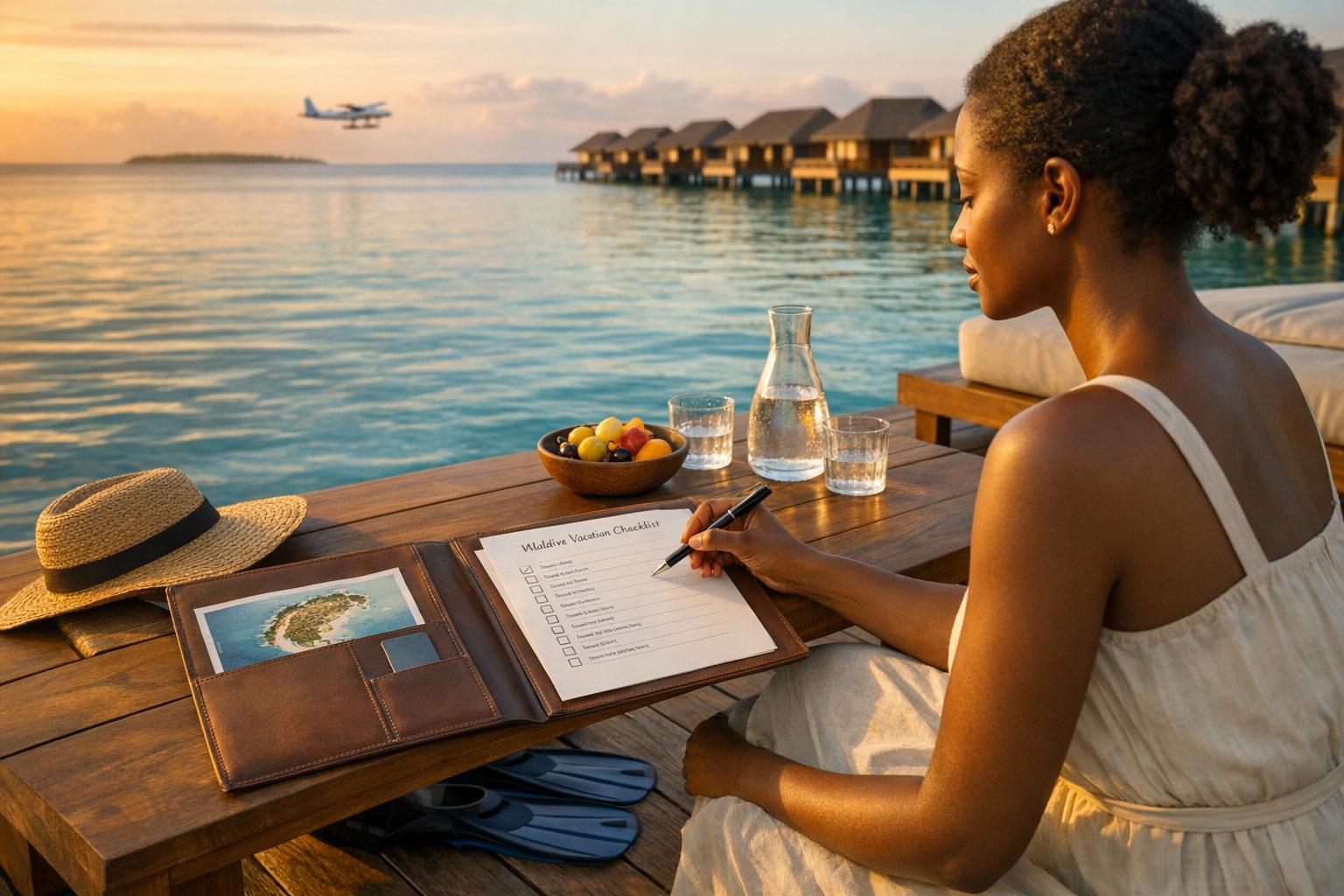
Pre-Departure Checklist: What to Do Before You Leave
Getting everything in order before your flight to the Maldives can save you from unnecessary stress. From documents to packing and finances, a little preparation ensures a smoother journey.
Travel Documents and Insurance
Make sure your passport is valid for at least six months beyond your arrival date and includes a Machine Readable Zone (MRZ). Upon arrival at Velana International Airport, you’ll receive a free 30-day visitor visa, but only if you present proof of onward travel and your resort voucher.
Complete the free IMUGA Traveler Declaration on the official portal no more than 96 hours before your flight. After submission, you’ll receive a QR code to present during check-in and at immigration. If you’re traveling from or transiting through a Yellow Fever endemic country, don’t forget your vaccination certificate.
Travel insurance is a must, especially one that covers medical evacuation. Advanced medical care is only available in Malé, and emergency transfers from remote resorts can be costly. If you take prescription medications, carry them in their original packaging along with your prescription to avoid customs issues.
Once your documents and insurance are sorted, it’s time to focus on packing smartly for your tropical getaway.
What to Pack for the Maldives
The Maldives’ tropical climate calls for light, breathable clothing, with temperatures usually above 75°F. For daytime, casual attire is perfect, but many luxury resorts have a “smart-casual” or “island chic” dress code for dinner. Men might opt for linen pants and button-down shirts, while women could choose elegant dresses or blouses. If you plan to visit Malé or local islands, bring modest clothing that covers your shoulders and knees.
Don’t forget reef-safe sunscreen (SPF 50+ with zinc oxide or titanium dioxide) to protect both your skin and the coral reefs. Pack multiple swimsuits, UPF 50+ rash guards for snorkeling, and reef shoes to avoid sharp coral. If you’re prone to motion sickness, bring medication for seaplane or speedboat transfers. Keep in mind that vaping devices and e-cigarettes are banned and will be confiscated, and items like alcohol and pork products are prohibited.
Seaplane luggage restrictions – 20 kg for checked bags and 5 kg for hand luggage – mean you’ll need to pack efficiently. Also, bring a Type G (UK-style) universal adapter for your electronics, as resorts use a 230V/50Hz power supply.
With your bags ready, the next step is to organize your finances for a stress-free experience.
Money and Payment Methods
Sorting out your finances is just as crucial as packing. The U.S. Dollar is the preferred currency at resorts and tourist spots, making it more practical than the local Maldivian Rufiyaa (MVR). Most resorts operate on a cashless system during your stay, with all expenses charged to your room and settled via credit card or USD at checkout. Be ready for a credit card authorization or a cash deposit at check-in, which typically ranges from $200 to $1,000 per night.
Bring small, pristine USD bills ($1, $5, $10) printed in 2009 or later for tips and minor purchases. While a 10% service charge is automatically added to resort bills, it’s customary to tip housekeeping $2–$10 per day and luggage handlers $2–$5 per bag.
Notify your credit card provider about your travel plans to avoid any disruptions during large transactions abroad. Visa and Mastercard are widely accepted, and American Express is usually an option at luxury resorts. If you plan to explore local islands, withdraw MVR from ATMs at the airport or in Malé, as ATMs are scarce on private resort islands.
With your finances squared away, you’re set to enjoy everything the Maldives has to offer.
Start Planning Your Maldives Vacation
Once you’ve gone through the checklist, the final step is crafting a personalized itinerary for your Maldives getaway. This means deciding on everything from your villa type to transfer arrangements and unique activities. Instead of managing endless resort comparisons, transfer schedules, and bookings on your own, let Jo Vacations’ Maldives specialists handle the details for you. Their team simplifies the process by creating tailored resort packages and coordinating all local transfers seamlessly.
This hands-on approach ensures your trip is nothing short of extraordinary.
“Your journey with JOY is more than just a vacation; it’s a personalized escape designed just for you.” – JOY Maldives
When you arrive at Velana International Airport, Jo Vacations Ambassadors will greet you and take care of all transfer logistics. If you’re using a seaplane transfer, make sure your international flight lands before 3:00 PM.
Pricing for packages starts at $600 per night for romantic getaways, $800 per night for family vacations, and $900 per night for wellness retreats. You can also customize your trip – such as adding a private island excursion – and enjoy 24/7 concierge support for any special requests. Whether it’s dietary accommodations or managing deposits (ranging from $200 to $1,000 per night), Jo Vacations has you covered.
From meal plans to understanding local customs, their expert guidance removes any guesswork from the planning process. With their help, you can focus on enjoying every moment of your Maldives adventure.
FAQs
How many nights should I split between a beach villa and an overwater villa?
To get the best of both worlds, consider splitting your stay evenly – spending about 3-4 nights in a beach villa and another 3-4 nights in an overwater villa. This way, you can fully enjoy the distinct experiences each type of accommodation offers during your trip.
Which meal plan is best if I don’t drink alcohol?
The Full Board meal plan is a great choice for those who don’t drink alcohol. It covers three meals a day but skips the cost of alcoholic beverages, which are often included in all-inclusive packages. This way, you can enjoy your meals without paying for drinks you won’t use.
What happens if my flight arrives after seaplanes stop running?
If your flight lands outside the operating hours for seaplanes, you’ll need to look into other transfer options like a speedboat or a domestic flight. Since seaplanes run only during specific daytime hours, it’s important to plan ahead to make sure your trip to your destination goes smoothly.