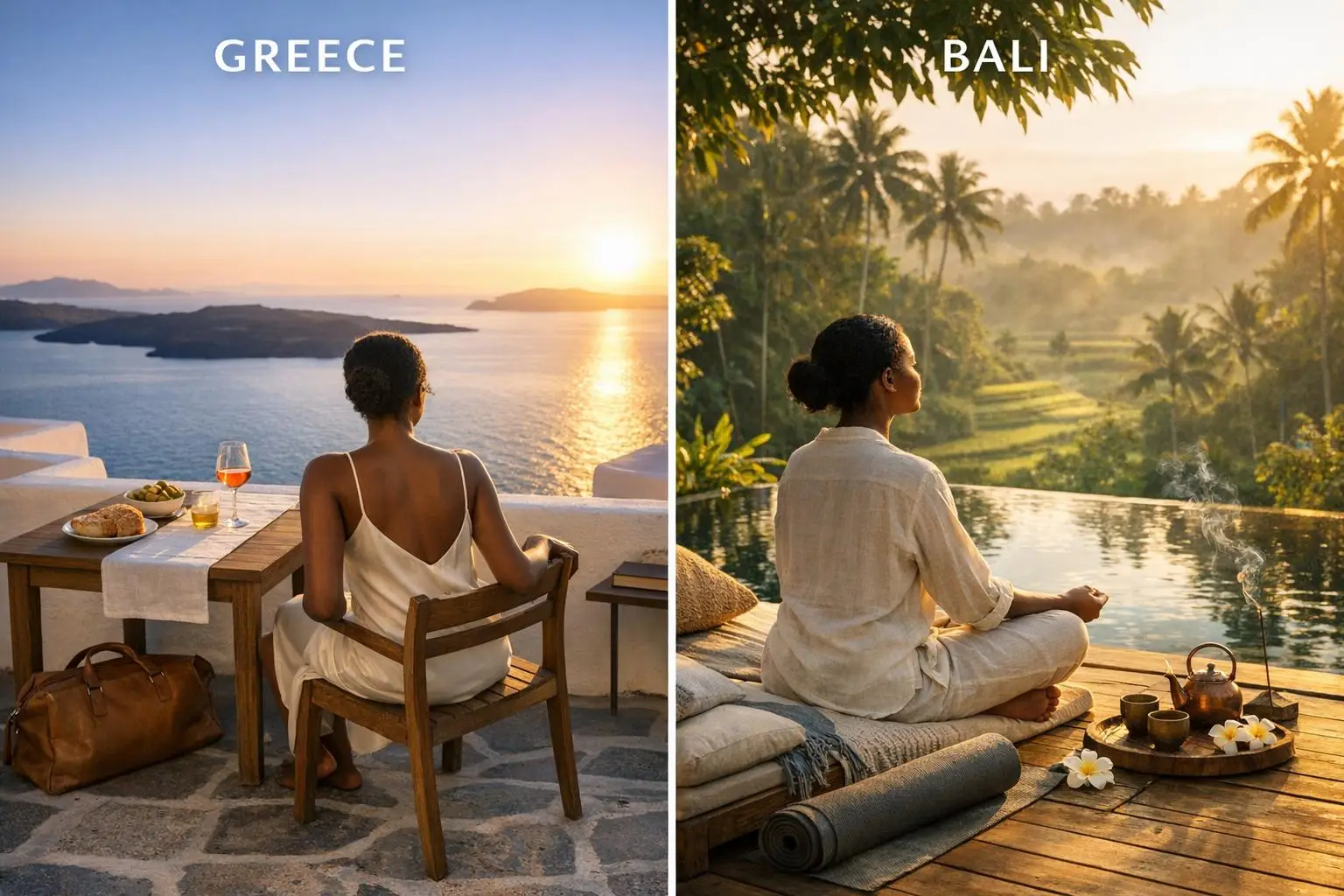
When deciding between Greece and Bali for your next trip, it boils down to what you value most in a vacation. Greece offers a historical, Mediterranean vibe with stunning clifftop villas, ancient ruins, and coastal adventures. Bali, on the other hand, provides a tropical escape with lush jungles, spiritual experiences, and affordable luxury. Here’s a quick breakdown:
- Greece: Best for history lovers, luxury seekers, and Mediterranean charm. Ideal travel months: May and September–October. Expect higher costs, especially in Santorini and Mykonos.
- Bali: Perfect for wellness enthusiasts, adventure seekers, and nature lovers. Best travel months: May–September (dry season). Offers luxury at a fraction of Greece’s costs.
Quick Comparison
| Feature | Greece | Bali |
|---|---|---|
| Climate | Mediterranean (hot summers, mild winters) | Tropical (year-round warmth, rainy Nov–Mar) |
| Best Time to Visit | May, September–October | May–September |
| Luxury Stay Cost | $1,000+ per night (peak season) | $200–$1,900 per night |
| Key Attractions | Ancient ruins, island-hopping | Temples, wellness retreats, jungles |
| Cuisine | Mediterranean seafood, moussaka | Indonesian dishes, global fusion |
| Activities | Private yacht charters, hiking | Yoga, surfing, Mount Batur hikes |
Both destinations offer unique experiences, but your choice depends on whether you’re drawn to Greece’s timeless elegance or Bali’s serene, tropical vibe. Dive into the article for a detailed comparison.
Greece vs Bali Travel Comparison: Climate, Costs, and Best Times to Visit
Weather Patterns and When to Visit
Greece: Mediterranean Climate
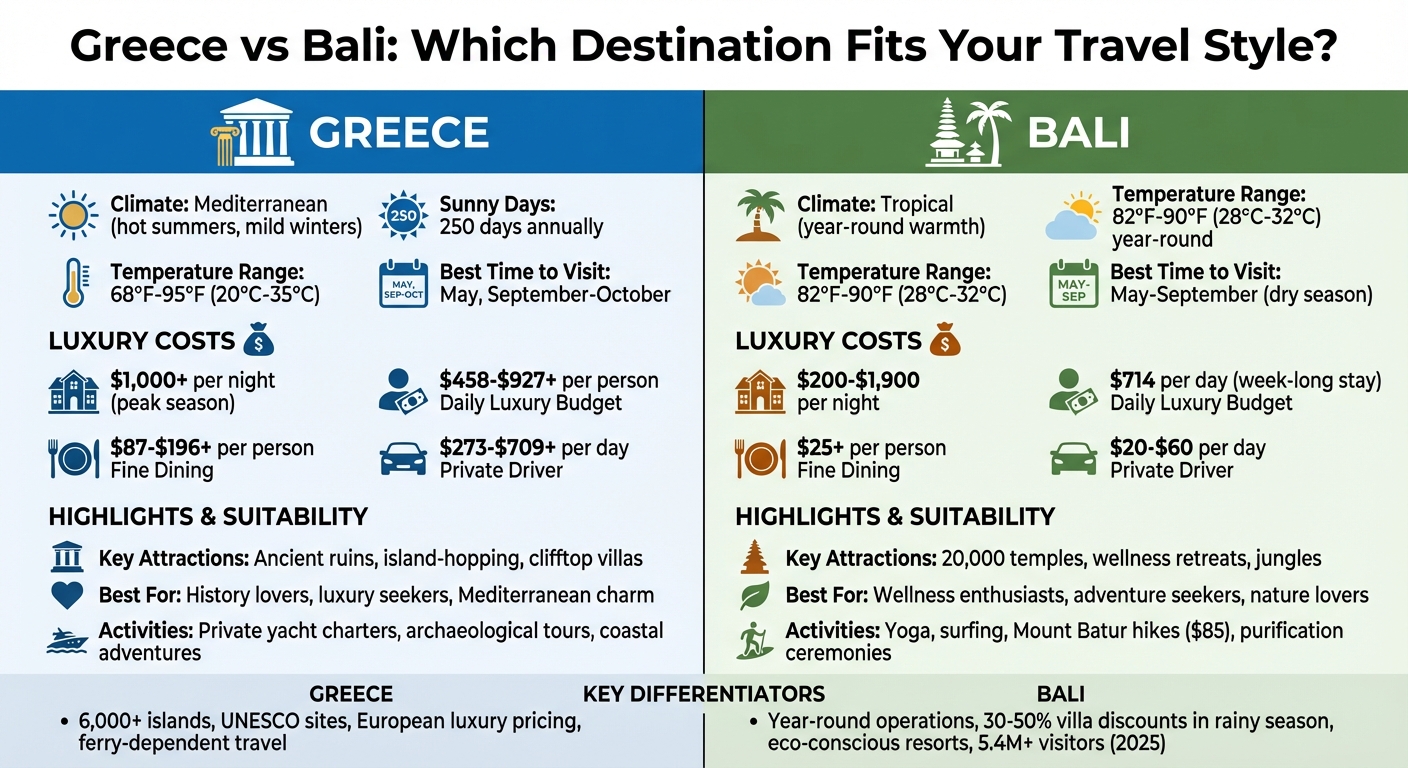
Greece enjoys an impressive 250 sunny days annually, making it a sun-seeker’s paradise. However, the weather shifts noticeably with the seasons. Summers, spanning June through September, are hot and dry, with average highs around 95°F (35°C). During occasional heatwaves, temperatures can even spike to 113°F (45°C). Winters, on the other hand, are mild but wet, with coastal areas experiencing average lows of about 59°F (15°C) in February.
The best times to visit are late spring (May) and early autumn (September–October). These months bring pleasant temperatures ranging from 68°F to 86°F (20°C to 30°C) and minimal rainfall, plus the added perk of fewer crowds compared to the bustling summer months. The sea remains warm enough for swimming from mid-May through late October, making it ideal for beach lovers.
"September is the sweet spot. The sea’s at its best, the crowds calm down, and the vibe shifts from ‘peak season madness’ to ‘this is why people fall in love with Greece’." – Tina Benias, Guide Writer
Travelers should note that many luxury hotels and fine dining spots on the islands close during the off-season (late October to mid-March). Additionally, winter weather can disrupt ferry services, so if island-hopping is on your agenda, plan your trip between May and October when everything is fully operational.
Greece’s Mediterranean charm offers a stark contrast to Bali’s tropical climate.
Bali: Year-Round Tropical Weather
Bali, in contrast, maintains a steady tropical climate throughout the year. Temperatures consistently hover between 82°F and 90°F (28°C to 32°C). Seasonal differences are marked more by rainfall than temperature. The dry season, from April to October, features sunny skies and lower humidity, while the wet season, running November through March, brings heavy rains and humidity levels exceeding 80%.
The dry season is perfect for outdoor adventures like yacht charters, beach-hopping, and jungle treks. May, June, and September strike a balance with reliable weather and fewer tourists. On the flip side, January sees the heaviest rainfall, averaging 13.6 inches (345 mm).
Unlike Greece, Bali’s luxury accommodations and services remain operational year-round. During the wet season, savvy travelers often adjust their plans. For instance, the west coast areas like Canggu and Uluwatu are ideal from May to September, while east coast spots like Sanur and Keramas shine from November to March. Another bonus? Many luxury villas slash their rates by 30% to 50% during the rainy months of February, March, and November.
sbb-itb-6675d37
Culture and Local Experiences
Greece: Ancient Sites and Island Life
Greece offers a window into the origins of Western civilization, paired with the charm of Mediterranean living. Iconic landmarks like the Acropolis in Athens, the Minoan ruins of Akrotiri in Santorini (dubbed the "Pompeii of the Aegean"), and the Palace of Knossos in Crete serve as open-air museums, showcasing thousands of years of history.
"Exploring Athens was like stepping into a living museum, with every corner revealing a story waiting to be discovered." – Csilla Dali, Owner & Luxury Travel Advisor, Evyssa Vacations
For those seeking a more exclusive experience, private guides can arrange "Skip-the-Line" access to major archaeological sites, transforming busy landmarks into intimate encounters enriched with expert storytelling. Beyond these ancient treasures, Greek culture thrives through vibrant island festivals, lively taverna music, and traditional dancing in areas like Plaka. Travelers can also enjoy curated dinners that highlight the warm hospitality and flavors of the Mediterranean. Luxury group itineraries typically range from $500 to $800 per person, per day, offering a personalized journey steeped in historical and cultural appreciation.
While Greece encourages reflection on its ancient past, Bali invites travelers to actively engage with its spiritual traditions.
Bali: Spirituality and Arts
Bali offers a unique opportunity to immerse yourself in its deep-rooted spiritual practices. The island is home to around 20,000 temples (pura), which are not just historical landmarks but active centers of daily worship. Visitors can witness rituals like floral offerings (canang sari) and religious processions that seamlessly blend into the rhythm of daily life. The guiding philosophy of Tri Hita Karana, which emphasizes harmony among people, nature, and the spiritual world, is evident in every interaction.
"The profound devotion of the Balinese people to the Gods… marks the time of every passing day." – Marzia Acampora, Author, ARTE.it for Bulgari Resort Bali
Ubud, considered the cultural heart of Bali, offers a variety of immersive experiences for luxury travelers. From private purification ceremonies and traditional dance lessons to jewelry-making workshops, Ubud provides a hands-on connection to the island’s artistic and spiritual heritage. Its vibrant arts scene includes traditional performances and modern galleries like the Neka Art Museum and Agung Rai Museum of Art. For a truly unique experience, the island-wide observance of Nyepi, the Balinese New Year, brings a full day of silence and meditation, creating an unforgettable atmosphere. With entrance fees for cultural events typically ranging from $10 to $20, Bali offers an accessible yet deeply enriching experience. These activities are ideal for travelers seeking a more interactive and personalized cultural journey.
Luxury Stays and Resort Options
Luxury accommodations in both Greece and Bali offer a distinct sense of place, reflecting their surroundings and cultural heritage in ways that appeal to travelers seeking unforgettable experiences.
Greece: Clifftop Villas and Mediterranean Elegance
Greece’s luxury stays are synonymous with iconic Cycladic architecture and breathtaking views. Santorini is perhaps the most famous, with its villas cascading down volcanic cliffs. These properties often feature infinity pools that seem to merge seamlessly with the caldera, creating a dramatic and serene atmosphere. The design here leans on clean lines and natural materials – raw stone, marble, and glass – paired with the classic Mediterranean palette of white and blue.
"Infinity pools blend into the caldera, whitewashed villas cascade down volcanic cliffs, and each evening is a private sunset screening." – Angelica Crudo, Luxury Travel Specialist
Mykonos, on the other hand, offers a lively luxury experience with beachfront properties close to high-end beach clubs and private yacht docks. In the Ionian islands, like Corfu, Venetian-style architecture and private jetties add a touch of old-world charm. Prices for high-end accommodations in Santorini start at $1,000 per night during the shoulder season, with peak summer rates climbing even higher. Many of these properties also feature exclusive amenities like private helipads, sunset terraces, and suites carved into volcanic rock.
Bali: Jungle Resorts and Nature-First Design
In Bali, luxury is all about blending with the natural world. Resorts here focus on biophilic design, using materials like bamboo, teak, and volcanic lava stone to create spaces that feel rooted in their environment. A prime example is Buahan, a Banyan Tree Escape in Ubud, where 16 villas built from salvaged wood offer an open-air experience at 2,000 feet above the jungle.
"You can’t get closer to nature than this resort with no walls or doors, located in a crowd-free part of Bali." – AFAR Editorial
Sustainability is a key focus in Bali’s luxury scene. At Capella Ubud, architect Bill Bensley designed 23 tented accommodations without cutting down a single tree. Meanwhile, Potato Head Suites in Seminyak showcases a regenerative design with 1.8 million hand-pressed terra-cotta bricks. For a dramatic coastal experience, Bvlgari Resort Bali sits on limestone cliffs 525 feet above the Indian Ocean, incorporating hand-cut volcanic stone and jade-colored pools. Pricing in Bali varies significantly, with luxury studios starting at $200 per night and ultra-luxury options like Buahan ranging from $1,242 to $1,900+ per night.
These contrasting approaches highlight how Greece and Bali each craft a distinct luxury experience that resonates with their unique landscapes and cultural influences.
Comparison Table: Greece vs Bali Accommodations
| Feature | Greece | Bali |
|---|---|---|
| Primary Materials | Whitewashed plaster, raw stone, marble, glass | Bamboo, teak, volcanic stone, alang-alang thatched roofs |
| Signature Design | Cave-style suites, clifftop infinity pools | Open-air bales, jungle structures |
| Location Focus | Clifftop settings (Santorini), beachfront (Mykonos) | Jungle terraces, rice paddies, coastal cliffs |
| Aesthetic | Sleek, minimalist, Mediterranean blue and white | Earthy, lush, and integrated with nature |
| Key Amenities | Private helipads, yacht docks, sunset terraces | Open-air spas, yoga shalas, copper tubs |
| Price Range (per night) | $1,000+ (shoulder season) | $200–$1,900+ |
Food, Wellness, and Activities
After enjoying a luxurious stay and exploring local traditions, both Greece and Bali continue to enchant travelers with outstanding cuisine, wellness experiences, and unique activities.
Greece: Mediterranean Food and Coastal Adventures
Greece is synonymous with the Mediterranean diet, featuring dishes brimming with fresh seafood, olive oil, and regional wines. Some must-try specialties include salt-crusted red snapper, grilled octopus, lamb fillet, and the classic moussaka. For something lighter, raw menus highlight delicacies like smoked octopus carpaccio seasoned with locally sourced sea salt.
Wellness in Greece draws from ancient practices and the region’s idyllic climate. Visitors can immerse themselves in thermal springs or enjoy yoga sessions by the sea. As Konstantina Orfanake, co-founder of Acro Suites, puts it:
"For us, wellness is a lifestyle… We wanted to take all these things [Mediterranean diet, swimming, fishing] and highlight them as a way of living".
Even the Greek greeting, yiasas, meaning "health to you", reflects the nation’s deep connection to well-being.
For activities, Greece excels in coastal exploration. Private yacht charters offer access to some of the country’s 6,000+ islands, perfect for luxury island hopping in Athens, Santorini, and Mykonos. High-end experiences include VIP Acropolis tours to avoid crowds, scenic helicopter rides over the Ionian Islands, or even winter skiing in Arachova near the Parnassus ski center.
While Greece celebrates its coastal charm, Bali captivates with a blend of culinary diversity and spiritual wellness.
Bali: Asian Cuisine and Holistic Wellness
Bali’s dining scene is a flavorful mix of Asian influences, Indonesian staples, and global culinary trends. From traditional Balinese home cooking to upscale Asian fusion and even fine-dining Italian, there’s something for every palate. At Begawan Biji in Ubud, on-site mandalas grow heritage rice, with proceeds supporting educational and environmental initiatives through the Begawan Foundation. Meanwhile, Fed by Made in Seminyak offers a constantly evolving prix fixe menu crafted by a talented young Balinese chef, attracting diners who book well in advance.
The island’s wellness offerings focus on spiritual and holistic practices. Visitors can participate in "Melukat" purification ceremonies at waterfall temples like Pura Taman Percampuhan Sala or indulge in luxurious spa treatments . Wellness expert Kathryn Romeyn shares:
"Something you never want to turn down in Bali is a spa treatment. It’s just unlike anywhere else in the world".
Signature treatments range from flower baths with hundreds of rose petals to chakra-balancing rituals, as well as modern therapies like "Sway Sleep" cocoons and "Light Sound Vibration" sessions that use strobe lights and vibrating waterbeds .
Adventure seekers can enjoy private hikes up Mount Batur (starting at $85), explore rice fields, or take part in cultural activities like traditional dance and jewelry-making workshops . Bali also makes luxury wellness retreats surprisingly accessible. Five-night packages in Seminyak start at around $1,999, offering an affordable alternative to similar European experiences . These curated programs ensure a personalized and unforgettable journey, perfectly aligned with the island’s tranquil spirit.
Costs and Budget Planning
When comparing luxury travel options, pricing plays a big role in shaping your experience. Greece and Bali each offer distinct approaches to high-end travel, with notable differences in cost.
Greece: European Luxury Pricing
In Greece, hotspots like Santorini and Mykonos come with a hefty price tag. During peak season (June through August), you might spend between $458 and $927+ per person, per day on luxury travel. Five-star hotels range from $415 to $982+ per night, while Santorini’s famous clifftop suites can climb to $1,200 to $2,000 per night in July.
Dining is another area where costs add up. A luxury dinner runs from $87 to $196+ per person, and restaurant prices in Athens are approximately 176.8% higher than in Bali. Unique experiences, like sunset cruises in Santorini starting at $500, or hiring a private driver for island tours at $273 to $709+ per day, can quickly elevate your expenses. As Tamara Gruber from We3Travel puts it:
"The Greek Islands have never been a budget destination, but these days if you want to go the luxury route for a special occasion trip… it is downright expensive."
Adding to the costs, Greece enforces a Climate Crisis Resilience Fee of about $17.53 per room, per night for five-star accommodations during peak season. If you’re looking for opulence at a lower price point, Bali offers a contrasting experience.
Bali: Accessible High-End Travel
Bali delivers luxury experiences at a fraction of the cost. A week-long luxury stay starts at around $5,000 (or $714 per day), with five-star hotels priced between $150 and $350+ per night. Private villas are even more accessible, ranging from $150 to $200 per night.
Across the board, Bali tends to be easier on the wallet. Fine dining starts at $25+ per person, premium spa treatments cost about $50+, and hiring a private driver for a full day is just $20 to $60. For those seeking the pinnacle of luxury, sprawling estates with six to eight bedrooms – complete with private chefs and gyms – are available for $3,000 to $4,000 per night.
As Bali.com notes:
"When compared to other popular tourist destinations, Bali’s luxury offerings are surprisingly affordable. It’s no exaggeration to say that Bali is home to some of the top hotels in Asia, if not the world."
Bali also keeps fees minimal, requiring only a one-time tourist fee of about $10 for foreign visitors.
Which Destination Matches Your Travel Style?
Now that we’ve covered the practical side of each destination, let’s dive into which one suits your travel preferences. Your dream luxury escape depends on what you value most in a getaway.
Greece: For Lovers of History and Timeless Charm
Greece, often called the birthplace of Western civilization, is perfect for anyone fascinated by history. If ancient ruins, UNESCO World Heritage sites, and a relaxed Mediterranean vibe sound like your kind of trip, Greece has plenty to offer. Its iconic landmarks provide a direct link to the past, making it a paradise for history buffs.
For couples, Greece is a dream. Picture this: watching the sun dip below the horizon in Santorini while dining on a cliffside, or taking a quiet stroll through Spetses, where horse-drawn carriages and a rich maritime history set the scene. If you’re an island-hopping enthusiast or an avid hiker, Greece’s scenic trails and charming lanes are waiting for you.
With over 6,000 islands – 227 of them inhabited – Greece offers endless variety. Whether it’s the buzzing nightlife of Mykonos or the serene, slow-paced lifestyle of Ikaria (where many residents live into their nineties), there’s something for everyone. As travel writer Amanda Castleman puts it:
"The cradle of Western civilization teems with archaeological splendors, craggy mountains, and crystalline waters… it’s no wonder Greece attracts every type of traveler under the sun."
While Greece enchants with its historical treasures, Bali offers a completely different kind of escape.
Bali: For Wellness Seekers and Adventure Enthusiasts
Bali is the go-to destination for those craving a blend of relaxation, spiritual renewal, and tropical adventure. Known for its world-class wellness retreats and vibrant temple culture, Bali offers a unique chance to reset and recharge.
Adventure lovers will also find their paradise here. Surfers can start with the beginner-friendly waves of Kuta before taking on the more challenging breaks in Uluwatu. Hikers can embark on a sunrise trek up Mount Batur, an active volcano with breathtaking views. Divers, on the other hand, are drawn to spots like the USAT Liberty wreck in Amed, famous for its clear waters and colorful marine life. Whether you’re traveling solo or with family, Bali has something for everyone – from the buzzing social hubs of Canggu and Seminyak to unique experiences like monkey forest tours or cooking traditional dishes.
As Lonely Planet describes it:
"Bali is more than a place; it’s a mood, an aspiration, a tropical state of mind."
With 5,460,288 international visitors recorded by September 2025, Bali continues to attract those seeking a mix of rejuvenation, adventure, and laid-back luxury. So, whether you’re drawn to Greece’s historic allure or Bali’s tropical adventures, your travel style will ultimately guide your choice between these two unforgettable destinations. If you need help deciding, you can book a call with our travel experts to start planning.
Conclusion
Deciding between Greece and Bali comes down to the type of luxury escape that resonates with you. Greece offers a mix of ancient history, Mediterranean allure, and clifftop elegance – perfect for those who love archaeological treasures, walkable historic towns, and a touch of European sophistication. On the other hand, Bali delivers spiritual retreats, tropical thrills, and approachable high-end experiences – a haven for wellness enthusiasts, surfers, and adventurers seeking lush landscapes and exceptional diving spots.
While costs can differ significantly, with Athens generally pricier than Bali, the choice ultimately reflects your personal preferences. Greece tempts with upscale beach clubs and designer boutiques, while Bali charms with eco-conscious resorts and attentive hospitality.
Logistics also play a key role in shaping your journey. Greece’s ferry schedules and island-hopping adventures require careful planning, while navigating Bali’s traffic and selecting the right villa benefits from local insight. With expert guidance, these logistical challenges can turn into seamless, stress-free experiences. Both destinations blend rich cultural experiences with tailored luxury, creating unforgettable memories.
Ready to bring your dream trip to life? Jo Vacations specializes in creating custom itineraries for Greece and Bali, taking care of every detail – from private transfers to curated stays and exclusive experiences. Contact us today to start planning your perfect luxury getaway.
FAQs
Which is better for a honeymoon: Greece or Bali?
Greece and Bali each bring something special to the honeymoon table, catering to different tastes. If you’re drawn to breathtaking sunsets, ancient ruins, and a timeless romantic atmosphere, Greece – particularly Santorini – might be your dream destination. On the other hand, Bali offers lush greenery, a rich local vibe, and plenty of wellness retreats, making it perfect for couples seeking an exotic adventure or a spa-centered escape. Whichever you choose, both destinations can be customized to create a luxurious and memorable experience.
How many days do I need for Greece vs Bali?
The perfect trip length really comes down to what you want to experience. If you’re heading to Greece, 7–10 days is a sweet spot for exploring Athens, Santorini, and iconic landmarks. On the other hand, a trip to Bali can vary: 5–7 days is great for soaking up the beaches and visiting temples, but if you want to dive deeper into the island’s charm, 10–14 days gives you that extra time to fully explore. Both destinations offer unforgettable experiences, and staying longer lets you connect more with their distinct attractions.
What should I book in advance for each destination?
When planning a trip to Bali, make sure to arrange your visa (e-VOA or extensions), luxury accommodations, and private tours well in advance, especially if you’re traveling during peak seasons. Similarly, in Greece, it’s a good idea to book high-end hotels, unique experiences, and guided tours ahead of time, particularly during the busy summer months. For both destinations, organizing transportation – like private transfers or car rentals – before your trip can help ensure everything runs smoothly and adds an extra layer of convenience to your journey.