
When planning a trip to Greece, artisan tours offer a hands-on way to engage with the country’s rich artistic heritage. From pottery workshops on Sifnos to marble carving in Naxos, these experiences let travelers work alongside skilled craftspeople while creating unique keepsakes. However, booking these tours can be challenging due to unclear information, language barriers, and concerns about quality.
Here’s how you can simplify the process:
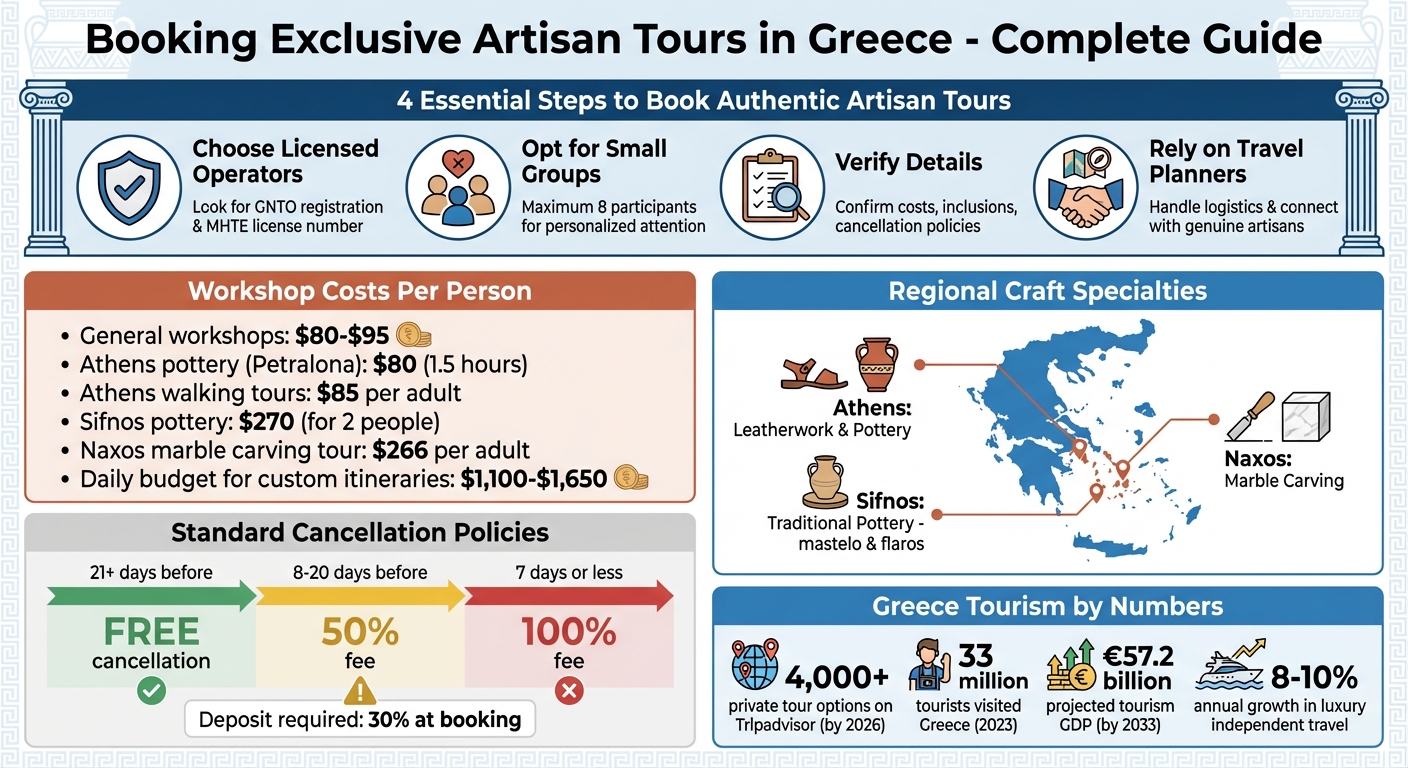
- Choose Licensed Operators: Look for Greek National Tourism Organization (GNTO) registration to ensure reliability.
- Opt for Small Groups: Workshops with fewer participants allow for personalized attention.
- Verify Details: Ensure clear communication about costs, inclusions, and cancellation policies.
- Rely on expert travel planners: Expert planners handle logistics, connect you with genuine artisans, and ensure smooth transportation.
Workshops range from $80 to $270 per person, often including tools, lectures, and shipping for your creations. With proper planning, these tours can become a highlight of your Greek adventure.
Guide to Booking Authentic Artisan Tours in Greece: Costs, Locations & Key Criteria
Common Challenges in Booking Artisan Tours
Too Many Options and Unclear Information
By 2026, Tripadvisor lists over 4,000 private tour options in Greece alone. With such an overwhelming number of choices, finding genuine artisan experiences can feel like searching for a needle in a haystack. Search results often prioritize revenue and clicks rather than cultural depth or authenticity. To complicate matters, many tours labeled as "private" fail to clearly outline what’s included – details like entrance fees to archaeological sites or whether an expert guide is part of the package are often missing. This lack of transparency can lead to unexpected costs and make it harder to separate authentic offerings from generic tourist traps.
Language and Communication Barriers
For international travelers, arranging private sessions with traditional artisans in remote areas or smaller Greek islands can be daunting. Many artisans don’t have English-language websites or staff, making direct communication difficult. A key part of these experiences is hearing personal stories, learning about family traditions, and understanding historical techniques. But when language barriers arise, much of this richness can be lost. One Tripadvisor reviewer shared an example of a misunderstanding at a local jewelry shop that caused administrative issues. The guide, Andreas, eventually stepped in to resolve the problem, but the incident highlighted how language challenges can create logistical headaches. These barriers can also make it harder to confirm whether a workshop is truly authentic.
Difficulty Verifying Quality and Genuineness
Separating genuine artisan workshops from overly commercialized presentations is another major hurdle. The rise in visitor numbers has pushed some operators to prioritize high-volume demonstrations over showcasing true craftsmanship. This issue is further complicated by the presence of unlicensed operators. Evia Private Tours cautions travelers, stating, "For your own personal safety & peace of mind be extremely aware of very low cost tours and offers. The companies offering them may be operating illegally". Legitimate operators must hold a license from the Greek National Tourism Organization (GNTO), which includes a mandatory registration number. Without insider knowledge or trusted local contacts – often referred to as a "black book" of artisans – travelers risk booking experiences that lack authenticity. Addressing these challenges requires bespoke travel planning and reliable resources to uncover truly meaningful experiences.
sbb-itb-6675d37
How to Identify Genuine Artisan Experiences in Greece
Characteristics of Genuine Workshops
When searching for authentic artisan workshops in Greece, there are a few key traits to look for. To start, real workshops tend to keep group sizes small – typically no more than eight participants. This allows for a more personal experience and meaningful interaction with the artisan leading the session. A true hallmark of authenticity is the presence of a master craftsperson guiding the activity, rather than a generic tour guide. For instance, ZAS Tours highlights their Sifnos pottery experience by stating: "A master potter, one of the most respected artisans on the island, will demonstrate the techniques, craftsmanship and secrets that have been passed down through generations".
Another important element is hands-on participation. Genuine workshops encourage visitors to directly engage with traditional tools, whether it’s shaping clay on a potter’s wheel, weaving on a loom, or carving with specialized instruments. This level of involvement goes beyond merely watching a demonstration. Additionally, these experiences often take place in working studios located in traditional neighborhoods, such as Petralona in Athens. Some workshops even include lectures that delve into ancient Greek art and the evolution of traditional techniques, adding an educational layer to the experience.
To ensure the legitimacy of the experience, check whether the tour operator is licensed by the Greek National Tourism Organization (GNTO). As Evia Private Tours advises: "Make sure that the tour company you select is registered under the Greek National Tourism Organization & Ministry of Tourism. All legally operating tour companies are mandatory to carry a license number". This step helps you avoid unlicensed operators and ensures a higher quality experience.
Popular Artisan Crafts in Greece
Greece’s regional crafts are a window into its rich heritage, and exploring these traditions through workshops can be a rewarding experience. One standout craft is Sifnian pottery, which offers a hands-on session for two people at approximately $270. This workshop is a great way to connect with the island’s unique artistic traditions.
In Athens, many workshops focus on ancient Greek ceramics, giving participants the chance to create items like prehistoric sculptures, Cycladic figurines, or pottery inspired by classical designs. For example, the "Make Your Own Souvenir Workshop" in the Petralona neighborhood offers a 1.5-hour session where participants not only craft their own pieces but also learn about various Greek artistic eras through a lecture. The workshop even provides professional firing services and can ship finished pieces internationally. This experience costs about $80 per person.
Other workshops across Athens and Naxos offer a variety of crafts, including loom weaving, marble carving, and leather sandal making. Prices for these sessions typically range from $80 to $95 per person and often include additional perks like lectures and international shipping for completed items. These workshops provide an affordable way to engage with Greece’s artistic traditions while creating something uniquely yours.
The Role of Expert Travel Planners
Simplifying the Booking Process
Planning artisan tours can be overwhelming, but expert travel planners take the stress out of the equation by managing all the logistics for you. From arranging private transfers to booking ferry and flight tickets, they handle the details across multiple vendors – whether it’s boutique hotels or master artisans – ensuring everything aligns seamlessly. Instead of juggling multiple bookings and worrying about timing conflicts, you’ll receive a single, streamlined itinerary that’s updated in real-time through centralized dashboards.
These planners also take care of administrative tasks like keeping track of payment deadlines, organizing necessary documentation, and navigating cancellation policies. Plus, with 24/7 local support – often provided through WhatsApp – they’re ready to handle any last-minute changes or emergencies.
Jeffrey B., a traveler from North Carolina, shared his experience: "Every successful trip requires a little bit of luck, and the luckiest thing that happened to us in planning our dream trip to Greece was coming across Evia Private Tours. For nearly a full year, Nikos worked with us to perfect the route we requested, and the result was a worry-free 18-day trip of a lifetime."
But expert planners don’t just make logistics easier – they also craft highly personalized journeys.
Creating Custom Itineraries
Using their in-depth local knowledge, travel planners eliminate common challenges and ensure your artisan tour is as authentic as it is seamless. Their real strength lies in their personal connections to artisans. Instead of relying on generic online resources, agencies like Jo Vacations build strong relationships with master craftspeople – such as celebrated potters on Sifnos – offering exclusive access that’s hard to arrange on your own.
The process begins with a detailed consultation to understand your interests and pace. From there, planners design itineraries that balance iconic workshops with downtime and opportunities for cultural discovery. For example, they might schedule a private pottery session in Athens’ Petralona neighborhood, followed by a marble carving workshop in Naxos. By coordinating all transportation and schedules, they ensure a smooth flow from one experience to the next. Many agencies also keep everything in-house, avoiding middlemen to maintain consistent quality throughout your trip.
With the luxury independent travel market expanding by 8–10% annually and North American travelers spending between $1,100 and $1,650 per day on custom Greek itineraries, this tailored approach has become the go-to option for those seeking meaningful artisan experiences.
My Big Fat Greek Crafty Tour with Peacetree Fiber Adventures

Regional Highlights: Top Artisan Destinations in Greece
Greece’s artisanal traditions are deeply rooted in its history, and exploring these crafts offers a unique way to connect with the country’s heritage. Here’s a look at some standout regions where you can immerse yourself in these time-honored practices.
Athens: Leatherwork and Pottery
Athens is a hub for two iconic crafts: leatherworking and pottery. In the heart of the city, you’ll find workshops where skilled leatherworkers craft handmade sandals using techniques passed down through generations. These artisans create pieces that reflect Greece’s rich cultural history.
For those drawn to pottery, Athens offers studios where you can try your hand at shaping local clay on a traditional wheel. Guided by local experts, you’ll gain insight into the artistry behind these creations. To ensure an authentic experience, specialized guides can direct you to genuine artisans through bespoke travel packages and away from tourist-focused shops. Walking tours centered on artisan crafts often include visits to multiple workshops and typically cost about $85 per adult.
This combination of leatherwork and pottery provides a perfect introduction to Greece’s diverse artisanal landscape.
Naxos: Marble Carving
Naxos is renowned for its marble carving, a craft tied to the island’s famous white marble quarries. Here, you can work alongside master artisans who teach carving techniques that have been preserved for centuries. These hands-on workshops allow you to use traditional tools and methods, working with the same marble that was used in ancient temples.
The island’s deep connection to marble is evident in historical landmarks like the Temple of Demeter, which showcases the enduring artistry of this craft. To fully experience this tradition, private full-day tours are available, starting at about $266 per adult. These tours often include carving sessions, as well as visits to historical sites and quarries, offering a comprehensive look at Naxos’s marble legacy.
Practical Considerations for Booking Artisan Tours
When planning an artisan tour in Greece, there’s more to think about than just picking a workshop. Logistics like reaching remote studios, handling payments, and shipping finished pieces can add complexity to your experience. Bespoke travel services take care of these details, ensuring everything runs smoothly behind the scenes.
Transportation and Scheduling
Getting to remote artisan studios can be tricky. Public transportation in these areas is often unreliable, especially during peak tourist season, when Greece sees roughly 33 million visitors each year. Many workshops are located in hard-to-reach places, such as narrow village streets or secluded rural areas, where standard tour buses simply can’t go.
To tackle these challenges, travel services often provide private luxury vehicles for door-to-door transportation. They also arrange private transfers using high-speed ferries, flights, or even unique local options like electric tuk-tuks for particularly remote destinations. For example, pottery workshops on Sifnos, which start at $270 for up to two people, often include private hotel pick-up and drop-off, ensuring a hassle-free experience.
Beyond transportation, having clear scheduling and payment terms is equally important.
Payment and Cancellation Policies
Knowing the payment and cancellation terms upfront can save you from surprises later. Many reputable operators follow tiered cancellation policies: free cancellation up to 21 days before the tour, a 50% fee for cancellations 8–20 days prior, and a 100% fee for cancellations within 7 days. It’s worth reviewing these policies carefully before booking.
To make things easier, travel services often require a small deposit (usually around 30%) at the time of booking, with the remaining balance due a few weeks before your trip. They also provide 24/7 local support through WhatsApp or dedicated dashboards, so you can handle last-minute changes without stress. Many of these agencies are members of recognized travel associations, offering financial protection for added peace of mind.
Now, let’s talk about what happens to your handcrafted treasures after the workshop.
Shipping Finished Pieces
Most artisan studios offer shipping services to send your finished pieces directly to your home country, though this typically comes with additional shipping fees beyond the cost of the workshop. As a representative from Truevoyagers explains:
"your souvenir will be baked, let dry and can be sent back to your home country (shipping fees apply)" – Truevoyagers
Travel planners can also help with documentation for high-value purchases, such as certificates of authenticity, so your handmade souvenirs arrive safely and with proper records.
Once these practical details are sorted, the next step is ensuring the authenticity and quality of your artisan experiences.
Verifying Quality and Genuineness
Once you’ve tackled the logistical details, it’s time to ensure your chosen workshop delivers an authentic experience. With around 33 million tourists visiting Greece in 2023, not every operator lives up to their promises of cultural immersion. To avoid falling into tourist traps, focus on verifying the workshop’s authenticity and its connection to traditional methods.
Checking Instructor Credentials and Reviews
Start by confirming the operator’s registration with the Greek National Tourism Organization (GNTO). Every legitimate company must display an MHTE license number. As Evia Private Tours emphasizes:
"Make sure that the tour company you select is registered under the Greek National Tourism Organization & Ministry of Tourism. All legally operating tour companies are mandatory to carry a license number."
Beyond licensing, prioritize workshops led by master artisans. These are often individuals who have inherited their craft through generations. Look for professional affiliations like IATA/TIDS codes or DUNS numbers, which can signal a commitment to higher standards. Additionally, reviews on platforms like Tripadvisor can provide insight into whether participants received hands-on instruction or simply watched a demonstration.
Focus on Historical Techniques
Authentic workshops stick to historical methods and tools that have defined Greek culture for centuries. For example, a genuine Sifnian pottery class should highlight traditional items such as the mastelo (a cooking pot) or flaros (a clay chimney).
Workshops held in traditional family-owned homes or artisan studios – rather than modern classrooms – are often more authentic. These spaces typically use local materials, like island-specific clay, and delve into the cultural meaning behind each creation. If you’re considering a workshop on Byzantine icon painting or marble carving, check that the instructor has a professional archaeological license. This ensures they can provide both accurate historical context and expert technical guidance.
Conclusion
Planning artisan tours in Greece becomes much simpler when you rely on experienced travel planners. These professionals take care of everything – vetting licensed artisans, organizing workshops, and arranging transportation – leaving you free to immerse yourself in the creative process.
As travelers increasingly seek tailored experiences, custom itineraries have grown in demand. Skilled planners offer one-on-one consultations to learn your specific interests, whether it’s exploring traditional pottery in Sifnos, mastering marble carving in Naxos, or trying your hand at leatherwork in Athens.
What makes these services stand out is their direct access to master artisans and round-the-clock local support throughout your trip. By cutting out intermediaries, planners like Jo Vacations provide seamless connections to genuine craftspeople.
For North American travelers, the typical budget of $1,000–$1,500 per day for custom Greek itineraries translates into exclusive, hands-on cultural experiences. With Greece’s tourism GDP projected to hit approximately €57.2 billion by 2033, the country continues to enhance its infrastructure for authentic artisan activities.
Expert travel planners craft journeys tailored to your pace, interests, and budget, ensuring your Greek artisan tour delivers a meaningful cultural experience – not a cookie-cutter tourist trap. Let Jo Vacations turn your artisan adventure into a truly memorable and stress-free experience. For more travel inspiration and expert advice, explore The Wanderer’s Guide.
FAQs
How far in advance should I book an artisan workshop in Greece?
To make sure you don’t miss out, especially during busy tourist seasons, it’s a good idea to book an artisan workshop in Greece at least four days in advance. This extra planning ensures you’ll have your spot reserved and enjoy the experience without any last-minute hassles.
What should I ask before paying for a private artisan tour?
Before booking a private artisan tour in Greece, make sure to clarify a few key details. Start with the cancellation policy, including any fees for last-minute changes. Ask about deposit requirements and payment deadlines, and confirm exactly what’s covered in the price – like entrance fees or meals. It’s also worth checking if tips for the guide are expected. Lastly, inquire about how flexible the itinerary is to ensure it aligns with your interests. Taking these steps can help you avoid unexpected surprises and enjoy a hassle-free experience.
Can my finished piece be shipped to the U.S.?
Yes, plenty of artisan experiences in Greece, such as pottery workshops, provide the option to ship your finished piece internationally – including to the U.S. This way, you can have your handmade creation delivered right to your doorstep and enjoy it long after your trip.