If you want New Year in Japan to go well, plan for closures, book early, and build your trip around shrine visits and family-season customs. From January 1 to January 3, many shops and restaurants shut, major shrines get crowded, and hotels fill fast during one of Japan’s busiest travel periods.
Here’s the short version:
- I’d aim to travel December 28 to January 4
- I’d expect many businesses to close January 1–3
- I’d book hotels, ryokan, and long-distance trains at least 2 months ahead
- I’d choose Tokyo for ease, Kyoto/Kansai for temple-centered New Year events, or Hakone for a slower onsen stay
- I’d focus on hatsumode, New Year foods, and simple logistics instead of trying to see everything
- I’d pack for winter evenings in the 30s°F to 40s°F
- I’d carry cash in yen and use luggage forwarding to make station transfers easier
New Year in Japan is less about late-night parties and more about quiet rituals, time with family, first shrine visits, and seasonal meals. That shift catches many visitors off guard, but if you plan around it, the trip usually feels smoother and more meaningful.
The Ultimate Guide to New Year’s in Japan
sbb-itb-6675d37
Quick comparison
| Place | Best for | Main New Year focus | Best stay type |
|---|---|---|---|
| Tokyo | First-time visitors | Major shrine visits and city convenience | Hotel |
| Kyoto / Kansai | Temple-focused trips | New Year’s Eve bell ringing and temple visits | Ryokan |
| Hakone | Slower holiday pace | Onsen time and quiet retreat | Ryokan |
Bottom line: I’d keep the plan simple, stay flexible with meals and daily timing, and treat New Year in Japan as a holiday first and a sightseeing trip second.
Understanding Oshogatsu: Meaning, Timing, and Traditions
What Oshogatsu Means in Japanese Life
Oshogatsu is Japan’s New Year season. It centers on family rituals, shrine visits, and seasonal food. For visitors, it’s one of the clearest ways to see how the holiday is lived in Japan, not just as a date on the calendar, but as a few days shaped by custom and family time.
How the Holiday Unfolds From December 31 to January 3
It helps to understand the flow of the holiday before you make plans. From January 1 to 3, hatsumode is the main public custom. That’s the first shrine or temple visit of the year, and it’s a big part of how many people start January.
Senso-ji in Tokyo, the city’s oldest temple, is one of the main places people go for this visit. And yes, the big sites can get packed. If you want a calmer visit, go early. Once you’re there, follow the local rhythm: bow at the entrance, keep your voice down, and pay attention to posted rules.
Food, Decorations, and Family Customs
Osechi ryori is the standard New Year meal. It’s tied closely to the season and often shared with family. You may also spot Daruma dolls during New Year. These red figures stand for perseverance and good fortune.
Taken together, these customs shape the first days of January, from where people go to how they eat and spend time with family.
Where to Celebrate New Year in Japan
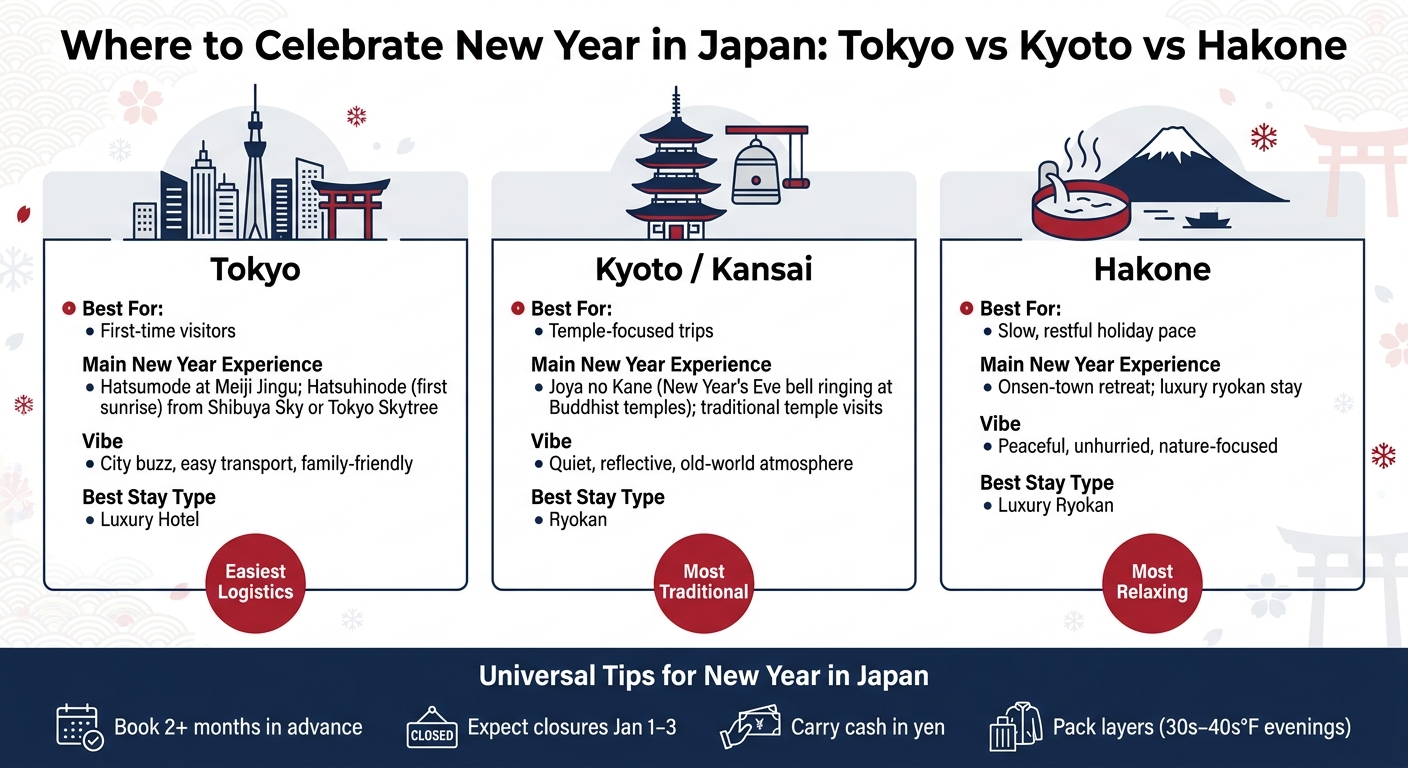
Japan New Year Destinations: Tokyo vs Kyoto vs Hakone
During New Year in Japan, where you stay can shape the whole trip just as much as what you plan to do. Many businesses close, shrine visits become a big part of the season, and getting around can feel very different from an ordinary week.
Tokyo, Kyoto, and Hakone each fit a different kind of Oshogatsu trip. Tokyo works well for city comfort and easy transport. Kyoto leans into temple customs and a more old-world mood. Hakone is better if you want to slow down and sink into an onsen stay. If easy logistics matter most, start in Tokyo. If you want more temple-centered customs, head to Kyoto. If rest sounds best, pick Hakone.
Tokyo: Major Shrine Visits and City Comfort
Tokyo is the easiest base for first-time visitors and for travelers who want smooth transport and a family-friendly pace during the holiday. Meiji Jingu is one of Tokyo’s main hatsumode spots, so it’s a natural pick if you want to join a major first shrine visit of the year.
For your first sunrise, hatsuhinode from Shibuya Sky or Tokyo Skytree can make the start of the year feel special in a big-city way. And when trains, closures, and holiday schedules start to pile up, private transfers and full-service hotels can take a lot of the stress off your plate.
Kyoto and Kansai: A More Traditional, Temple-Centered Atmosphere
Kyoto and the Kansai region are a strong fit if you want a New Year trip shaped by temple customs. The big draw here is Joya no Kane, the New Year’s Eve bell-ringing at Buddhist temples. It gives the season a quieter, more reflective feel.
A ryokan stay pairs well with this setting. It adds to the sense of season and makes the whole trip feel more rooted in the mood of the holiday.
Hakone and Onsen Towns: A Slower New Year
Hakone is a good choice if your idea of New Year is less about rushing between sights and more about slowing down. Its onsen towns are well suited to a luxury ryokan stay, which makes it easy to settle in and let the holiday unfold at a gentler pace.
| Destination | Signature New Year Experience | Best Stay |
|---|---|---|
| Tokyo | Hatsumode at Meiji Jingu; Hatsuhinode from Shibuya Sky or Tokyo Skytree | Luxury hotel |
| Kyoto / Kansai | Joya no Kane temple bell ringing; temple traditions | Ryokan |
| Hakone | Quieter onsen-town retreat | Luxury ryokan |
Planning the Trip: Closures, Logistics, and Booking
What Closes, What Stays Open, and How It Affects Your Plans
Once you’ve picked your base, closures shape the rest of the trip. They decide what you can do on each day, so it helps to build your plans around places that stay open.
The inner grounds of the Tokyo Imperial Palace are closed from Jan. 1–3, aside from the Jan. 2 New Year Greeting ceremony. Major shrines such as Senso-ji in Tokyo and Fushimi Inari in Kyoto remain active for Hatsumode, and many department stores open for New Year sales.
That quieter feel in some parts of the city isn’t a flaw in the plan. It’s part of what makes this time of year in Japan feel different.
Getting Around: Winter Weather, Crowds, and Train Travel
Once you know what’s open, transportation becomes the next big piece. For trips between Tokyo and Kyoto, the Shinkansen is the fastest practical choice. Book as soon as reservations open. Stations get VERY crowded around New Year, so showing up early matters.
Expect evening temperatures in the 30s°F to 40s°F, with colder weather farther north. Pack layers, especially if you’ll be outside for shrine visits.
One simple move can make travel much easier: use Japan’s luggage forwarding service, Takkyubin. Shipping bags between cities lets you move through packed stations and trains without dragging suitcases behind you. It makes city-to-city travel much smoother.
Hotels, Ryokan, and When to Book
Where you stay can shape the trip just as much as the places you visit during Oshogatsu. New Year is peak season, so early booking is a must if you want the best hotel or ryokan options.
For bespoke trips, aim to finalize bookings, submit passport copies, and complete payment at least two months before your departure date.
| Accommodation Type | Typical New Year Inclusions | Strengths | Trade-offs |
|---|---|---|---|
| Luxury Hotel | Breakfast, festive extras, high-end amenities | Central locations, English-speaking staff, 24/7 concierge | High demand; NYE often excluded from standard package rates |
| Ryokan (Traditional Inn) | Kaiseki multi-course meals, traditional Osechi New Year breakfast | Cultural immersion, private onsen | Strict check-in times; often in quieter or rural areas |
| Business/4-Star Hotel | Standard breakfast, functional rooms | Cost-effective, near major train stations | Smaller rooms, fewer festive extras |
Sample Itineraries and Bespoke Planning
Once closures and transport shape the trip, the next step is choosing a pace that fits the holiday.
Itinerary Ideas for Different Travel Styles
The best Oshogatsu trips stay focused. If you try to cram in too many stops, the whole thing starts to feel thin. It’s better to build the route around hatsumode, New Year meals, and one stay that feels meaningful.
That same idea works across different trip styles. Whether you’re planning for a couple, a family, or a trip built around shrines, food, or onsen, a tighter plan usually works better.
A single-base itinerary keeps transfers simple and gives you more time for shrine visits instead of train changes and hotel check-ins.
Couples who want a more luxurious pace can pair a Tokyo city stay with a ryokan in Kyoto or Hakone. That split stay gives you both sides of the trip: the buzz of a major city and the calm of a classic inn.
Families and multi-generational groups usually do better with shorter transfers and a slower schedule. That extra breathing room matters, especially when domestic travel is busier than usual and people may want time to rest between outings.
Shrine-, food-, and onsen-focused trips also work best when the plan stays narrow. During Oshogatsu, timing matters more than trying to fit in as much as possible.
When Custom Trip Planning Is Worth It
Oshogatsu is one of those times when bespoke planning can make a big difference. Inventory is tight, and transfers can be harder to manage. Premium ryokan rooms and guided shrine visits are much easier to line up early, especially when closures and limited New Year availability shrink your choices.
This kind of planning is most useful for travelers with clear priorities. That might mean:
- A couple set on a certain ryokan for a milestone trip
- A family that needs multilingual local support during shrine visits
- A solo woman traveler who wants a carefully planned itinerary with 24/7 support throughout the journey
How Jo Vacations Can Plan Your Japan New Year Trip
For travelers who want everything arranged from start to finish, bespoke planning takes out the guesswork.
Jo Vacations designs tailor-made Oshogatsu trips with handpicked stays, private transfers, cultural experiences, and 24/7 support. Every itinerary is built around your pace and priorities.
For couples marking a milestone, such as an anniversary, honeymoon, or proposal, the team can arrange premium ryokan stays, private dining, and smooth transfers. For families, itineraries are paced to ease New Year logistics, with dining booked ahead and comfortable accommodations. For solo women travelers, Jo Vacations builds fully supported itineraries with vetted local guides throughout the trip.
Because New Year travel can get especially busy, it helps to start early while the best options are still on the table.
Conclusion: Key Takeaways for Celebrating New Year in Japan
Oshogatsu goes most smoothly when you build your trip around its main rituals, especially hatsumode, the first shrine visit of the year. Think of it as a holiday rooted in custom first, and a sightseeing trip second.
The big thing to watch is timing. New Year is one of Japan’s busiest travel periods, so it pays to book early. Try to lock in your bookings, payment, and travel documents at least two months before departure.
It also helps to confirm accommodations, transfers, and guided visits well ahead of time. Once those pieces are in place, your next call is where to stay.
Your base can shape the whole feel of the trip. Tokyo fits shrine visits and big-city buzz. Kyoto and Kansai tend to feel quieter and more old-world. Hakone and other onsen towns are a better fit if you want a slower rhythm.
A few small things can make the holiday much easier. Carry some yen in cash, and wear comfortable shoes. Both help a lot when you’re dealing with crowded stations and temple grounds.
FAQs
Is New Year a good time to visit Japan?
Yes, New Year (Oshogatsu) can be a great time to visit Japan if you want a trip that feels calm, reflective, and rooted in local custom. It’s a season of serene winter scenery, from snow-covered landscapes to hot springs with views of Mount Fuji.
That said, timing matters. Major shrines are often extremely crowded during the first three days of January for Hatsumode, when people make their first shrine or temple visit of the year. If you want a quieter moment, smaller local shrines often offer a more peaceful, personal experience.
How crowded do shrines and trains get?
During the first three days of January, popular shrines get extremely crowded. At major sites like Meiji Jingu, wait times often run from 1 to 3 hours, and the crowds can feel tight and slow.
Trains still run on time and remain dependable, but they’re busier during the New Year period. If you’d rather skip the long lines, smaller local shrines are usually much calmer and often have little to no wait.
What should I reserve before arriving?
Book accommodations at least 6 months in advance. A lot of properties open reservations around that point, and the best options can go fast.
It also helps to lock in must-do activities early. That matters most for Ghibli Park, Universal Studios Japan Express passes, popular museums, and teamLab.
For flights, the sweet spot is usually 1 to 2 months before departure.
If you’d rather skip the back-and-forth of planning, Jo Vacations can put together a tailored itinerary with accommodations, private transportation, and expert-led experiences.