When planning a Great Migration safari in Africa, your choice between luxury tented camps and safari lodges shapes your experience. Tented camps immerse you in nature with canvas walls, mobile setups, and proximity to wildlife. Safari lodges, on the other hand, offer permanent structures with modern comforts like air conditioning, spas, and pools. Here’s a quick breakdown to help you decide:
- Tented Camps: Best for those seeking an intimate, close-to-nature experience. They often follow the migration, keeping you near the action, but may lack full weather protection or soundproofing.
- Safari Lodges: Ideal for families or travelers prioritizing comfort and amenities. They provide a hotel-like experience but are stationary, which might mean longer drives to see wildlife.
Quick Comparison
| Factor | Luxury Tented Camps | Safari Lodges |
|---|---|---|
| Structure | Canvas walls, raised platforms | Permanent buildings (stone/wood) |
| Wildlife Access | High, often mobile | Moderate, fixed location |
| Amenities | Basic (flush toilets, hot showers) | Extensive (pools, spas, gyms) |
| Privacy | Fewer guests, quieter | More guests, social atmosphere |
| Family Suitability | Older kids, adventurous families | Great for families with young kids |
For a balanced trip, consider combining both options: stay in a tented camp for wildlife immersion, then relax at a lodge for extra comfort.
Luxury Tented Camps: A Closer Look
What Luxury Tented Camps Offer
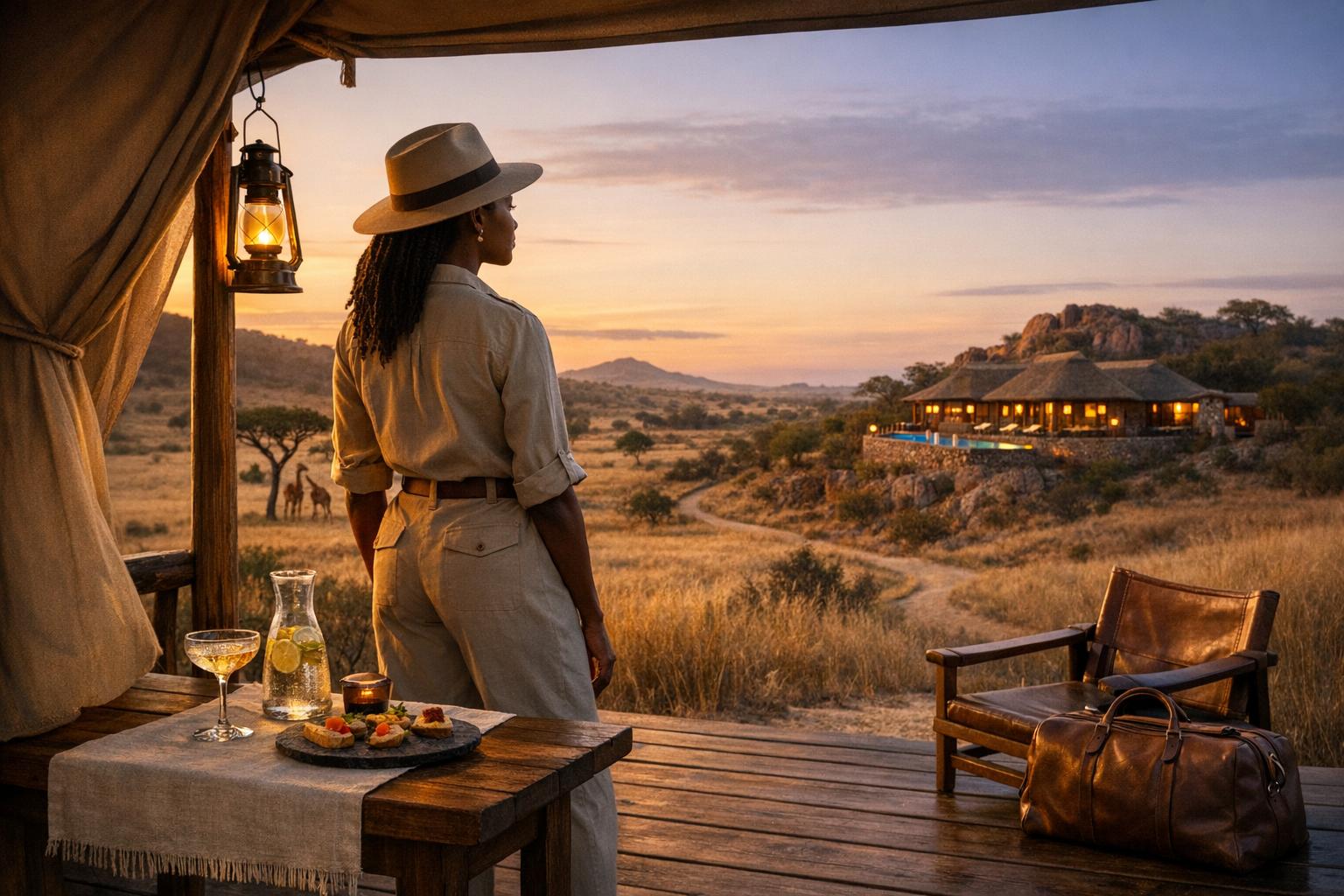
Luxury tented camps combine the charm of the outdoors with modern conveniences. Picture canvas suites perched on raised wooden platforms, complete with en-suite bathrooms featuring flush toilets, hot showers, private decks, and upscale furnishings. The canvas walls are not just for aesthetics – they let in the sounds and breezes of the wild, creating an authentic outdoor vibe. This setup is perfect for an unforgettable safari packages.
What truly makes these camps stand out is their intimate size and strategic locations. Unlike larger lodges, these camps host only a handful of guests, ensuring a more personal experience. Many are situated in prime safari destinations along the migration route – think the Northern Serengeti for thrilling river crossings or the Western Corridor during calving season. Some camps even move with the herds, keeping you at the center of the action.
Benefits of Staying in a Luxury Tented Camp
The design and location of these camps offer an unparalleled connection to nature. Imagine lying in bed and hearing lions roar at dusk, hyenas wander through the camp at night, or birds singing at the crack of dawn. Legendary Expeditions beautifully sums it up:
"The luxury tented camp experience feels less like a destination to check off your list and more like a love letter to the wild."
Many of these camps are located in private conservancies, which means you can enjoy activities like off-road drives, night safaris, and walking tours – adventures that aren’t always available in national parks. This flexibility often leads to closer wildlife encounters and unique experiences.
Things to Keep in Mind
While canvas walls bring you closer to nature, they also mean less insulation. The temperature inside the tent mirrors the weather outside, and rain can sound louder than you’d expect. Since most camps are unfenced, guests are always escorted to their tents by an askari (security guard) after dark.
Privacy can also be a consideration. Canvas walls don’t block sound as effectively as solid structures, so light sleepers or those who value quiet may want to ask about tent spacing and layout. If you have mobility challenges, it’s worth checking with the camp ahead of time – paths are often unpaved and uneven, which can make getting around a bit tricky.
sbb-itb-6675d37
Safari Lodges: Comfort and Convenience
What Safari Lodges Offer
Safari lodges are permanent structures designed to blend seamlessly into their natural surroundings while offering bespoke luxury experiences and modern amenities. Typically constructed from stone, wood, and glass, these lodges provide guests with comforts like king-size beds, en-suite bathrooms with clawfoot tubs, private decks overlooking the plains, swimming pools, full-service spas, fitness centers, and jacuzzis.
One standout example is Legendary Mwiba Lodge in Tanzania. Perched on a granite outcrop, it features suites with en-suite bathrooms, clawfoot tubs, a gym, a spa, and a jacuzzi nestled among natural boulders. As the Lodge Manager aptly puts it:
"This is your home away from home." – Lodge Manager, Legendary Mwiba Lodge
Beyond luxurious accommodations, lodges ensure practical comforts such as 24/7 electricity, reliable running water, and high-speed internet. These features create a setting where guests can enjoy both the wilderness and modern conveniences.
Benefits of Staying in a Safari Lodge
Safari lodges excel at delivering unparalleled comfort. Their solid walls provide soundproofing and climate control, offering a cool, peaceful retreat after a day spent exploring places like the Serengeti. For those who want to experience the wild without giving up a restful night’s sleep, lodges strike a perfect balance.
Lodges are also a great option for families and larger groups. With fenced perimeters, interconnected rooms, and activities tailored for children, they are particularly suited for families traveling with young kids. As Opulent Africa highlights:
"The security and facilities of lodges make them a great choice for families with young children." – Opulent Africa
After several days of early-morning game drives, amenities like spas and gyms offer a welcome chance to relax and recharge.
Things to Keep in Mind
While lodges offer incredible comfort, they do come with some trade-offs. The solid walls and insulated rooms, while cozy, can dilute the raw, immersive experience of the wilderness. Additionally, the resort-like atmosphere – with communal dining areas and shared game drives – can feel busier compared to the intimate vibe of tented camps.
Unlike mobile tented camps that move with migrating herds, lodges are fixed in one location. This means they might not always be close to the action during migration seasons. Finally, the upscale infrastructure comes at a price, with nightly rates often ranging from several hundred dollars to over $1,000, depending on the season and the suite’s level of luxury.
Choosing Your Safari Accommodation | Lodges, Bush Camps & Mobile Tented Camps
Tented Camps vs Safari Lodges: Side-by-Side Comparison
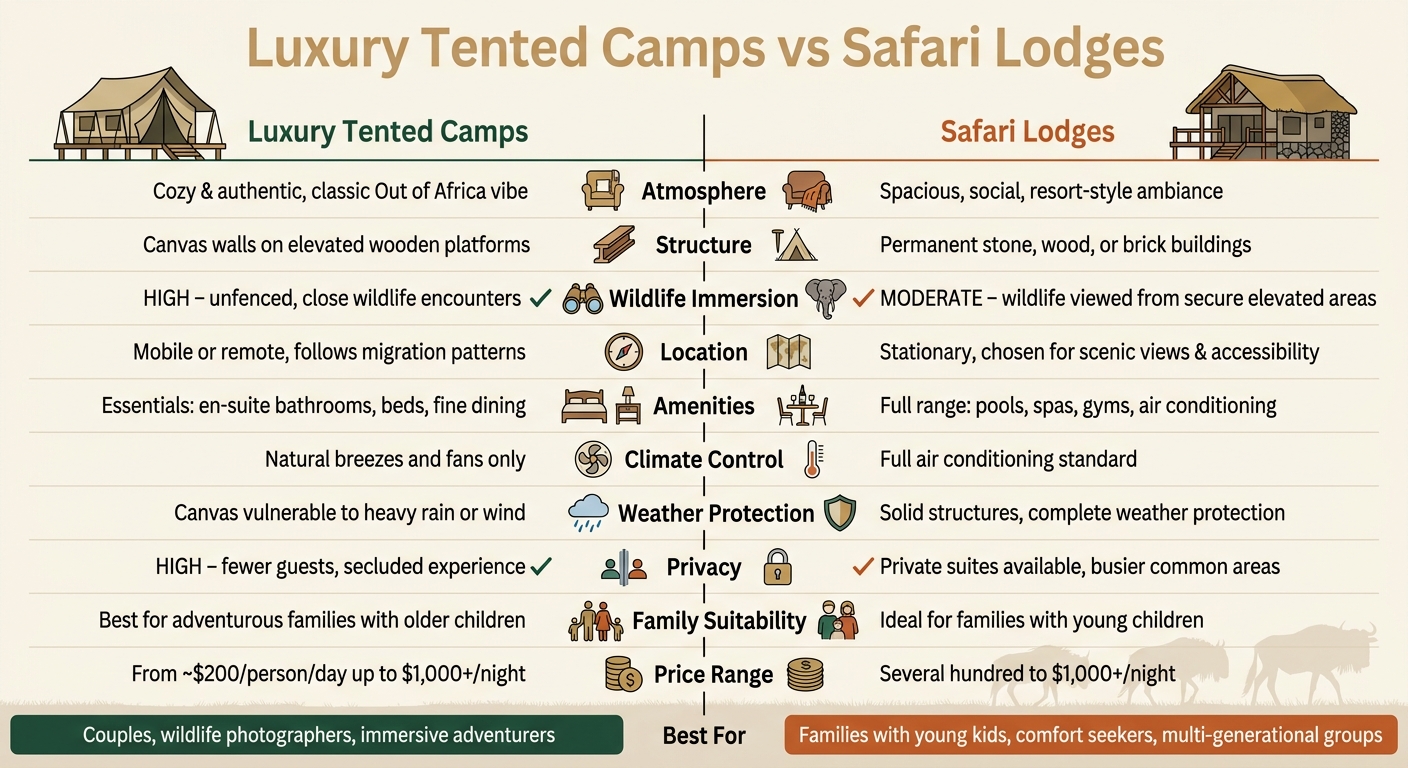
Luxury Tented Camps vs Safari Lodges: Side-by-Side Comparison
Comparison Table
Tented camps offer a closer connection to nature with their seasonal mobility and open-air designs, while safari lodges provide a more permanent, resort-like experience with extensive amenities such as air conditioning, spas, and solid structures. Tented camps are all about the raw beauty of the wilderness, whereas lodges emphasize comfort and luxury. The table below highlights the key differences between these two accommodation options.
| Factor | Luxury Tented Camps | Safari Lodges |
|---|---|---|
| Atmosphere | Cozy and authentic, with a classic "Out of Africa" vibe | Spacious, social, and resort-style ambiance |
| Structure | Canvas walls on elevated wooden platforms | Permanent buildings made of stone, wood, or brick |
| Wildlife Immersion | High – unfenced, allowing close encounters with wildlife | Moderate – wildlife often viewed from secure, elevated areas |
| Location | Mobile or located in remote areas, often following migration patterns | Stationary, chosen for scenic views and accessibility |
| Amenities | Focused on essentials (en-suite bathrooms, proper beds, fine dining) | Wide-ranging, including pools, spas, gyms, and air conditioning |
| Climate Control | Limited to natural breezes and fans | Full air conditioning as a standard feature |
| Weather Protection | Canvas can be vulnerable to heavy rain or wind | Solid structures provide complete weather protection |
| Privacy | High – fewer guests, offering a more secluded experience | Private suites available, but common areas can be busier |
| Family Suitability | Better for adventurous families with older children | Ideal for families with younger kids, offering more conveniences |
| Price Range | Starts around $200 per person per day, reaching $1,000+ per night for luxury options | Typically ranges from several hundred to $1,000+ per night |
Tented camps shine when it comes to a deep, immersive wilderness experience, while safari lodges cater to those seeking comfort, security, and a wide array of facilities. Choosing between the two ultimately depends on your travel style and the type of adventure you’re looking for, especially if you’re following the Great Migration.
How to Choose the Right Option for the Great Migration Route
Key Factors to Consider
When planning your Great Migration adventure, think about whether you want to be fully immersed in the wild or prefer a more comfortable, distant perspective.
Luxury tented camps place you right in the heart of the wilderness. With only canvas walls separating you from nature, you’ll hear the sounds of the wild at night – an exhilarating experience for some, though not everyone feels the same. As a safari guide at Legendary Nyasi Tented Camp explained:
"This is how the old safaris would have been. Comfortable, yes, but still connected to the wilderness around them."
If you’re looking for modern conveniences, safari lodges might be a better fit. These offer solid walls, air conditioning, spas, and pools, making them a great choice for families, older travelers, or anyone who values added comfort. However, keep in mind that many tented camps have uneven, unpaved paths, so accessibility can be a concern for those with mobility issues.
For couples or solo travelers craving a deeper connection with nature, tented camps provide a more immersive experience. Meanwhile, families or multi-generational groups often appreciate the practicality and ease of lodges. Your choice should also take into account the time of year you plan to visit.
How the Season Affects Your Choice
Once you’ve considered your comfort level and desired level of immersion, think about how the season influences where you’ll find the migration.
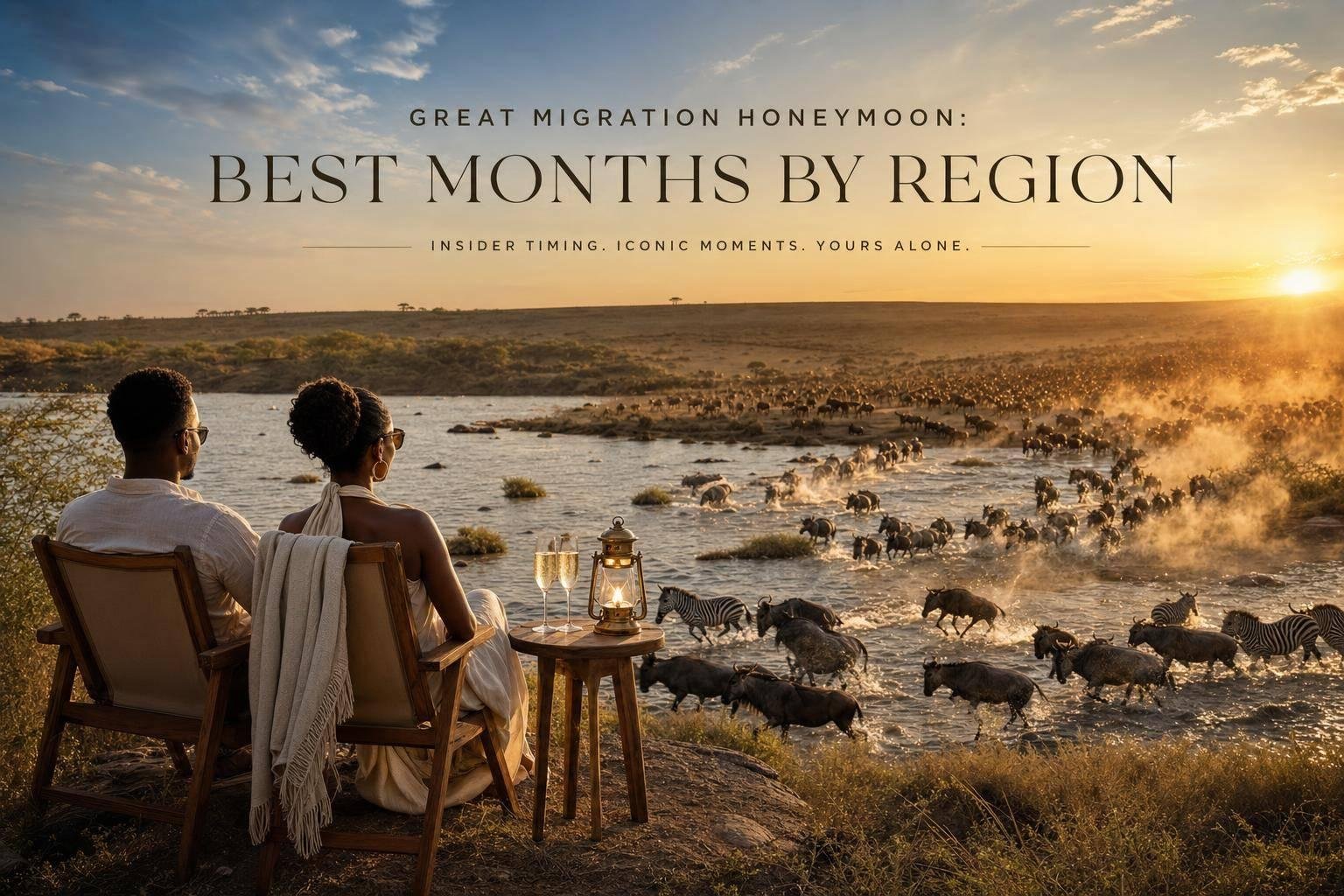
The Great Migration is a dynamic event, with over 2 million wildebeest, Thomson’s gazelles, and zebras constantly on the move across the Serengeti-Mara ecosystem. Their location depends entirely on the time of year.
Dry season (June through October) is the peak migration period. This is when the herds cross rivers in the northern Serengeti and Maasai Mara, making a mobile tented camp invaluable. Camps like &Beyond’s Serengeti Under Canvas relocate based on the herds’ movements, ensuring guests stay close to the action. In contrast, staying at a fixed lodge during this period might mean longer drives to reach key migration points. Choosing accommodations that adapt to the migration’s movements can save you time and keep you closer to the wildlife.
Wet season (November through May) brings the herds south to the Ndutu area for calving. During this time, the landscape becomes lush, and prices drop significantly. However, heavy rains can make remote tented camps harder to access due to muddy roads, making permanent lodges a more practical option. For instance, in May 2026, unseasonably dry weather caused herds to move north earlier than expected, showing how unpredictable migration patterns can be. Flexible accommodations can help you adapt to these changes.
For many travelers, the best strategy is a split stay: spend a few nights in a mobile tented camp for an up-close wildlife experience, then relax at a safari lodge with full amenities to unwind. If you’re unsure how to plan this kind of itinerary, Jo Vacations specializes in custom Africa trips and can help match your travel dates with the migration’s movements.
Conclusion: Picking the Right Fit for Your Safari
Choosing between a luxury tented camp and a safari lodge comes down to what you value most in your travel experience. Do you crave an intimate connection with the wild, or do you prefer modern comforts while enjoying the adventure? Tented camps bring you closer to nature with their open designs, offering an authentic wilderness vibe. Meanwhile, safari lodges provide resort-like amenities and a more climate-controlled environment, ideal for those who prioritize convenience and comfort.
As Governors’ Camp Collection aptly says:
"Luxury should promote immersion, not take it away, so that the wild can unfold at its own pace."
If you’re traveling as a couple, a wildlife photographer, or someone eager for an immersive experience, a tented camp is likely to be your best match. On the flip side, families with young kids, travelers with mobility concerns, or those who prefer extra conveniences might find a lodge more suitable.
For many, a combination of the two – starting with the raw beauty of a tented camp and ending with the comfort of a lodge – strikes the perfect balance. To plan a safari tailored to your preferences and the migration’s timing, Jo Vacations offers personalized itineraries that cater to your unique style and schedule.
FAQs
How many nights should I split between a camp and a lodge?
For a complete safari experience, try dividing your stay between a camp and a lodge, spending around 3–4 nights at each. This combination lets you soak in the raw, immersive feel of a tented camp while also enjoying the comfort and amenities of a lodge. If your trip spans 7–10 nights, you might lean slightly toward the camp – say, 4 nights in the camp and 3 in the lodge – for a perfect mix of adventure and relaxation.
Are luxury tented camps safe at night?
Luxury tented camps are built with safety as a priority, offering a secure environment even at night. They are staffed with trained personnel who are available to escort guests after dark, ensuring peace of mind. These camps are usually situated in well-chosen, secure locations near wildlife-rich areas, with staff prepared to address any safety concerns that might arise.
If the sounds of wildlife at night make you uneasy or you feel more comfortable with solid walls, staying at a lodge could be a better fit for you. Ultimately, following the guidance and instructions provided by the camp staff will help ensure a safe and enjoyable experience.
Which option is best for rainy season road access?
Safari lodges tend to be a more practical option during the rainy season. Their solid infrastructure and well-maintained roads make them easier to access, even when the weather gets tricky. On the other hand, luxury tented camps are often located in remote areas where roads can quickly become muddy or impassable during heavy rainfall, making them harder to reach.