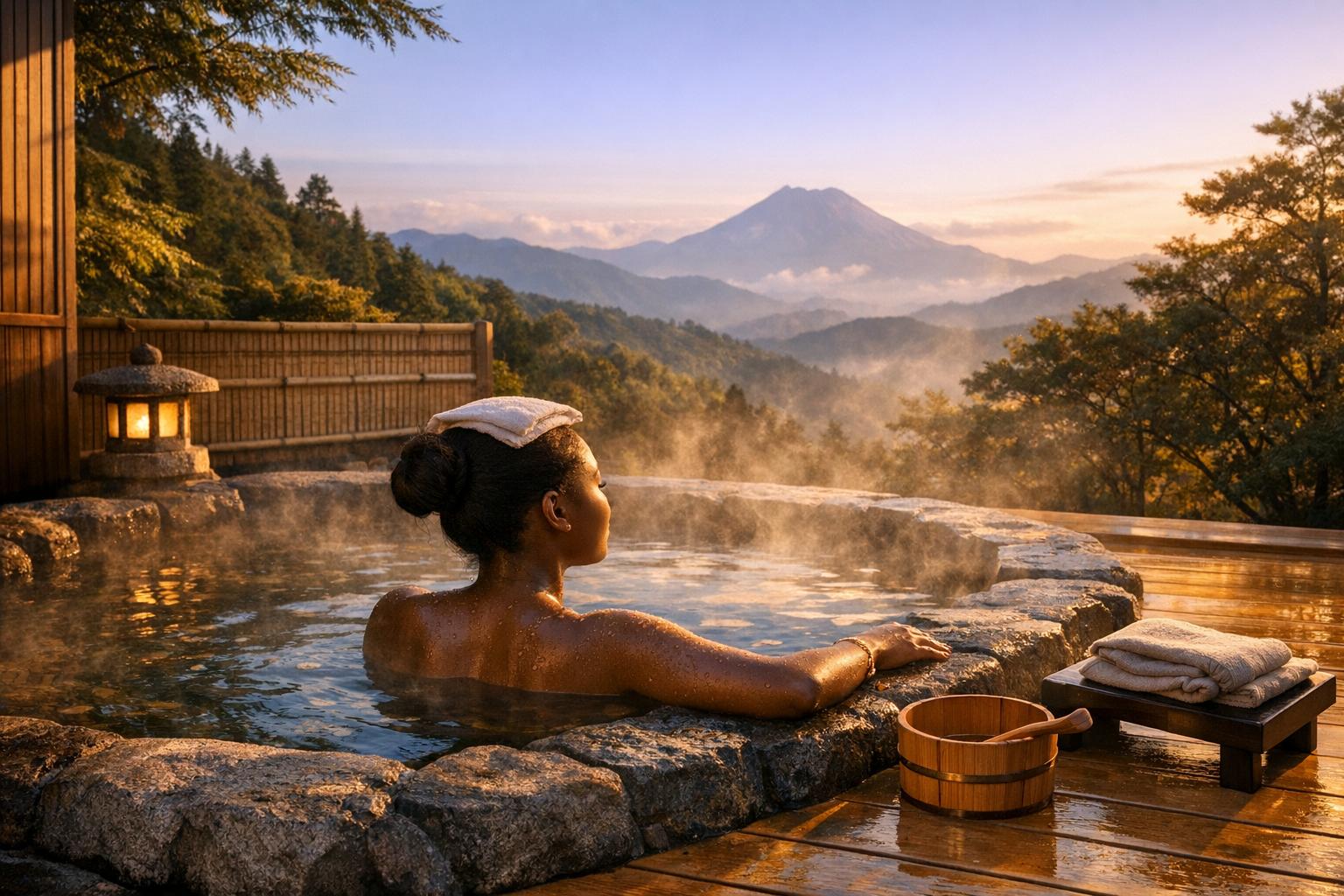
Japan is famous for its onsen (hot springs), offering relaxation, wellness, and a glimpse into centuries-old traditions. With over 27,000 hot springs and 3,000 establishments, each onsen has its own charm, mineral properties, and unique experiences. Whether you’re looking for historic bathhouses, scenic outdoor pools, or quirky themed spas, Japan has something for everyone. Here’s a quick look at 10 of the best:
- Kusatsu Onsen (Gunma Prefecture): Known for its high sulfur content, the town features the iconic Yubatake and the traditional yumomi water-stirring ceremony.
- Gero Onsen (Gifu Prefecture): Famous for its alkaline "beauty baths" and riverside open-air pools.
- Dogo Onsen (Ehime Prefecture): Japan’s oldest onsen, with connections to legends and inspiring Studio Ghibli‘s Spirited Away.
- Kinosaki Onsen (Hyogo Prefecture): A charming town with seven public bathhouses connected by picturesque streets.
- Hakone Onsen (Kanagawa Prefecture): Close to Tokyo, offering diverse mineral springs and views of Mount Fuji.
- Nyuto Onsen (Akita Prefecture): A remote cluster of rustic ryokan with milky, mineral-rich waters.
- Kinugawa Onsen (Tochigi Prefecture): Easily accessible from Tokyo, featuring scenic river views and family-friendly baths.
- Beppu Onsen (Oita Prefecture): Japan’s hot spring capital, offering sand baths, mud baths, and the famous "Hells of Beppu."
- Ginzan Onsen (Yamagata Prefecture): A Taisho-era town with snowy landscapes and historic ryokan.
- Ibusuki Onsen (Kagoshima Prefecture): Home to sunamushi onsen (sand baths) and seaside relaxation.
Each destination offers a mix of healing waters, scenic beauty, and local traditions. Whether you’re seeking therapeutic benefits, cultural insights, or pure relaxation, these onsen provide unforgettable experiences. These destinations are essential stops on any bespoke journey through Japan.
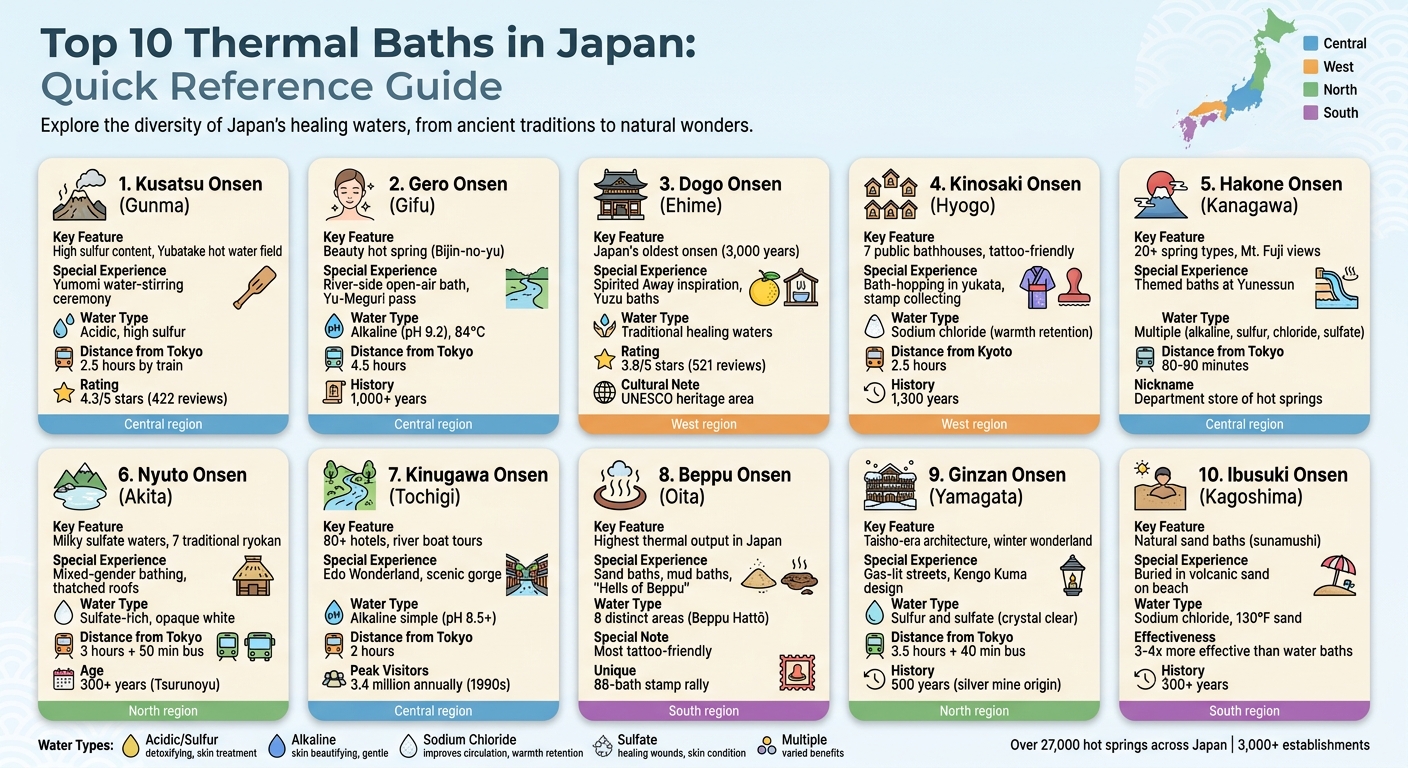
Top 10 Thermal Baths in Japan: Quick Comparison Guide
JAPAN Hot Spring: Complete Guide to Visit an Onsen
sbb-itb-6675d37
1. Kusatsu Onsen, Gunma Prefecture
Kusatsu Onsen stands as a shining example of Japan’s rich onsen culture, blending history, tradition, and natural healing.
Tucked away in the mountains of Gunma Prefecture, Kusatsu Onsen is celebrated as one of Japan’s Top Three hot springs, a title rooted in historical recognition. At the heart of the town lies the Yubatake, or "hot water field." This striking wooden structure channels immense volumes of hot spring water from the mountains, naturally cooling it as it flows for bathers.
Healing Properties of the Water
Kusatsu’s waters are known for their high sulfur content and acidity, offering relief for joint pain, improved blood circulation, and soothing effects for various ailments. Locals have long embraced the yumomi method, a traditional practice of stirring the water rhythmically with large wooden paddles to adjust its temperature without diluting its natural minerals. There’s even a saying that these waters can "cure any sickness except lovesickness".
Unique Traditions and Features
The yumomi technique has transformed into a cultural performance, where rhythmic stirring with paddles highlights the town’s dedication to preserving its onsen’s healing qualities. For a truly memorable visit, head to Sai no Kawara Rotenburo, an outdoor bath nestled in a serene park surrounded by lush forest views.
Accessibility and Visitor Experience
Getting to Kusatsu Onsen from Tokyo is straightforward, making it a popular addition to Japan travel packages. You can take the Kusatsu limited-express train from Ueno Station to Naganohara-Kusatsuguchi Station (around 2.5 hours) and then a 30-minute bus ride into town. Alternatively, the Shinkansen from Tokyo Station to Karuizawa, followed by an 80–100 minute bus ride, is another option. The town enjoys a 4.3 out of 5-star rating on Japan-guide, based on feedback from 422 visitors. Before leaving, consider picking up Yu no Hana (hot spring powder) to bring a piece of Kusatsu’s rejuvenating experience back home. With its therapeutic waters, charming traditions, and convenient access, Kusatsu Onsen is a destination that promises relaxation and cultural immersion.
2. Gero Onsen, Gifu Prefecture
Gero Onsen carries on Japan’s rich onsen tradition with its standout mineral waters and centuries-old legends, often featured in bespoke experiences for travelers. Nestled in Gifu’s Japanese Alps, this onsen ranks among Japan’s Three Famous Springs, boasting over 1,000 years of history and more than 50 ryokans lining the Hida River.
Healing Properties of the Water
The waters of Gero Onsen are classified as a simple alkaline hot spring with a high pH level of 9.2. The water emerges at a steamy 84°C (184°F) and is cooled to a comfortable 55°C (131°F) for bathers. Known as "Bijin-no-yu", or beauty hot spring, its silky texture leaves skin feeling smooth, or "tsuru tsuru", as locals describe it. Chef Yukari Sakamoto notes that just a few minutes in the water makes the skin feel noticeably softer. Beyond its cosmetic benefits, the water is believed to aid in conditions like rheumatism, nerve pain, sports injuries, and motor function disorders. Since 1971, a centralized system has maintained a consistent supply of high-quality thermal water across the town’s facilities.
Unique Traditions and Features
According to legend, a white egret revealed the spring’s location by landing near the Hida River to heal its injured wing. Visitors today can enjoy Funsenchi, a large, open-air bath by the river where swimsuits are required. For just $8.50, the "Yu-Meguri-Tegata" wooden spa pass grants access to three different ryokan baths, making it a fun way to explore the town’s offerings. Seven free public foot baths, like the "Venus Footbath" and "Sarubobo Golden Footbath", are scattered throughout the area, adding to the charm. At Onsen-ji Temple, visitors can pour hot spring water over a statue of Yakushi Nyorai, the Buddha of healing, with the belief that it will cure ailments of the corresponding body part.
Accessibility and Visitor Experience
Reaching Gero Onsen from Tokyo involves a 4.5-hour journey: take the Shinkansen to Nagoya, followed by the Wide View Hida limited express train. Once there, the compact town is easy to explore on foot, though electric bikes are available for rent at $6.50 per day or $4 for four hours. Mid-range ryokans like Suimeikan and Ogawaya start at approximately $200 per night. For the best results, it’s recommended not to rinse off with tap water after soaking, to preserve the mineral benefits. Reflecting on the experience, Yukari Sakamoto shares:
When we get off the train we all talk about the air. You hear people on the platform saying, ‘the air is delicious.’
3. Dogo Onsen, Ehime Prefecture
Dogo Onsen is celebrated as Japan’s oldest hot spring, with a history stretching back roughly 3,000 years. Nestled in Ehime Prefecture on the island of Shikoku, it’s one of the Nihon San Kotō (Three Ancient Hot Springs of Japan) and is even mentioned in the Nihon Shoki (The Chronicles of Japan, 720). At the heart of this historic town stands the Dogo Onsen Honkan, a magnificent wooden bathhouse constructed in 1894, which famously inspired the bathhouse in Hayao Miyazaki’s Spirited Away.
Cultural and Historical Significance
Dogo Onsen’s origins are steeped in legend. One tale tells of a white heron that healed its injured leg in the spring’s waters, revealing its location to humans. Another story recounts how the god Sukunahikona no Mikoto recovered from an illness after bathing here. These myths underscore the spring’s longstanding reputation for healing and renewal.
Architect Yuval Zohar highlights its influence on popular culture:
Dogo Onsen, with its sweeping tiled roofs, shoji lattice hallways and overflowing tubs, is widely considered the most prominent [inspiration for Spirited Away].
This connection to Studio Ghibli has drawn international attention, cementing its place as a must-visit destination. With a 3.9 out of 5 rating from 521 reviews on Japan-guide.com, it continues to attract visitors eager to experience its therapeutic waters and cultural richness. Despite its ancient roots, Dogo Onsen embraces modern traditions, adding a dynamic layer to its charm.
Unique Traditions and Features
Dogo Onsen stands out not only for its history but also for its lively atmosphere. Unlike many serene onsen towns, Dogo is "unapologetically full of life," with bustling streets, vibrant shops, and friendly locals. At night, the Honkan becomes even more enchanting as traditional lanterns light up the structure, creating a magical ambiance.
Ehime Prefecture is also a major producer of Yuzu oranges, and during the winter solstice, these fragrant fruits are added to the baths. The Yuzu-infused water fills the air with a refreshing citrus scent while offering soothing relief for sore muscles and rough skin – a delightful tradition that blends natural beauty with wellness.
Accessibility and Visitor Experience
Dogo Onsen caters to a variety of preferences with its diverse bathing options. While the Honkan remains the star attraction, other facilities in the area provide quieter, more intimate experiences. Its location on Shikoku, slightly removed from the typical tourist trails, adds to its appeal, offering an authentic glimpse into Japanese onsen culture. The combination of historical depth, architectural splendor, and a vibrant local scene ensures that Dogo Onsen delivers an experience that is both culturally rich and genuinely welcoming.
4. Kinosaki Onsen, Hyogo Prefecture
Kinosaki Onsen, a historic hot spring town with a 1,300-year legacy dating back to the early 8th century, warmly welcomes all visitors – including those with tattoos – across its seven public bathhouses.
Cultural and Historical Significance
According to local legend, the springs were first discovered when an Oriental White Stork healed its injured leg by bathing in the waters. This bird has since become a cherished symbol of the town, commemorated with statues scattered throughout Kinosaki, including near Kono-Yu Onsen. What makes Kinosaki especially unique is its layout, where the entire town feels like one large resort. The streets serve as pathways connecting the seven public bathhouses, or soto-yu, and visitors often take part in "Soto-yu Meguri", a bath-hopping tradition complete with a stamp-collecting activity on English-friendly maps. This blend of history and culture creates an unforgettable onsen experience.
Unique Traditions and Features
One of the highlights of visiting Kinosaki is strolling through the charming streets in rented yukata (light cotton robes) and geta (wooden sandals), adding to the festive atmosphere. Beyond the baths, visitors can deepen their connection to the area by participating in activities like guided zazen meditation or green tea picking, offering a glimpse into local traditions.
Healing Properties of the Water
Kinosaki’s mineral-rich sodium chloride springs are known for their therapeutic benefits. These waters improve circulation, aid in muscle recovery, and alleviate joint pain and neuralgia. Often referred to as "springs of warmth", they help retain body heat by controlling sweat evaporation long after a soak. The sodium content also has mild antiseptic properties, making it effective for treating minor cuts, burns, and skin irritations. Each of the seven bathhouses has its own theme and reputed benefits: Kono-Yu is associated with longevity and marital happiness, Goshono-Yu is called the "Water of Beauty" for its skin-nourishing qualities, and Yanagi-Yu is linked to fertility and safe childbirth.
Accessibility and Visitor Experience
Kinosaki is conveniently located about 2.5 hours from Kyoto and 3 hours from Osaka via limited express train. The town is highly accessible for international visitors, offering English maps, translated signs, and multilingual support. For those looking to explore all seven bathhouses, a Yumeguri Pass is available for 1,500 yen, granting unlimited access for the day. Individual bathhouse entries typically range from 800 to 900 yen per person. Guests staying at local ryokan often enjoy complimentary access to all baths, making it easy to fully immerse in the rejuvenating waters.
5. Hakone Onsen, Kanagawa Prefecture
Just 56 miles southwest of Tokyo lies Hakone Onsen, a hot spring destination steeped in history. Its origins date back to 738 AD, when a Buddhist priest opened the first hot spring here. Later, it gained prominence when warlord Toyotomi Hideyoshi brought his samurai to the springs for rest after the siege of Odawara Castle. During the Edo period, Hakone’s waters were even transported to Edo (modern-day Tokyo) as a tribute to the Tokugawa Shogun.
Cultural and Historical Significance
Hakone Onsen started with seven springs but has since grown into a collection of over 20 distinct areas, often called the Hakone Twenty Springs [24,25]. Each spring has its own lore. For instance, Kiga Onsen’s origins are tied to a legend where a white fox led warrior Minamoto no Yoritomo to its healing waters. This spring later became popular among Edo-period concubines. The area’s historical charm is further highlighted by landmarks like the Fujiya Hotel in Miyanoshita, a Meiji-era relic that once catered to international visitors.
Healing Properties of the Water
Hakone is often referred to as a "department store of hot springs" because of the variety of mineral compositions across its onsen areas. Its alkaline springs, nicknamed "beauty baths", are known for leaving skin smooth and soft. Sulfur springs, with their milky white appearance and distinct scent, are praised for their antibacterial qualities, aiding in wound healing and improving circulation. Chloride springs form a salt layer on the skin, locking in heat and moisture to combat cold sensitivity. Meanwhile, sulfate springs, also called "medicine springs", are known to enhance circulation and help with ailments like gout and stiff shoulders. Bicarbonate springs, on the other hand, soften keratin, leaving skin silky after a soak.
Unique Traditions and Features
Hakone seamlessly combines traditional and modern onsen experiences. Yunessun spa resort offers quirky themed baths, where you can soak in pools infused with coffee, wine, or green tea – perfect for a fun, co-ed experience where swimsuits are required. For those craving privacy, Hakone Yuryo features 19 private open-air baths, the largest facility of its kind in the Tokyo area. Many onsen in Hakone also provide stunning views of Mount Fuji and Lake Ashinoko, adding to the serene experience. Another notable feature is the Taiko stone bath at Sokokura Onsen, said to date back to Toyotomi Hideyoshi’s era during the Warring States period.
Accessibility and Visitor Experience
Getting to Hakone is straightforward. The Odakyu Limited Express Romancecar from Shinjuku takes just 80–90 minutes to reach Hakone-Yumoto. For added convenience, the Hakone Freepass ($46) covers round-trip fares and unlimited use of local transport, including the ropeway and pirate ship cruises [6,24]. Lodging options range from traditional ryokan, starting at around $150 per person, to hotels, which typically begin at $115. If you plan to enjoy the sulfur-rich baths, remember to rinse thoroughly afterward to avoid skin irritation, especially if you have sensitive skin [24,22]. These amenities make it easy to explore Hakone’s renowned thermal springs and surrounding attractions.
6. Nyuto Onsen, Akita Prefecture
Tucked away in Towada-Hachimantai National Park, Nyuto Onsen is a cluster of seven traditional ryokan, some of which have been around for more than 300 years. The oldest, Tsurunoyu, dates back to the Edo period and was once a private retreat for feudal lords. Perched at an elevation of roughly 1,970 feet (600 meters), this remote village retains its timeless charm with thatched roofs, wooden structures, and softly lit lantern-lined pathways.
Healing Properties of the Water
The milky, sulfate-rich waters of Nyuto Onsen are known for their therapeutic benefits. They can help alleviate skin conditions like chronic dermatitis, psoriasis, and dryness, while also promoting faster wound healing. Additionally, the waters may aid in lowering blood pressure and improving circulation. The minerals provide calming, anti-inflammatory, and skin-repairing effects. Each ryokan offers its own unique mineral springs – Tsurunoyu features sodium-calcium chloride waters, while Magoroku is known for its radium-infused springs – providing a range of benefits, from digestive aid to relief for rheumatic conditions.
Unique Traditions and Features
One of the standout features of Nyuto Onsen is its milky, opaque water, which naturally allows for mixed-gender bathing (kon’yoku) while maintaining modesty. This practice, along with the village’s rustic architecture, keeps age-old traditions alive. Visitors can also try unique local specialties, like the "black eggs" cooked in Kuroyu Onsen’s sulfur-rich springs or Tsurunoyu’s hearty mountain yam hot pot. While each ryokan offers a distinct experience, most bathhouses welcome day visitors during specific hours, with entry fees ranging from ¥700 to ¥1,000 (about $5–$7). These traditions make Nyuto Onsen a perfect blend of authenticity and accessibility.
Accessibility and Visitor Experience
Getting to Nyuto Onsen involves a three-hour Shinkansen ride from Tokyo to Tazawako Station, followed by a 50-minute bus trip. The Yumeguri-go shuttle bus connects all seven ryokan, making it easy to enjoy multiple baths in one visit. For unlimited access to the baths, visitors can purchase the Yumeguri-cho Pass. Keep in mind that Kuroyu Onsen is closed from November to mid-April due to heavy snowfall, so it’s essential to check weather and road conditions if planning a winter trip. This serene retreat offers a peaceful escape while showcasing the diversity of Japan’s onsen culture.
7. Kinugawa Onsen, Tochigi Prefecture
Located just two hours north of Tokyo, Kinugawa Onsen is a picturesque hot spring destination known for its stunning river views and rich history. The area boasts two main hot spring sources – Taki Onsen on the west bank and Fujiwara Onsen on the east bank – both offering clear, mildly alkaline waters that have been drawing visitors for centuries. Today, the Kinugawa River is lined with over 80 hotels and ryokans, while remnants of bubble-era hotels stand as reminders of Japan’s economic boom.
Cultural and Historical Significance
Kinugawa Onsen’s history dates back to 1691 when it was originally called Taki Onsen. Back then, its sacred waters were reserved for Buddhist monks and samurai visiting the nearby Toshogu Shrine. After the Meiji Restoration, the baths became accessible to the general public. In 1927, the Taki and Fujiwara hot springs merged under the name Kinugawa Onsen, and by 1929, the Tobu Railway transformed the area into a thriving resort destination. During its peak in the early 1990s, the town welcomed over 3.4 million visitors annually. However, economic downturns led to challenges, including the closure of landmarks like the Kinugawa Kan, which declared bankruptcy in 1999 with debts exceeding ¥3 billion (about $20 million).
Healing Properties of the Water
The hot springs of Kinugawa Onsen are classified as alkali simple springs with a pH of 8.5 or higher. This type of water is often praised for its ability to leave skin feeling smooth and soft, earning it the nickname "springs for pretty women." The mild nature of the water makes it ideal for a wide range of visitors, including young children and the elderly. Its therapeutic benefits include relief from joint pain, muscle soreness, neuralgia, and recovery from injuries. Additionally, the waters are said to help with stress, sleep issues, depression, digestive problems, and high blood pressure.
Unique Traditions and Features
Kinugawa Onsen offers more than just soothing baths. Visitors can embark on a Kinugawa River Boat Tour, gliding past dramatic cliffs and lush forested landscapes, or hike the scenic trails of Ryuokyo Gorge. The area also features cultural attractions like Edo Wonderland Nikko Edomura, where samurai and ninja performances bring history to life, and Tobu World Square, which showcases over 100 miniature replicas of famous landmarks from around the globe at a 1:25 scale. For those seeking relaxation, public footbaths (ashiyu) and riverside walking paths provide peaceful spots to unwind and take in the natural beauty.
Accessibility and Visitor Experience
Kinugawa Onsen is easily accessible from Tokyo, making it a convenient escape for thermal relaxation, scenic views, and cultural exploration. Local legends, such as stories of kappa inhabiting the river, add an element of folklore to the experience. In recent years, the town has shifted its focus from catering to large tour groups to offering more personalized and niche experiences. Modern revitalization efforts, including the development of riverside parks and tranquil walking trails, complement the area’s nostalgic charm, making it a perfect getaway close to the capital.
8. Beppu Onsen, Oita Prefecture
Beppu, often called the "hot spring capital of Japan", boasts the highest output of thermal water in the country. The city is home to eight distinct onsen areas collectively known as "Beppu Hattō": Beppu, Kannawa, Myoban, Kankaiji, Hamawaki, Kamegawa, Horita, and Shibaseki. Among these, Shibaseki Onsen has a historical connection as a retreat for the Japanese Imperial family. This rich tradition, paired with its natural abundance, has cemented Beppu’s reputation as a premier onsen destination.
Cultural and Historical Significance
Beppu’s connection to hot springs stretches back centuries. During the Kamakura period, injured samurai sought the area’s waters for recovery, establishing its reputation as a healing retreat. The city also preserves the unique practice of "Jigoku Mushi" (Hell Steaming), where geothermal steam is used to prepare local delicacies like blue-salt steamed eggs. Hyotan Onsen, a standout in the region, has even earned three Michelin stars for its facilities.
Unique Traditions and Features
"What sets Beppu apart from other onsen resorts is not only its abundance of thermal waters, but also the wide range of bath types that can be enjoyed there." – Japan-guide
Beppu offers an array of bathing experiences that go beyond the ordinary. Sand baths (suna-yu) involve being buried in naturally heated volcanic sand, which is said to detoxify the body and improve circulation. Takegawara Onsen, a facility dating back to 1879, provides both sand baths and traditional bathing options. Steam baths (mushi-yu) use natural geothermal steam in enclosed spaces, while mud baths allow visitors to soak in mineral-rich mud for skin benefits.
The city also features the famous "Hells of Beppu" (Jigoku Meguri), a tour of seven hot springs designed for viewing rather than bathing. Highlights include the striking cobalt-blue "Sea Hell" and the "Monster Mountain Hell", where crocodiles are bred. For an added adventure, visitors can join an onsen stamp rally, collecting stamps from 88 different baths to earn the title of "Onsen Expert" (Onsen Meijin).
Healing Properties of the Water
Beppu’s waters are known for their diverse mineral content, including sulfur, sodium, calcium, and magnesium. These minerals are believed to aid detoxification, improve circulation, and enhance skin health. In March 2026, visitors reported noticeable improvements in skin conditions after soaking in the area’s sulfur-rich baths.
Accessibility and Visitor Experience
Getting to Beppu is straightforward, thanks to the JR Nippō Main Line, with Beppu Station serving as the main gateway for tourists. The city is also recognized as one of Japan’s most tattoo-friendly onsen destinations, with facilities like Tsurunoyu Onsen and Hyotan Onsen welcoming tattooed visitors. For those exploring the Myoban and Kannawa districts, a Kamenoi Bus Pass offers unlimited local travel, making it easy to navigate the area. If visiting wild springs like Tsurunoyu, it’s wise to bring a dark towel, as the high sulfur content in the water can stain lighter fabrics.
9. Ginzan Onsen, Yamagata Prefecture
Ginzan Onsen, which translates to "Silver Mine Hot Spring", traces its origins back about 500 years to the miners of the Nobesawa Silver Mine. When silver production dwindled in the late 17th century, the area transitioned into a toji‐ba, or a therapeutic hot spring destination. After a devastating flood in the early 20th century, the area was rebuilt with traditional three- and four-story wooden ryokans, giving it a charming Taisho-era aesthetic. The town’s picturesque setting gained international fame as the backdrop for the 1983 NHK drama Oshin [37,38,39]. Today, Ginzan Onsen blends its rich history with seasonal traditions that captivate visitors year-round.
Cultural and Historical Significance
Ginzan Onsen’s historic charm is carefully preserved through strict local ordinances requiring all new buildings to align with its Taisho-era design. At night, the gas-lit street lamps cast a warm glow on the multi-story wooden inns flanking the Ginzan River. Among these, the Fujiya Ryokan stands out, redesigned by renowned architect Kengo Kuma to seamlessly merge century-old architectural elements with modern touches. For an immersive experience, visitors can rent Taisho-period costumes from local shops, adding a nostalgic flair to their journey.
Unique Traditions and Features
Winter turns Ginzan Onsen into a magical snowy retreat. Guests can enjoy outdoor baths (rotenburo) while admiring the snow-covered scenery, with historic buildings showcasing Kote-e – vivid plaster reliefs – and snowflake-patterned tiles along the paths [6,39]. A free Warashiyu footbath located by the Ginzan River offers a relaxing way to warm up while taking in the serene surroundings [37,38]. Just a short walk away, the 22-meter Shirogane-no-Taki Falls adds a breathtaking natural feature to the already stunning landscape [38,39].
Healing Properties of the Water
The onsen waters at Ginzan are classified as sulfur and sulfate springs, known for their crystal-clear appearance and slightly salty taste. These mineral-rich volcanic waters are believed to enhance skin clarity, aid detoxification, and boost blood circulation. The buoyancy of the water reduces body weight by about 10%, while its gentle pressure provides a soothing massage effect, promoting better venous and lymphatic flow [7,36]. Beyond the physical benefits, the tranquil environment and warm waters offer a calming escape for the mind, easing stress and tension.
Accessibility and Visitor Experience
Reaching Ginzan Onsen involves taking the Yamagata Shinkansen from Tokyo Station to Oishida Station, a journey of approximately 3.5 hours, followed by a 40-minute bus ride. While the JR Pass covers the Shinkansen leg, the local bus fare is separate, and it’s crucial to plan around the limited "Ginzan Hanagasa-go" bus schedule [6,37,38]. Winter is a particularly popular time to visit, so booking ryokan accommodations at least three months in advance is highly recommended. From December to March, vehicle access is restricted for safety, making waterproof, non-slip snow boots essential for navigating the narrow, icy streets. These practical considerations add to the unique charm of experiencing one of Japan’s most enchanting hot spring towns.
10. Ibusuki Onsen, Kagoshima Prefecture
Ibusuki Onsen, perched on Kyushu’s southern coastline, has earned the nickname "Hawaii of Japan" thanks to its seaside charm and beaches warmed by volcanic activity. What truly sets it apart is its iconic sunamushi onsen – natural sand baths where visitors are gently buried in warm, volcanic sand. This practice, with roots stretching back over 300 years, was first recorded in 1703 and even noted by Portuguese merchant Jorge Alvares.
Unique Traditions and Features
The sand baths of Ibusuki offer a one-of-a-kind experience. Guests wear lightweight yukata and lie down in shallow sandy pits along the beach, where staff cover their bodies with warm sand, leaving only their heads exposed. The sensation is often compared to the comfort of a weighted blanket, while the volcanic heat – around 130°F – induces deep sweating. Tour guide Hiroko Otani describes the experience as:
Whatever your traditional hot spring can do, the sand bath is supposed to do it three to four times better
. Sessions are limited to about 15 minutes to ensure safety, and a wooden headrest, covered with a towel, adds to the comfort. Afterward, visitors can rinse off and unwind in nearby onsen facilities, enjoying the mineral-rich sodium chloride baths. Together, these traditions create a deeply relaxing and rejuvenating experience.
Healing Properties of the Water and Sand
The combination of volcanic heat and the weight of the sand delivers numerous therapeutic benefits. The pressure from the sand improves blood circulation by increasing heart output and dilating blood vessels. Lying horizontally in the sand further aids blood flow compared to sitting in a traditional bath. Meanwhile, the sodium chloride springs moisturize the skin and are believed to help with neuralgia, joint pain, rheumatism, asthma, gastric issues, and even menopausal symptoms. The intense sweating also helps flush out toxins, with some experts noting that sand bathing can be three to four times more effective than soaking in water-based hot springs.
Cultural and Historical Significance
Ibusuki Onsen is steeped in cultural and historical significance. The area is linked to the Ryugu Legend of Urashima Taro, and visitors can explore Ryugu Shrine at Cape Nagasakibana, said to be the birthplace of the legendary character. The region also has ties to samurai history – Saigo Takamori, known as Japan’s "last samurai", reportedly visited nearby Unagi Onsen for its healing waters, and his dog later became a beloved local mascot. For history enthusiasts, the Satsuma Denshokan Museum showcases Meiji-era ceramics and local heritage. Food lovers will appreciate that Ibusuki is also the birthplace of nagashi somen (flowing noodles), a fun culinary tradition originating at Tosenkyo Gorge.
Accessibility and Visitor Experience
Getting to Ibusuki is straightforward. From Kagoshima Airport, it’s about a 1.5-hour bus ride (costing around ¥2,350), or you can take the Shinkansen from Fukuoka to Kagoshima-Chuo Station, followed by the scenic "Ibusuki no Tamatebako" express train. The area boasts over 800 hot spring sources, producing an impressive 120,000 tons of water daily. Sand bath experiences are widely available – Saraku charges approximately ¥1,080 (including yukata rental and tax), while Tamatebako Onsen offers a combined open-air and sand bath for about ¥1,130. For accommodations, traditional spots like Ibusuki Hakusuikan provide tatami-style rooms with ocean views, and staff often enhance the experience with thoughtful touches like decorative umbrellas during the sand burial process. All of this is set against the stunning backdrop of Mount Kaimon, often called the "Fuji of Satsuma" for its strikingly symmetrical shape.
Planning Your Onsen Trip with Jo Vacations
Once you’ve explored Japan’s top thermal baths, it’s time to plan your visit with ease and confidence. Proper preparation is key when it comes to navigating remote areas, securing authentic accommodations, and coordinating wellness activities. This is where Jo Vacations steps in, offering fully tailored onsen itineraries that take care of everything – from booking stays at historic ryokan to arranging private transportation between serene mountain hot springs.
Jo Vacations creates personalized itineraries based on your preferences. Accommodation options include luxury hotels starting at around $300 per night and traditional ryokan beginning at $200 per night, many of which feature private open-air baths (rotenburo) or hinoki cypress tubs for an intimate soaking experience. For popular spots like Ginzan Onsen, they suggest booking at least three months in advance, particularly during winter when the snow-covered village feels like something out of a fairytale.
Travel logistics are also covered. Jo Vacations organizes private transportation, ranging from short trips costing $7–$14 to full-day rentals priced around $62, making it easier to reach remote locations like Nyuto Onsen in Akita or explore Beppu’s eight distinct hot spring areas. This level of planning ensures smooth travel, even in hard-to-reach destinations.
Beyond the baths, Jo Vacations incorporates wellness experiences into their itineraries, such as zazen meditation, forest bathing, and unique therapeutic treatments like mud, steam, and sand baths in places like Beppu. They also include cultural activities to enrich your trip – think traditional tea ceremonies, cultural performances, or leisurely walks through historic onsen towns dressed in yukata and geta sandals. For those seeking adventure, options like hiking in national parks or combining skiing with hot spring relaxation are also available.
To make your trip even more seamless, Jo Vacations offers 24/7 concierge support and thoughtful extras, such as securing exclusive access passes to multiple onsen when available. Their expertise ensures you experience highlights like multi-course kaiseki meals served in tatami-floored rooms, all while navigating Japan’s onsen culture with ease.
From the planning stage to the final soak, Jo Vacations ensures every moment of your onsen journey is as rejuvenating as the baths themselves.
Conclusion
Japan’s thermal baths offer a rare blend of history, wellness, and natural beauty, rooted in a tradition that spans over 1,300 years. With more than 30,000 natural hot springs scattered across the country, each onsen is governed by the Onsen Law of 1948, which ensures the water meets strict criteria: a minimum temperature of 25°C (77°F) and at least one of 19 specific minerals. These hot springs aren’t just about relaxation – they’re rich in healing minerals like sodium chloride and dissolved carbon dioxide, which continue to provide warmth and health benefits long after you leave the water.
But onsens are more than just therapeutic pools; they are windows into Japan’s cultural soul. The tradition of hadaka no tsukiai – bathing together in the nude – encourages genuine connections and fosters a sense of equality, all within a serene and reflective atmosphere. Whether you’re soaking in a snow-covered outdoor rotenburo at Ginzan or embracing the centuries-old tōji hot spring cure, every visit intertwines physical rejuvenation with spiritual renewal.
Each onsen destination offers its own story, from the historic waters of Kusatsu to the scenic beauty of Ginzan. Unique traditions, like the yumomi stirring ceremony, and landmarks such as Tsuboyu Onsen in Yunomine – a UNESCO World Heritage site – showcase the deep-rooted heritage of onsen culture. These traditions highlight how Japan’s onsens have adapted over time while staying true to their healing origins.
For those looking to fully immerse themselves in this experience, planning is key. Jo Vacations specializes in crafting personalized onsen-focused itineraries. They handle every detail – from booking exclusive ryokan stays to organizing transportation – ensuring a seamless journey with 24/7 support.
FAQs
What are the basic onsen etiquette rules I should know?
When visiting an onsen, following proper etiquette is essential to ensure everyone has a pleasant and relaxing experience. Here are some important guidelines to keep in mind:
- Wash thoroughly before entering: Use the shower area to clean your body completely before stepping into the onsen. This helps maintain cleanliness for everyone.
- Nudity is standard: Swimsuits are generally not allowed, so be prepared to bathe nude. It’s a common practice and part of the onsen tradition.
- Tattoo restrictions: Many onsens have policies against tattoos. Be sure to check the rules in advance to avoid any surprises.
- Stay quiet: Keep your voice down to preserve the calm, peaceful atmosphere that makes an onsen so enjoyable.
By respecting these customs, you contribute to the serene environment and ensure a positive experience for all visitors.
Which onsen towns are best for a first-time visitor from Tokyo?
Hakone and Kinosaki Onsen are fantastic destinations for first-time travelers starting their journey from Tokyo. Hakone stands out with its breathtaking views of Mount Fuji, easy accessibility from Tokyo, and tourist-friendly amenities, making it an ideal option for newcomers. On the other hand, Kinosaki Onsen offers a more traditional vibe, featuring seven charming, walkable bathhouses, historic streets, and the chance to stay at a ryokan (traditional inn). Both locations strike a great balance between cultural discovery and convenience, offering a wonderful introduction to Japan’s onsen culture.
Do I need to book ryokan and onsen visits in advance?
Booking your ryokan or onsen visit ahead of time is a smart move, especially during busy seasons. For well-known ryokan, it’s best to reserve your spot 3–6 months in advance to ensure availability. This is even more crucial for ryokan with private hot spring baths or top-tier ratings, as they tend to get fully booked quickly. Planning early can save you from missing out on these sought-after experiences.