
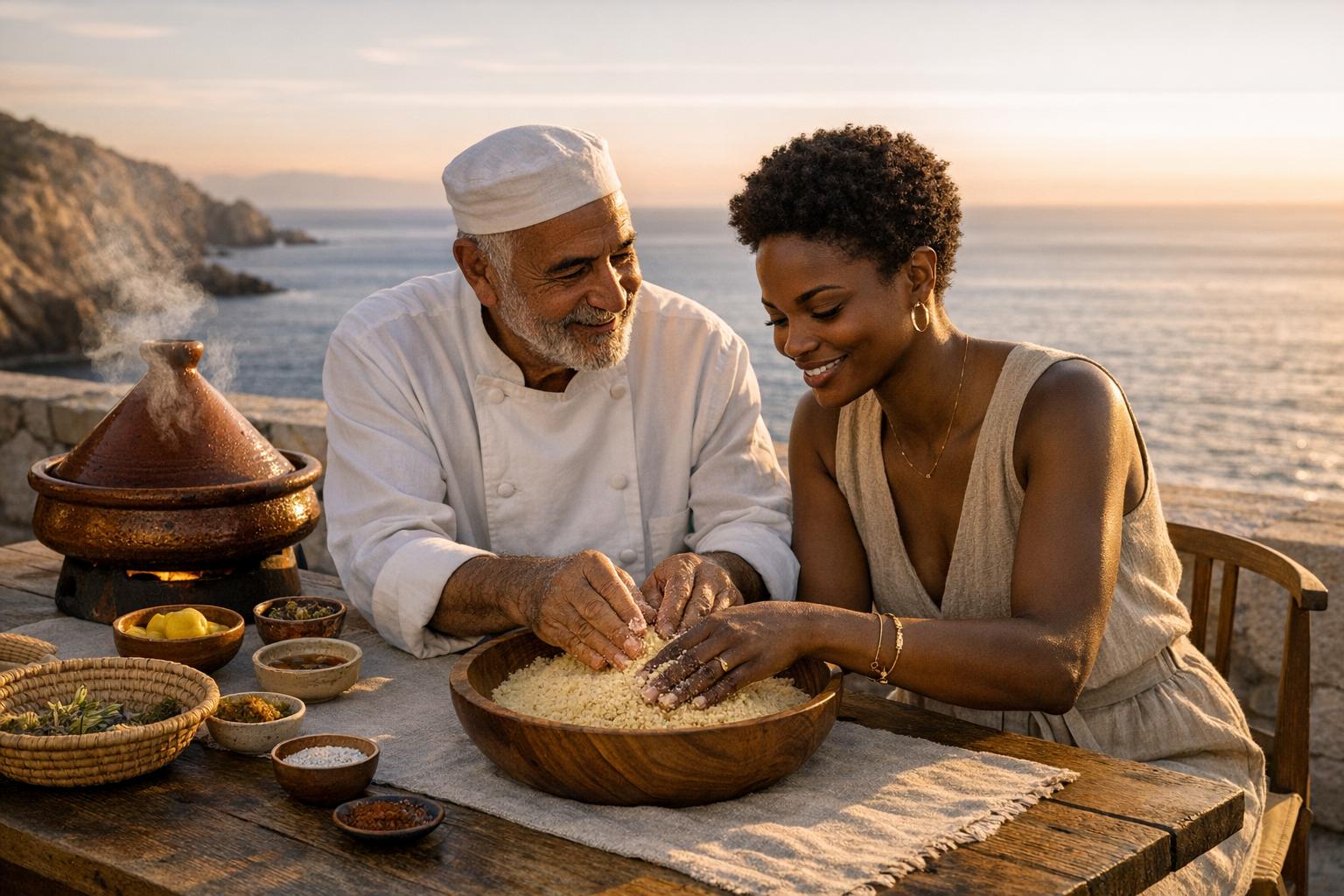
Luxury travel is stepping into a new role: preserving disappearing food traditions.
From forgotten recipes to ancient cooking techniques, these practices are vanishing due to globalization, urbanization, and generational gaps. Luxury travel now offers experiences that connect travelers with these food heritages while supporting local communities.
Key takeaways:
- Hands-on experiences: Travelers join cooking classes, harvest ingredients, and learn from local experts.
- Community partnerships: Programs source ingredients from small-scale farmers and indigenous groups, creating economic opportunities.
- Popular destinations worldwide: Uganda’s chicken luwombo, Japan’s Zen cuisine, and the Philippines’ kinilaw are being revived through curated travel experiences. These are often available through exclusive travel packages designed for cultural immersion.
- Impact: These efforts help sustain endangered food practices while funding education, healthcare, and community resources.
Luxury travel is no longer just about indulgence – it’s about engaging with and supporting the culinary roots of the places you visit.
What Are Endangered Culinary Practices?
Defining At-Risk Food Traditions
Endangered culinary practices are deeply rooted recipes and techniques passed down through generations, often tied to sustainable methods and cultural heritage. These practices align with the concept of "food sovereignty", which emphasizes the right to access healthy, culturally meaningful food that respects one’s traditions.
Several warning signs indicate when a culinary tradition is at risk. For starters, knowledge gaps emerge when older generations fail to pass down traditional skills and languages to younger ones. Ingredient displacement occurs when indigenous foods are replaced by processed or imported alternatives. Rituals tied to food – like planting by lunar phases or performing ceremonies to honor the land – also fade, signaling a loss of cultural significance. Additionally, urbanization and migration often disrupt land-based lifestyles, making traditional practices like wild harvesting or companion planting less common.
These markers highlight how culinary heritage can erode over time, leading to a broader cultural decline.
Why Culinary Traditions Disappear
The disappearance of culinary traditions is not just symbolic – it has real-world consequences. For more travel inspiration, explore our luxury travel blog. Colonization, for example, has stripped many communities of their ancestral knowledge and languages. In Canada, this has deeply affected indigenous communities’ ability to engage with the land.
As Joef, a Mi’kmaw Earth Keeper, explains:
Natives’ poverty rate is above average in the country mostly because we don’t know how to use the land anymore.
Cultural stigma and Western influence have also played significant roles. In Africa, luxury travel operators historically prioritized European-style dining, sidelining local culinary traditions in favor of imported ingredients. Similarly, in Manila, Filipino food was once considered too "ordinary" for restaurants, though this sentiment has shifted in recent years. Paulo Achacoso, manager of the restaurant Inatô, observes:
It used to be that Manila folk would not go out to eat Filipino food. They felt they got enough of that at home. But in the last five years that has completely changed.
One of the most pressing challenges is the failure to pass knowledge between generations. When traditional skills like wild food harvesting or gardening are not taught, entire culinary systems can vanish in just one generation. Economic factors add to this issue, as younger people often see less financial value in traditional practices compared to modern jobs.
Examples of Disappearing Food Traditions
Around the world, certain culinary practices are on the brink of disappearing:
- In Nova Scotia, Canada, the Mi’kmaq community is working to preserve nijinjk, a traditional caviar made from salmon roe. This dish reflects the indigenous principle of using every part of an animal to minimize waste. In February 2025, they published the cookbook Mitji-Let’s Eat!, featuring 30 recipes to safeguard both their language and culinary techniques.
- In Uganda, chicken luwombo, a dish once reserved for Buganda royalty, is being revived. This meal, which involves steaming chicken in banana leaves with peanut sauce and smoked paprika, was at risk of being overshadowed by Western-style safari menus. Chefs at Volcanoes Safaris Bwindi Lodge are actively preserving this tradition.
- In the Philippines, restaurants like Hapag and Inatô are reintroducing forgotten ingredients and dishes such as masareal (a peanut and sugar snack from Cebu) and kinilaw (a pre-colonial raw fish dish made with coconut vinegar, ginger, and local spices).
- The Three Sisters companion planting method, a Mohawk agricultural tradition, involves planting corn, beans, and squash together to create a self-sustaining ecosystem. This practice not only produces food but also preserves agricultural biodiversity and ecological knowledge that has supported communities for centuries.
These examples illustrate the ongoing efforts to protect endangered culinary practices, ensuring they remain part of our shared heritage.
sbb-itb-6675d37
Cooking Up History: Preserving the Wisdom of the Chinese Kitchen with Chef Grace Young
How Luxury Travel Supports Food Heritage
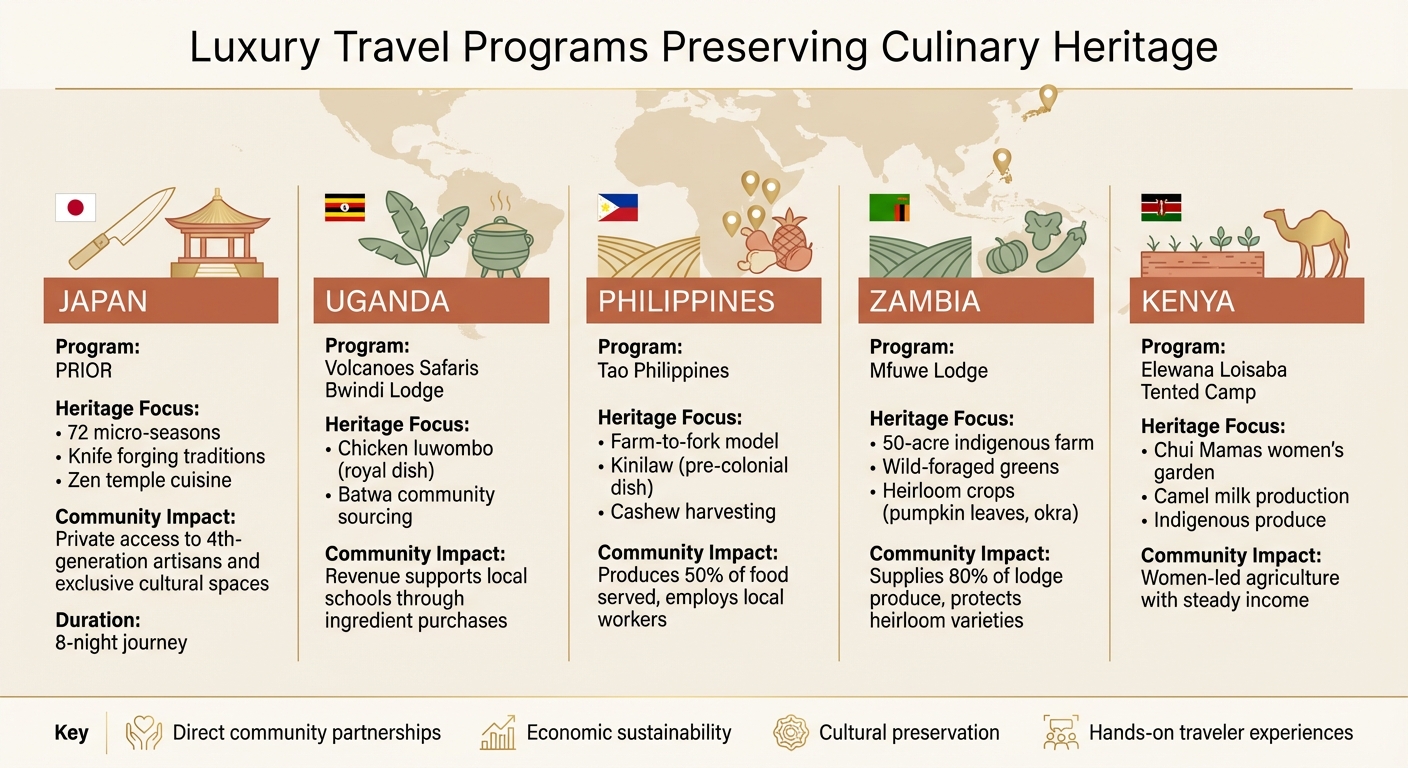
Luxury Travel Programs Preserving Endangered Culinary Traditions Worldwide
Hands-On Culinary Experiences
Luxury travel services are stepping up their game by offering travelers more than just a front-row seat to traditional food practices. Guests are now invited to roll up their sleeves and dive into the culinary traditions of the places they visit. These experiences allow travelers to harvest ingredients, master age-old techniques, and cook alongside local culinary experts who carry the weight of generations of knowledge.
Take Palawan in the Philippines, for example. Tao Philippines runs "Tao Farm", which produces half of the food served to its guests. This farm-to-table approach not only supports traditional ingredients but also provides jobs for the local community.
In Japan, PRIOR offers an eight-night "Culinary Heritage of Japan" journey, giving travelers access to rare experiences. From knife-forging workshops in Sakai – where blacksmiths have been crafting blades for centuries – to meeting a fourth-generation fishmonger at Omicho Market, this trip dives deep into Japan’s rich culinary traditions. Edoardo Cervigni from PRIOR highlights Japan’s unique approach to seasons:
Japan has this very particular way of defining seasons, so there are not just four but 72. Some seasons last a week… There is a whole rituality that comes with it.
In Uganda, visitors to Volcanoes Safaris Bwindi Lodge can take part in traditional cooking classes, where they prepare chicken luwombo, a dish steamed in banana leaves. This dish connects participants to royal culinary traditions that are at risk of fading away. These immersive experiences don’t just enrich travelers – they also create meaningful economic opportunities for local communities.
Partnerships with Local Food Communities
Beyond hands-on activities, luxury travel is creating direct economic ties with local food producers to help sustain traditional practices. By partnering with indigenous communities and small-scale farmers, these programs ensure that tourism dollars go toward preserving food heritage and supporting local livelihoods.
At Volcanoes Safaris Bwindi Lodge in Uganda, Chef Loyce Acom sources beans, onions, and potatoes from the nearby Batwa community. The income from these sales funds local schools, creating a sustainable cycle where tourism supports both education and cultural preservation.
In Zambia, The Bushcamp Company‘s Mfuwe Lodge operates a 50-acre farm that supplies 80% of its fruits and vegetables, including indigenous crops like pumpkin leaves and okra. This reduces reliance on imported food and boosts the demand for heirloom varieties that might otherwise vanish.
Meanwhile, in Kenya, Elewana Loisaba Tented Camp collaborates with the "Chui Mamas" garden, a women-led agricultural initiative. This partnership not only provides fresh produce like greens, tropical fruits, and camel milk for the camp but also offers a steady income for local women.
In Manila, high-end restaurants are bridging the gap between urban luxury and rural food traditions. Establishments like Hapag and Inatô work with the "Good Food Community", which connects chefs directly with farmers in northern Luzon. This collaboration ensures that regional flavors remain alive while giving farmers access to premium markets. Chef Kevin Navoa of Hapag explains:
We want to bring honor to Filipino cooking by using local produce that lives and grows in our mountains, jungles and seas.
Real Examples: Destinations and Programs
Some destinations are leading the charge in blending luxury travel with the preservation of food heritage. Each of these programs takes a unique approach, rooted in its cultural context.
| Destination | Program/Provider | Key Heritage Focus | Community Impact |
|---|---|---|---|
| Japan | PRIOR | 72 micro-seasons, knife forging, Zen temple cuisine | Private access to fourth-generation artisans and exclusive cultural spaces |
| Uganda | Volcanoes Safaris Bwindi Lodge | Chicken luwombo, Batwa community sourcing | Revenue supports local schools through ingredient purchases |
| Philippines | Tao Philippines | Farm-to-fork model, kinilaw, cashew harvesting | Produces 50% of food served, employs local workers |
| Zambia | Mfuwe Lodge | 50-acre indigenous farm, wild-foraged greens | Supplies 80% of lodge produce, protects heirloom crops |
| Kenya | Elewana Loisaba | Chui Mamas women’s garden, camel milk | Women-led agriculture with steady income |
These programs share a common goal: moving away from the European-centric menus that once dominated luxury travel. In Africa, for instance, safari lodges are replacing outdated offerings like French pastries and British high tea with local dishes featuring ingredients like baobab fruit, wild spinach (mchicha), and sorghum porridge. This shift, often called "de-colonial dining", not only celebrates local food traditions but also provides financial incentives for communities to keep these practices alive.
In the Philippines, the change is particularly striking. Paulo Achacoso, manager of Inatô, notes how attitudes toward Filipino cuisine have evolved:
It used to be that Manila folk would not go out to eat Filipino food. They felt they got enough of that at home. But in the last five years that has completely changed and the restaurant scene has exploded.
How Travelers Can Help Preserve Culinary Traditions
Travelers have the power to support and protect culinary traditions that are at risk of disappearing. By making thoughtful choices, engaging with local communities in respectful ways, and working with expert travel agencies, you can turn your journeys into meaningful contributions to food heritage.
Choosing Ethical and Responsible Tourism
One of the most impactful ways to support endangered food traditions is by choosing travel providers that genuinely prioritize cultural preservation. Seek out operators who integrate heritage and sustainability into their core values, rather than treating local culture as a mere afterthought. Programs like the "Considerate Collection" or companies focused on meaningful travel experiences demonstrate a real commitment to preserving culinary traditions while offering memorable trips.
Community-based tourism is a fantastic way to ensure your travel spending directly benefits local food traditions. Opting for homestays with rural families or accommodations managed by indigenous groups not only helps preserve their practices but also boosts local economies. For example, Impactful Travel collaborates with over 100 Peruvian families to offer authentic homestays, ensuring tourism revenue stays within the community.
Additionally, consider where you dine. Restaurants and lodges that highlight local culinary heritage instead of defaulting to Western-style fine dining deserve your support. This approach respects indigenous food traditions and provides financial motivation for communities to continue practicing them. Dining in such establishments not only enriches your experience but also reinforces the value of these traditions.
Respectful Engagement with Local Communities
Ethical tourism goes beyond choosing the right providers – it’s also about how you interact with local communities. Participating in traditional cooking classes or harvest activities allows you to learn directly from those who have safeguarded these practices for generations. For instance, at Pandey in Bauko, Philippines, guests can gather ingredients like peppers, spring onions, and basil to prepare their meals.
When dining communally, whether at a carinderia in Manila or during a meal in a traditional boma, it’s important to follow local customs. Respecting seasonal food regulations, such as avoiding certain seafood during breeding seasons, shows consideration for the ecosystems that sustain these traditions.
Some experiences go a step further by directly supporting community infrastructure. For example, at Volcanoes Safaris Bwindi Lodge in Uganda, proceeds from ingredient sales by the Batwa community fund local schools. This creates a positive cycle where your participation in culinary traditions directly contributes to the community’s future.
Working with Specialized Travel Agencies
Navigating ethical culinary tourism can be complex, but specialized travel agencies make it easier. They offer curated experiences that respect local customs while benefiting the community. These agencies turn everyday activities, like cooking classes, into meaningful cultural exchanges.
With the right agency, you can access unique experiences that might otherwise remain hidden. Imagine enjoying a Pachamanca feast in Peru, where food is cooked underground with hot stones as a tribute to Mother Earth, or visiting a fourth-generation artisan in Japan to learn about traditional knife-forging techniques. Agencies also vet sourcing practices to ensure the lodges and restaurants they recommend support local farmers and indigenous communities.
Jo Vacations is one such agency, specializing in creating personalized itineraries that merge food heritage with luxury travel. Their expertise spans destinations like Japan, the Philippines, Kenya, Tanzania, and Morocco, offering hands-on culinary experiences while ensuring your trip benefits local communities. With 24/7 concierge support and a deep understanding of logistics, they handle the details so you can focus on the experience. Visit jovacations.com to see how your passion for food heritage can inspire meaningful travel adventures.
Conclusion
Luxury travel today has evolved into a way to safeguard endangered culinary traditions while fostering meaningful connections with local communities. This marks a shift in the way we view high-end travel – moving from exclusivity to a more intentional engagement with the cultures and traditions of the destinations we explore.
Opting for luxury experiences that focus on preserving food heritage not only enhances your journey but also supports the survival of these traditions. By sourcing ingredients from smallholder farms and women-led initiatives, these experiences ensure that the communities maintaining these practices can continue to thrive financially. Across the globe, similar programs tie travelers’ experiences to real community benefits, such as improved education and infrastructure.
As Luxury Travel Magazine explains:
"Luxury travel is no longer about distance from culture, but about access to it, thoughtfully designed, comfortably navigated, and deeply immersive." – Luxury Travel Magazine
From learning to prepare Ugandan chicken luwombo to participating in Peru’s Pachamanca ritual, these hands-on experiences introduce global audiences to ancient techniques while helping to preserve them for future generations. Such exchanges celebrate the spiritual and agricultural heritage of each destination, showing younger generations the enduring worth of their ancestral knowledge. This approach not only protects cultural traditions but also ensures economic stability for the communities that uphold them.
FAQs
How can I tell if a culinary experience benefits locals?
A great dining experience can truly benefit local communities when it aligns with their traditions, actively involves them, and ensures that profits remain within the community. Take, for instance, Indigenous groups in Canada or local communities in Africa – many are bringing back traditional foods and techniques, prioritizing genuine practices and fair pay. Seek out experiences that engage locals directly and back small-scale producers, artisans, and farmers, all while safeguarding their culinary traditions.
What should I ask a travel advisor about sourcing and community pay?
When discussing sourcing and community pay with a travel advisor, focus on how they support local communities and protect culinary traditions. Ask if they collaborate with local farmers, artisans, and suppliers to prioritize locally sourced ingredients and products. It’s also worth inquiring whether they have partnerships in place to ensure fair compensation for those involved in culinary practices. This way, you can be sure that your travel experience contributes to equitable pay and directly benefits the local community.
How can I participate respectfully in traditional cooking or harvesting?
To engage respectfully with local communities, it’s important to approach with care, understanding, and a willingness to learn. This means seeking permission, honoring customs, and recognizing the deeper meaning behind these practices. Here are some key points to keep in mind:
- Listen to local hosts or guides and follow their instructions carefully.
- Take only what you need to ensure resources are shared fairly.
- Respect boundaries by avoiding the use of sacred or private items and techniques.
By showing humility and respect, you contribute to preserving and honoring these fragile culinary traditions.